

.png)
Chances are, you’ve lived this moment: you’re casually scrolling through Instagram (as we all do), and boom—there’s an ad for those exact sneakers you were obsessing over yesterday. Maybe you even added them to your cart… and then ghosted. Coincidence? Not even close. That, my friend, is the magic of dynamic ads..
But here’s the real question: when you’re planning your campaign, how do you choose—static or dynamic ads? What’s actually going to move the needle for your brand?
Truth is, both have their strengths. Picking the right one can seriously impact engagement, conversions, and your return on ad spend (and let’s be honest, that’s what we’re all chasing). The key is understanding how each type works, where it fits in your strategy, and how to use it well. Skip that part, and you’re basically throwing money into the wind.
Static Ads: Simple, Solid, Consistent
Let’s break it down. Static ads are the classics. They’re fixed creative assets—same image, same message, shown to everyone. Doesn’t matter where they live, what they like, or what they’ve clicked on. Think of them like digital billboards: one message, loud and clear.
Here’s what people often miss: static ads are awesome for building brand recognition. They’re perfect for awareness campaigns, product launches, or simple promos. Because the content doesn’t change, every impression delivers exactly what you intended.
From where I stand, one of the biggest wins is simplicity. No need for fancy integrations or data feeds. You can test different visuals, headlines, or CTAs without jumping through hoops. But fair warning—static ads don’t personalize. Everyone gets the same experience. And if you don’t refresh them now and then, they can start to feel… stale. Engagement might dip.
Examples of Static Ads

Static ads are everywhere:
- A bold product shot with a tagline like “Meet Your New Favorite Moisturizer”
- A seasonal promo banner that says “20% Off All Fall Styles”
- A brand awareness ad with a clean logo and mission statement
These ads are consistent, recognizable, and easy to deploy across platforms.
Pros of Static Ads
- Strong brand consistency – Same message for every viewer builds familiarity
- Lower production costs – No need for data feeds or automation tools
- Easier performance tracking – A/B testing is straightforward
- Ideal for awareness campaigns – Repetition reinforces brand memory
Cons of Static Ads
- No personalization – Same content for all users may reduce engagement
- Potential for ad fatigue – Repeated exposure leads to creative burnout
- Manual updates required – Any change in pricing or product info means redesigning the ad
Static ads work best when consistency is the key element. For example, when launching a new brand, reinforcing messaging across multiple touchpoints, or running short-term promotions with fixed offers.
Explore static ad strategies that build brand recognition.
Dynamic Ads: Personalization That Performs
Now, dynamic ads? Whole different vibe. These adjust in real-time based on who’s looking. Ever browsed a site and then saw an ad for the exact product you clicked on? That’s a dynamic ad doing its thing.
Unlike static ads, dynamic ones respond to user behavior. Every impression feels tailored—and that’s why they’re gold for e-commerce. Retargeting campaigns? Chef’s kiss.
One of the best parts? Automation. No more manually updating ads when prices change or products sell out. Dynamic ads pull from structured data feeds and update instantly. But heads up: setup isn’t plug-and-play. You’ll need clean data, solid tracking, and automation tools. If the feed’s off, your ad might show the wrong info—or nothing at all.
Examples of Dynamic Ads
- A carousel ad showing products you viewed yesterday
- A banner that updates pricing based on your location
- A personalized ad that says “Still thinking about those boots? They’re 10% off today!”
These ads feel custom-built for each user—and that’s what makes them powerful.

How Marpipe Simplifies Dynamic Ad Creation
Creating dynamic ads at scale can be tricky. But platforms like Marpipe make it easier.
How it works:
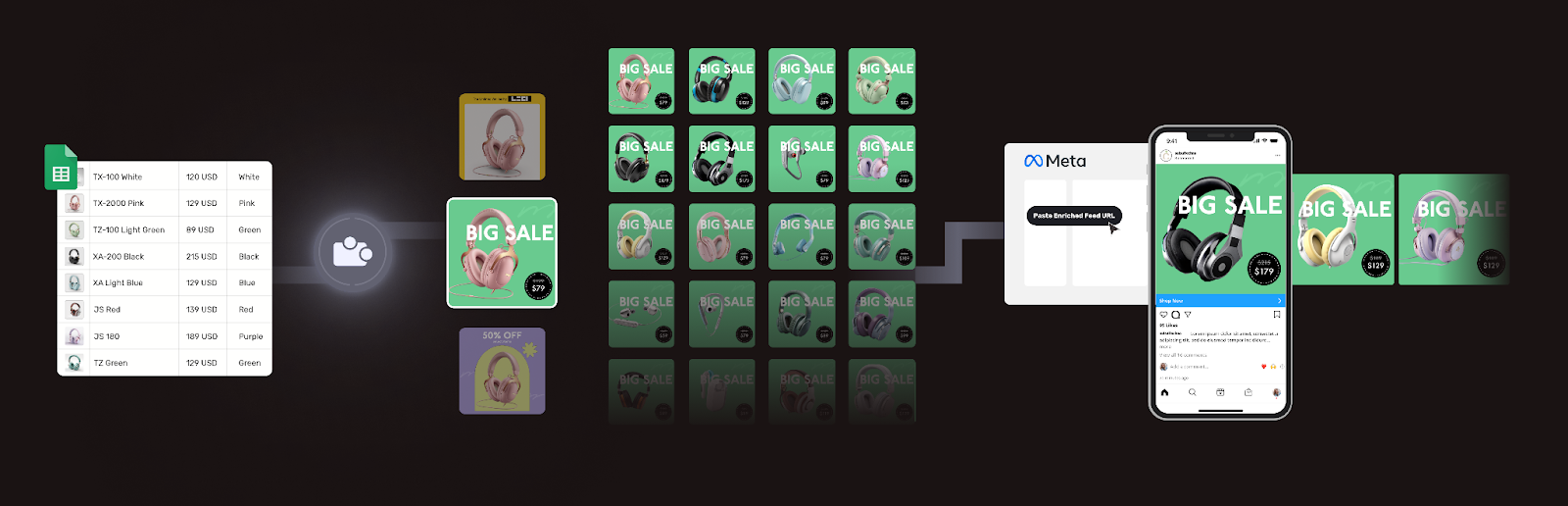
- Upload your product feed (all your product details: names, prices, ratings)
- Marpipe uses dynamic templates to generate countless ad variations from the feed
- Layouts stay consistent across the product catalog
- Updated feeds push seamlessly to Meta, Snap, TikTok, and Pinterest
Result? Hyper-personalized ads without the headache of manual updates. Time saved? Yes. Effort minimized? Yes. Resources preserved? Absolutely.
Pros of Dynamic Ads
- Personalized messaging – Ads adjust to user behavior, location, and preferences
- Real-time updates – Content reflects inventory, pricing, or promotions instantly
- Higher engagement and conversion rates – Relevance drives performance
- Scalability – Ideal for brands with large catalogs and frequent updates
Cons of Dynamic Ads
- Requires technical setup – Needs structured data feeds and automation tools
- Higher upfront investment – More complex than static ads
- Data-dependent – Incorrect or outdated feeds can hurt performance
Dynamic ads work best for businesses that want to optimize engagement and conversions through personalization. They’re ideal for retargeting past visitors, showing relevant product recommendations, and delivering location-based promotions.
Learn more about dynamic ad automation.
Choosing the Right Approach for Your Campaign
Here’s the honest truth: static vs. dynamic depends on your goals, budget, and bandwidth.
- Want brand consistency with minimal fuss? Go static.
- Need higher engagement and conversions? Dynamic’s your move.
Most smart brands use both. Static ads build a strong, steady presence. Dynamic adapt to user behavior. For example, you might run static ads for general awareness, then follow up with dynamic retargeting for users who clicked. It’s simple, effective, and just plain smart.
Testing is key. Look at engagement, conversions, and audience reactions. A/B test static vs. dynamic to see what hits hardest. Use Marpipe’s multivariate testing tools to compare performance.
Mixing Static and Dynamic Ads Without Overthinking It
Good news: you don’t have to pick sides.
Static ads now benefit from programmatic placement, helping them reach the right people at the right time. Meanwhile, dynamic ads keep evolving with smarter automation and targeting.
The brands that blend both? They win. Hybrid strategies give you consistent branding plus real-time adaptability. And the ones that test different angles? They stand out.
Your Next Steps: Build a Smarter Ad Strategy
Not sure where to begin? Start by mixing static and dynamic strategies. And if you want to make your life easier, tools like Marpipe are a game-changer.
Instead of designing every ad manually, you upload your product feed, pick a dynamic template, and boom—personalized creatives ready to roll.
Here’s how it works:
- Upload your product feed (names, prices, ratings, etc.)
- Marpipe uses dynamic templates to generate tons of ad variations
- Layouts stay consistent across your catalog
- Updated feeds push to Meta, Snap, TikTok, Pinterest—automatically
Result? Hyper-personalized ads without the manual grind. Time saved? Yep. Effort minimized? Definitely. Resources preserved? You bet.
Want to see it in action? Sign up free and give it a spin. You’ll see how Marpipe can streamline your creative process and take your ad game to the next level.
Your Next Steps: Building a Smarter Ad Strategy
By leveraging both strategies—and using tools like Marpipe to simplify dynamic ad creation—brands can create advertising campaigns that are not only efficient but also drive meaningful results.
Want to see how dynamic ads can work for you? Sign up for free and explore how Marpipe can streamline your creative process and take your campaigns to the next level.
FAQs: Static vs Dynamic Ads
- What is the difference between static and dynamic ads? Static ads use fixed creative assets that show the same message to all viewers, while dynamic ads personalize content based on user behavior, location, or preferences.
- When should I use static ads in my campaign? Static ads are ideal for brand awareness, product launches, and short-term promotions where consistency and simplicity are key. They’re also great for A/B testing visuals and messaging.
- How do dynamic ads improve ad performance? Dynamic ads automatically update based on real-time data, delivering personalized experiences that increase engagement, conversion rates, and return on ad spend.
- What tools can help me create dynamic ads at scale? Platforms like Marpipe simplify dynamic ad creation by using product feeds and customizable templates to generate hundreds of personalized ad variations automatically.
- Can I combine static and dynamic ads in one strategy? Absolutely. Many successful brands use static ads for consistent branding and dynamic ads for personalized retargeting. A hybrid approach allows you to reach broad audiences while optimizing for performance.