

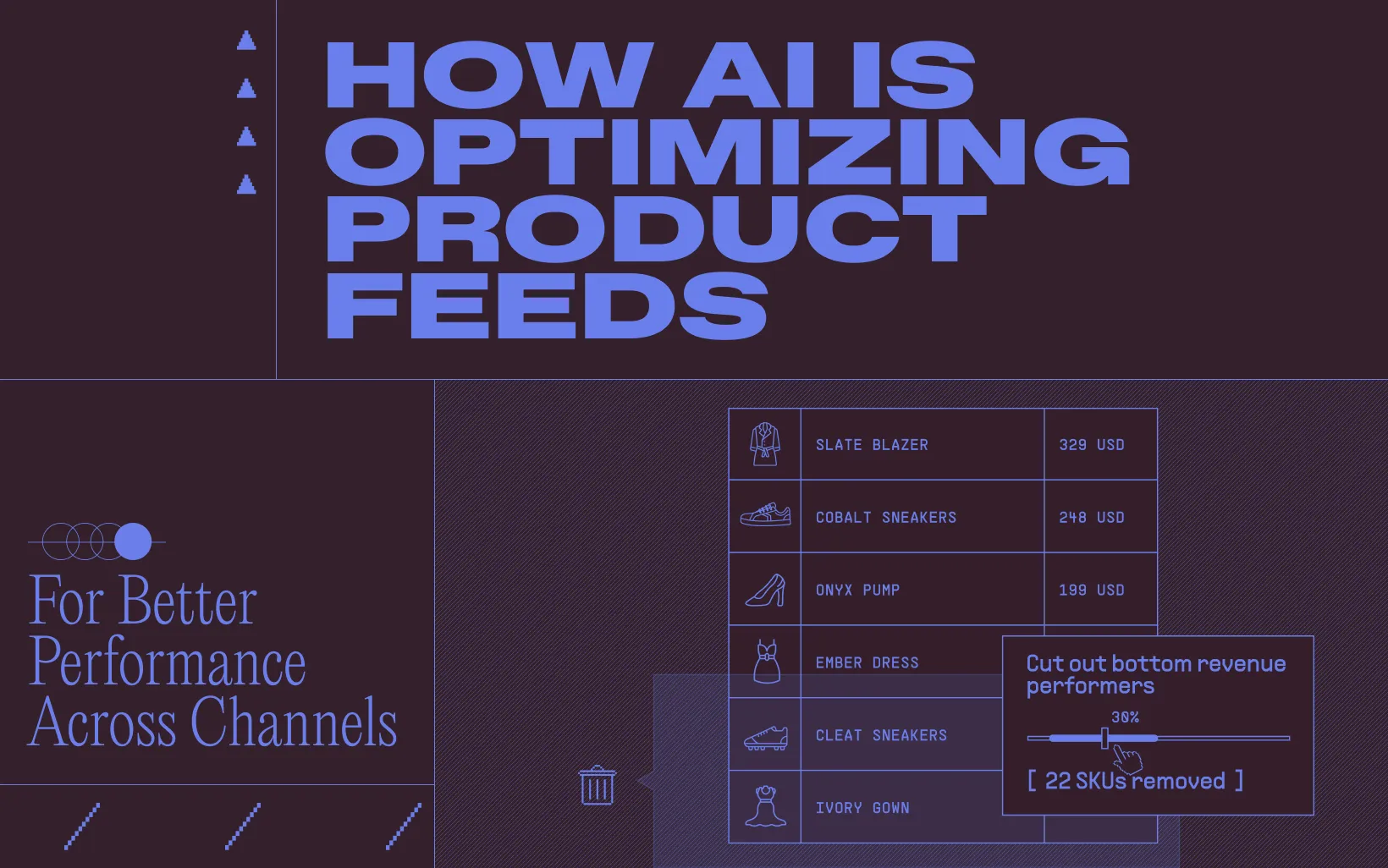
Most product feeds work well enough to stay out of the way, which is often the problem. Once campaigns are live, feeds tend to stay in place with only minor updates, even as performance shifts. That makes it harder to tell whether weaker results are coming from creative, targeting, or the product data itself. AI for product feed optimization gives teams a more practical way to improve what platforms see and prioritize without rebuilding the full campaign.
That matters more as platforms rely more heavily on feed data to decide what gets shown. Google states that product data is used to match products to relevant queries, and missing or inaccurate fields can stop ads from serving altogether. Google also updates Merchant Center requirements every year to improve how products are ranked, matched, and displayed across Search and Shopping, which means feed quality has a direct impact on how consistently products stay competitive in the auction.
Not Every Product Belongs in Your Campaign
It’s tempting to promote everything. But here’s the reality: some of your products are quietly killing your performance. Maybe they have a high return rate. Maybe they eat up your budget without converting. Or maybe they just don’t get clicks. Whatever the issue, leaving them in your active campaigns pulls down your ROAS, clutters your catalog, and makes it harder for your best products to shine.
That’s where AI steps in. With tools like Marpipe, you can automatically spot the products that are underperforming, and remove them from your campaigns in real time. No spreadsheets. No guesswork. Just a cleaner, leaner catalog that’s built to convert.
What’s AI for product feed optimization?
The AI for product feed optimization is set out to evaluate how each SKU performs over time, then using those signals to decide which products should stay active, which should be deprioritized, and which should be removed from spend altogether. Instead of relying on assumptions, it looks at how products actually perform across the metrics that shape efficiency and return.
So what does it actually pay attention to?
Revenue vs. Ad Spend
One of the clearest signals is how much revenue a product generates compared to what it costs to advertise. If a SKU consistently absorbs budget without producing enough return, it becomes harder to justify keeping it active. AI flags those products early, especially when spend is rising faster than revenue or when margins are too thin to support continued promotion. This helps reduce wasted budget and keeps more spend focused on products that are actually contributing to return.
Click-Through Rate (CTR)
Click-through rate helps measure whether a product is earning attention in the first place. A low CTR usually signals that the product is not standing out, whether that comes from weak imagery, poor positioning, or low relevance in the auction. If users are seeing the product but not clicking, AI treats that as an early sign that the SKU may not be competitive in its current form. That makes CTR useful as a filtering signal before spend becomes the bigger issue.
Return Rate
Not every sale is a good sale. Products with high return rates often look fine in platform reporting but create margin problems after the purchase. AI can account for that by identifying products that convert well but regularly come back through returns, cancellations, or low-value orders. This helps prevent budget from being concentrated on products that appear efficient at the ad level but perform poorly once profitability is factored in.
Conversion Rate
Conversion rate helps show whether product interest is turning into actual sales. If a SKU is earning clicks but consistently failing to convert, it usually points to a mismatch somewhere between the ad and the purchase. That could mean weak product-market fit, pricing issues, poor landing page alignment, or lower purchase intent. AI uses that signal to deprioritize products that attract traffic but fail to produce meaningful outcomes.
Performance Shifts Over Time
These decisions are not fixed. AI keeps re-evaluating product performance as conditions change. Products that improve can be reintroduced. Products that begin to lose efficiency can be pulled back before they waste more spend. That ongoing adjustment is what makes AI for product feed optimization useful in practice. It gives teams a way to manage product performance continuously instead of relying on static rules or occasional audits.
What AI for Product Feed Optimization Looks Like in Action
You connect your data sources - Meta, Google Merchant Center, Shopify, wherever you’re running ads or tracking sales. From there, Marpipe syncs your catalog and starts crunching numbers. No extra work on your end. The system knows what’s working and what’s not. It immediately builds optimized product sets that reflect your current best performers.
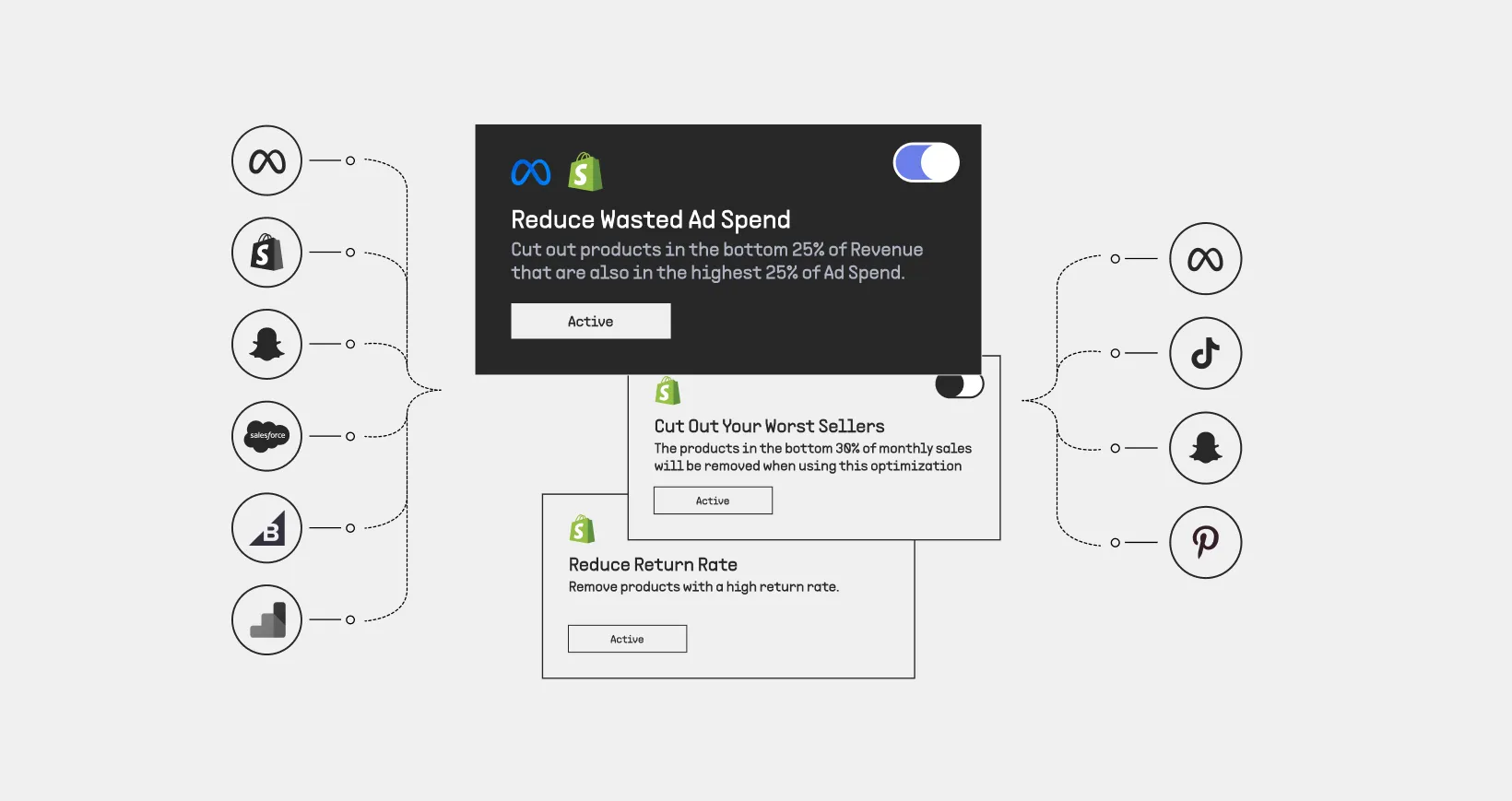
You can apply filters in just a few clicks. Want to cut the bottom 30% of products based on monthly revenue? Easy. Want to remove items that are burning ad spend without sales? Done. Need to clean up products with low CTRs? One toggle and it’s handled.
All of this takes less than 15 minutes. And the impact on ROAS? Huge.

Real Examples: What Brands Are Doing With AI Right Now
These brands used Marpipe’s optimization tools and enriched catalogs to clean up their product feeds, unlock better creative, and scale smarter.
Twillory, a performance menswear brand, saw a 127% improvement in DPA performance using Marpipe’s Enriched Catalog Product. By layering smart design templates over their product feed, they transformed static, flat-lay creative into dynamic ads featuring bundle offers and real customer testimonials. Within ten days, the enriched templates more than doubled revenue compared to their original DPA setup, on the same spend.
Cozy Earth, a luxury bedding and loungewear brand, tested over 30 dynamic templates to refine their product feed and ad creative. With Marpipe, they were able to scale their DPA budget while improving ROAS, especially during peak sales periods. Their team used flexible elements like strikethrough pricing and sale callouts to quickly adapt to changing promos - something that simply isn’t possible with static catalog ads.
Ridge, a DTC accessories powerhouse, used Marpipe to take creative control of their catalog. By testing enriched templates that automatically matched the design color to each product’s color variant, they created a more tailored, visually compelling experience. The result? A 53% increase in ROAS, and a catalog ad system they could scale effortlessly inside Meta.
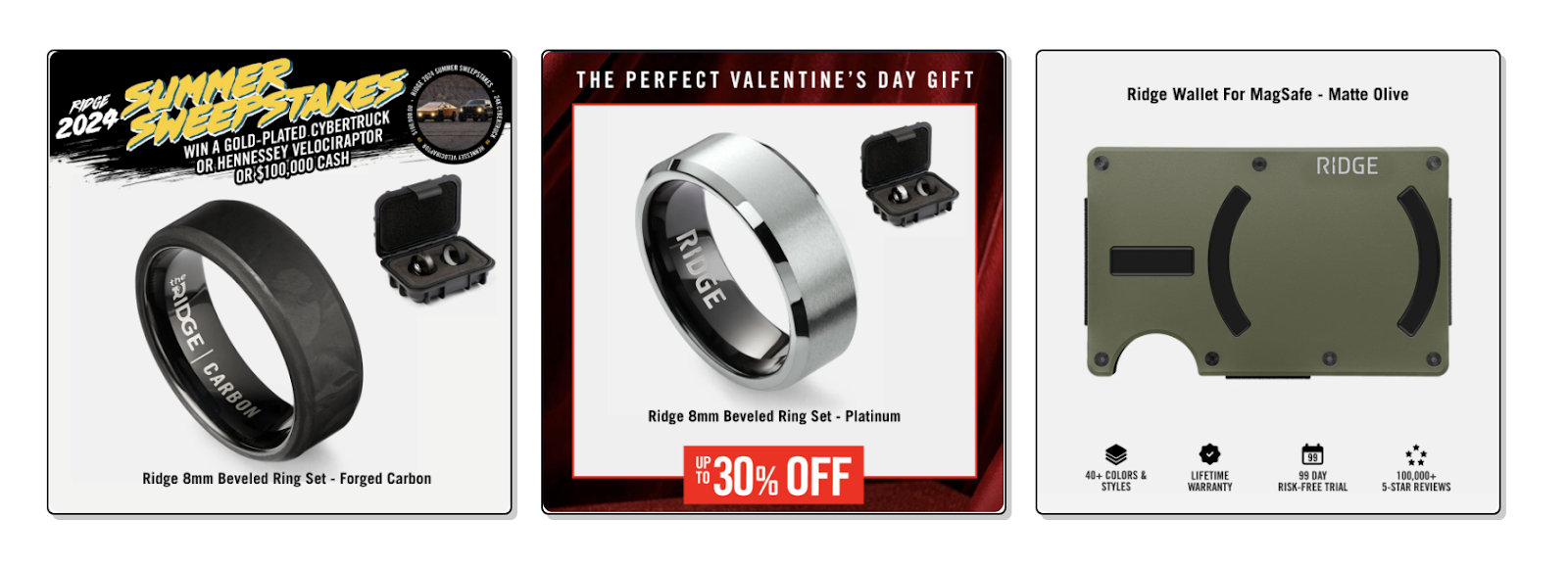
Each of these brands had a different challenge. Twillory needed a creative upgrade. Cozy Earth needed dynamic flexibility. Ridge needed performance at scale. All three found it through one thing: a smarter product feed powered by AI and design automation.
The Power of Enrichment: Smarter Data Leads to Better Creative
Optimization isn’t just about what you remove. It’s about what you add. With Marpipe’s custom feed fields, you can enrich your product data by layering in smart creative inputs. Think urgency copy like “Almost Gone,” seasonal labels like “Back to School Favorite,” or brand differentiators like “Sustainably Made” or “Ships Free.”
You can also dynamically inject overlay text, promotional pricing, or custom value props into your catalog. That means when your feed builds ads, each product has more context, more reasons to click, more relevance, more performance.
And you’re not editing creative manually. It’s baked into the product feed, scaled across your catalog, and refreshed as needed.
AI Feed Optimization by Channel: What Platforms Actually Prioritize
Every platform is different. What works for Meta might fall flat on Google. TikTok favors a totally different experience than Amazon. AI can help you match your catalog to each platform’s preferences so your products are set up to win everywhere.
Google Shopping wants clean structure, accurate categorization, and pricing consistency. AI helps refine product titles, filter by performance, and maintain up-to-date data for dynamic inventory and price changes.
Meta (Facebook + Instagram) wants strong engagement signals and visual consistency. Products that are served in high-CTR formats like carousel or collection ads perform best when powered by an optimized catalog that excludes budget-burners.
TikTok rewards relevance and recency. If your product feed is stale, you’re not getting served. AI can help identify fast-moving SKUs, update video overlays, and keep your product creative aligned with TikTok’s fast pace.
Amazon is all about detail and reliability. Attributes matter. Return rate matters. Competitive pricing matters. AI can flag which listings don’t meet the algorithm’s expectations and pull them from your sponsored product campaigns before they waste your budget.
Pinterest and Snapchat lean heavily into imagery. If your catalog includes custom image fields, lifestyle context, or enhanced tags, your products are more likely to get traction on visual search and AR-enhanced formats.
Across the board, AI is your cheat code for aligning your product data with how these platforms actually serve content.
A Before and After Snapshot
Let’s imagine a common scenario.
Before AI Optimization
You’re running campaigns across Meta and Google. Your product feed includes 500 SKUs. You’re seeing average performance, some wins, but your ROAS has dipped and you’re not sure why. You suspect some products are tanking performance, but there’s no time to do a full audit.
After AI Optimization
You connect to Marpipe, sync your product feed, and turn on filters. You cut the bottom 30% of underperformers. You also enrich your catalog with urgency copy, dynamic overlays, and custom promotional text. Suddenly, your catalog is cleaner, your ads look sharper, and your spend is focused on what works.
Within two weeks, you see CTR jump 18%, ROAS improve by 29%, and return rate drop 7%. All because your product feed stopped working against you.
What Happens After You Optimize With AI?
When you optimize your product feed with AI, three things happen.
First, your ad budget stops leaking. Bad SKUs are gone. High-return products are out. The budget is spent on products that actually sell.
Second, your ads get smarter. Feed enrichment makes every product in your catalog more engaging. Copy improves. Visuals improve. Targeting improves.
And third, your performance improves across the board. Better ROAS. Higher CTR. Lower cost per purchase. And all of it is automatic, scalable, and built to keep learning.
With platforms like Marpipe, it’s never been easier to clean up your feed and get more out of every campaign.
The Product Feed is Your Foundation
Every ad you run, every campaign you build, every conversion you want - it all starts with your product feed. If your feed is weak, your performance will suffer, no matter how good your creative or targeting is.

But with AI-powered optimization, you take control. You feed the algorithms what they want. You remove the junk. You promote what works.
This isn’t some abstract strategy. This is performance marketing in its most practical form.
And it starts with a cleaner catalog.
Make Your Feed Work Smarter
With Marpipe, getting started is quick. You can connect your ecommerce platform and ad channels in just a few clicks. Once synced, Marpipe automatically filters out the low-performing products that are quietly draining your ad budget, making room for the ones that actually sell.
From there, you can enrich your product feed with data that’s built for performance, things like urgency messaging, bundle offers, or review scores that plug straight into your creative.
You can customize feeds for specific channels like Meta, Google, or TikTok, ensuring every product shows up in the right format with the right message, exactly where it performs best.
No more spreadsheets. No more manual cleanup. Just a smarter, faster, cleaner way to run catalog campaigns that actually scale.
Want to see it in action? Get started for free or book a demo today.
Frequently Asked Questions
Does AI replace manual product feed management?
Not completely. AI is useful for speeding up decisions, spotting patterns, and improving feed quality at scale, but teams still need control over product strategy, merchandising, and creative inputs. The goal is not to remove people from the process. It is to reduce repetitive manual work and make feed decisions easier to manage. A strong baseline still matters, which is why these product feed management best practices are still relevant even when AI is involved.
How do I choose the right AI product feed tool?
The right tool depends on what needs the most work in your current workflow. Some tools are built for feed cleanup, some focus on syndication, and others are better at creative enrichment or catalog automation. The best option usually depends on whether your main problem is data quality, scale, or creative output. If you are evaluating options, this comparison of the top AI tools for product feed automation is a good place to start.
What data does AI use to optimize product feeds?
Most AI systems use a mix of catalog data and performance data. That usually includes product titles, descriptions, images, pricing, inventory, CTR, conversion rate, ROAS, and return rate. The goal is to understand both how the product is structured and how it performs once it is live. The stronger the product data, the easier it is for platforms to rank and serve the right products. This is especially important for Google, where feed quality has a direct impact on visibility. More on that here.
What is the difference between AI product feed optimization and feed enrichment?
AI product feed optimization and feed enrichment solve related but different problems. Optimization is about making the feed more usable for performance. That includes cleaning data, improving structure, fixing inconsistencies, and helping platforms decide which products should be shown. Feed enrichment is what makes that same data more useful in-market. It adds context like better copy, stronger product tags, promotional messaging, and creative inputs that help products stand out once they are served. One improves how the feed functions. The other improves how the feed performs. Marpipe combines both, which matters because clean data alone does not improve ad quality, and better creative does not help much if the feed behind it is weak.