


Most ecommerce teams get familiar with DataFeedWatch because it solves a pretty basic problem: feeds are messy, and every channel wants them differently. You set up rules once, push products out to places like Google Shopping, Meta, Bing, and Amazon, and you cross your fingers that they stay compliant.
For many teams, DataFeedWatch has worked well for years. But as catalogs get bigger, channels get stricter, and internal teams evolve, people start wondering if there’s something better suited to the way they work.
This is not about whether DataFeedWatch is “bad”, it isn’t. A lot of brands depend on it. But in 2026, feed needs aren’t one-size-fits-all anymore. Some teams want more control, others want simpler setups, and others want closer ties between feed logic and campaign activation.
Below are the top alternatives to DataFeedWatch right now, why teams look at them, and what each one feels like in real use.
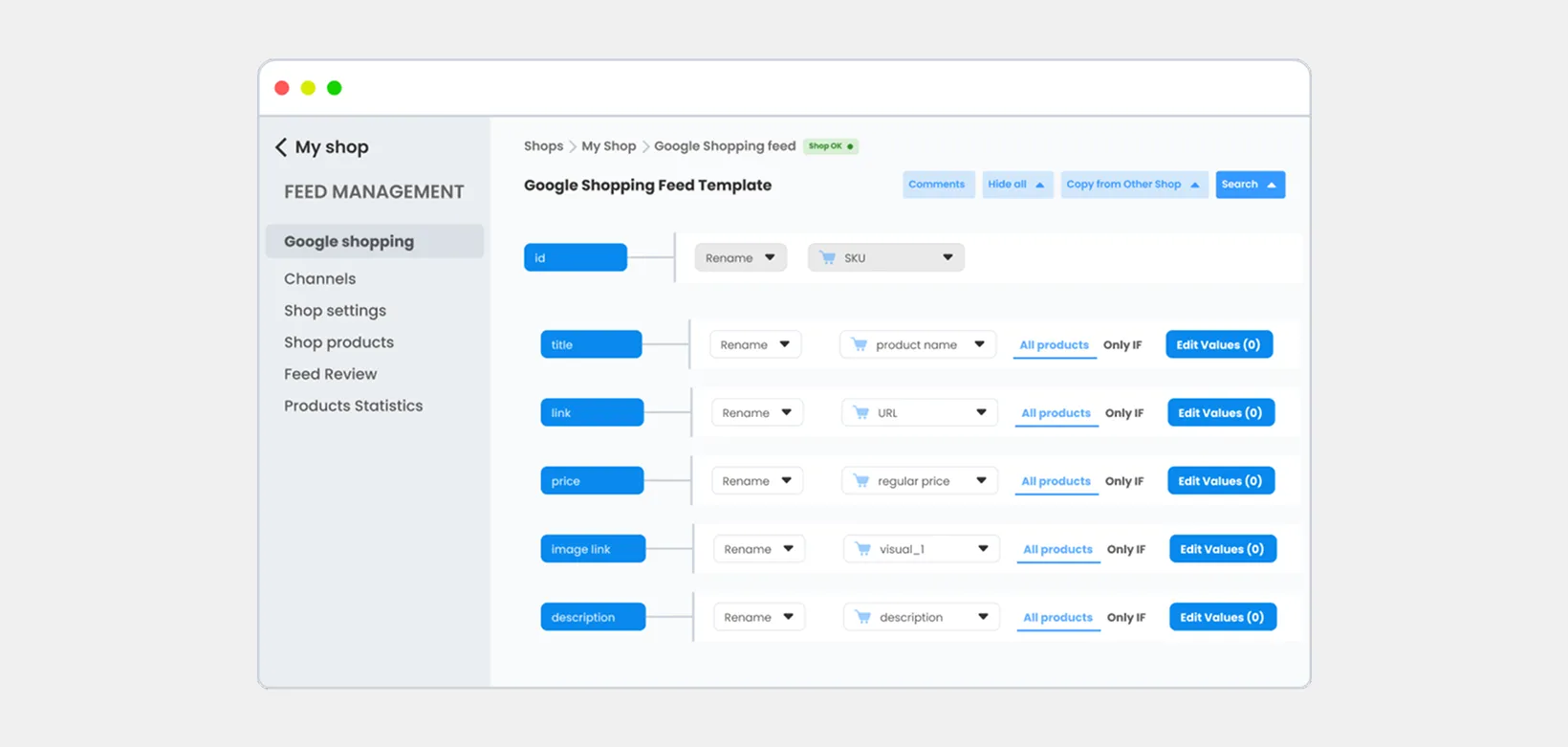
Where DataFeedWatch Starts to Feel Heavy
Let’s talk straight. DataFeedWatch is well-rounded; it covers a huge list of channels, and it gets the job done for a lot of brands. But “good” doesn’t always mean “right for you.”
Here are a few common reasons teams start exploring alternatives in 2026:
- The setup feels long or complicated relative to how deep they actually need to go
- They want more direct control over mapping and rule changes without relying on support
- Pricing starts to feel high for their catalog size or channel mix
- They want feed management tied more directly to ad execution or campaign optimization
In short, teams trade DataFeedWatch when either it feels heavier than their needs or when something else fits their workflow better.
What You Should Be Thinking About Before Picking a Tool
Before we get into specific tools, it’s worth saying: alternatives are different because priorities are different.
Most teams evaluating options are asking one or more of these questions:
- Is this going to be something my team can edit and iterate on quickly?
- Does this give us a clear view of errors and feed health without complex dashboards?
- Do we need deep automation, or are we okay with hands-on tweaking?
- Do we want feeds tied closer to campaign creation or ad workflows?
There’s no perfect tool here. There’s just the right tool for the way your team works.
Top DataFeedWatch Alternatives
1. Marpipe
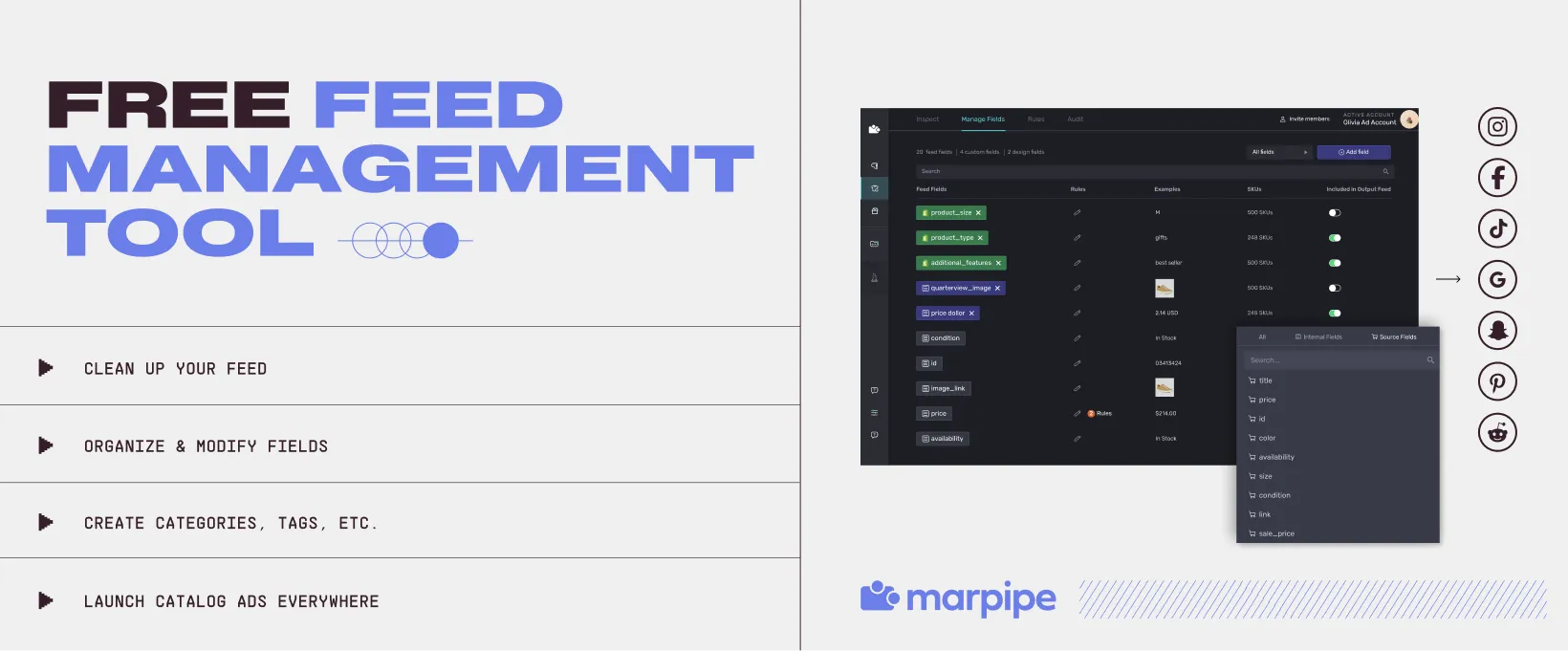
Many marketers associate Marpipe with catalog ad creative testing, but the platform has expanded beyond creative workflows. Marpipe evolved by creating a built-in product feed management layer that allows brands to manage their product catalogs directly inside the platform before turning that data into ads.
Key capabilities include:
- Direct product feed uploads so teams can manage catalogs inside the platform
- Catalog cleanup and enrichment to improve product attributes and data quality
- Organizing feed data for dynamic ads and shopping campaigns across channels
- Maintaining structured, reliable product catalogs without relying on a separate tool
- Feed management included at no additional cost, rather than sold as a separate module
For ecommerce teams, this setup connects two steps that are usually handled in different systems. Product feeds can be prepared and structured in one place, and then immediately used to generate and test catalog ad creatives. By combining feed management with creative experimentation, Marpipe helps teams move faster from clean product data to insights about which ads actually drive results.
2. Feedonomics
Feedonomics is broader in scope than most feed tools. It combines automation with strong governance and managed support. It is built for teams that want feeds to just work with minimal babysitting, even as catalogs scale.
Teams tend to pick Feedonomics when they want:
- Strong compliance across many channels
- Managed support so internal teams don’t spend all day troubleshooting
- A system that can absorb complexity without breaking
It’s not as lightweight or hands-on as some others, but where it shines is in stability and scale. If your product catalog is large or if you cannot afford feed outages or data errors, this is one of the first places teams look.
3. GoDataFeed
GoDataFeed is another feed management tool that often comes up when teams say they want “simpler” than DataFeedWatch.
GoDataFeed is straightforward in its approach. It gets product data where it needs to go and keeps it in sync without a ton of complexity. Setup tends to be faster, and the interface doesn’t overwhelm people the way some larger systems do.
Most teams that end up with GoDataFeed are looking for:
- Clean feed distribution that just works
- Less time spent learning a big rule engine
- A platform that fits mid-size catalogs without a ton of extras
GoDataFeed handles the basics reliably, but it’s not the best choice when feeds need lots of custom logic or advanced transformations.
4. Productsup
Productsup sits closer to the enterprise level, much like Feedonomics, but it approaches feed transformation differently.
Productsup gives teams deep control over their data. You can tailor feeds in precise ways, handle multiple regions and languages, and adapt feeds for dozens of nuanced channel requirements without building external scripts or workarounds.
This strength also means it usually assumes you have a team or at least a specialist dedicated to feed logic. It is not the tool you pick when you want something quick out of the box. It’s something you pick when feeds are central to your business operations.
Teams that gravitate toward Productsup do so because:
- They need maximum control over complex catalogs
- They operate in many regions with different channel requirements
- They have the bandwidth to manage a deeper toolset
In other words, it is a good alternative to DataFeedWatch when control and precision matter more than simplicity.
5. Channable
Channable blends feed management with campaign activation. It lets teams manage product feeds and also build campaign structures for platforms like Google and Meta in the same place.
This tight integration can make a big difference for teams that think of feeds as part of their ad workflow, not just backend data.
Teams tend to like Channable when they want:
- A workflow where feed changes and campaign rules live together
- A simpler tool that bridges the gap between feed and activation
- Less switching between platforms during the campaign build process
It isn’t trying to replace the most robust feed management platforms, but for certain teams it hits the sweet spot of speed and workflow efficiency.
easyFeed and Other Lightweight Tools
There are also lighter tools that appeal to small shops or teams just getting started with feed management.
Some options focus on straightforward feed creation and basic syndication, often with low barriers to entry or free tiers. These tools don’t always have the depth of DataFeedWatch, but they make it easy to get feeds running without much setup.
Teams that fall into this category usually want:
- Quick setup with minimal rules to write
- Low recurring cost
- A simple interface that gets product feeds out the door
They are not ideal when feeds start to demand complex rules, dynamic labeling, or deep optimization for paid channels, but they do fit teams that are earlier in their ecommerce journey.
How These Alternatives Really Differ
It helps to think about the choices not as “better or worse,” but as different philosophies.
- DataFeedWatch is broad and capable, a reliable workhorse that scales well for many teams.
- Feedonomics leans into automation and managed support for complex, high-risk environments.
- GoDataFeed leans into simplicity and ease of use.
- Productsup leans into precision and enterprise-level customization.
- Channable leans into feed plus activation workflows.
- Lightweight tools lean into fast setup and a minimal learning curve.
There isn’t a one-size-fits-all winner. The right choice is the one that fits where your team spends most of its time and where it feels the most friction.
How to Pick the Right Alternative in 2026
Start with your biggest feed pains today.
Are you spending too much time fixing errors? Are custom transformations a headache? Are campaigns suffering because feeds lag? The answers to these questions usually point in the right direction.
For instance:
- If ease and speed matter most, start with GoDataFeed or lighter tools.
- If integration with ads matters, look at Channable.
- If precision matters, look at Productsup or Feedonomics.
No option is perfect, but matched to the right need, they solve real problems fast.
From Feed Management to Ad Performance
Feed management keeps product data organized, accurate, and ready for advertising platforms. That foundation is essential for running catalog campaigns, but by itself it does not determine how well those campaigns perform.
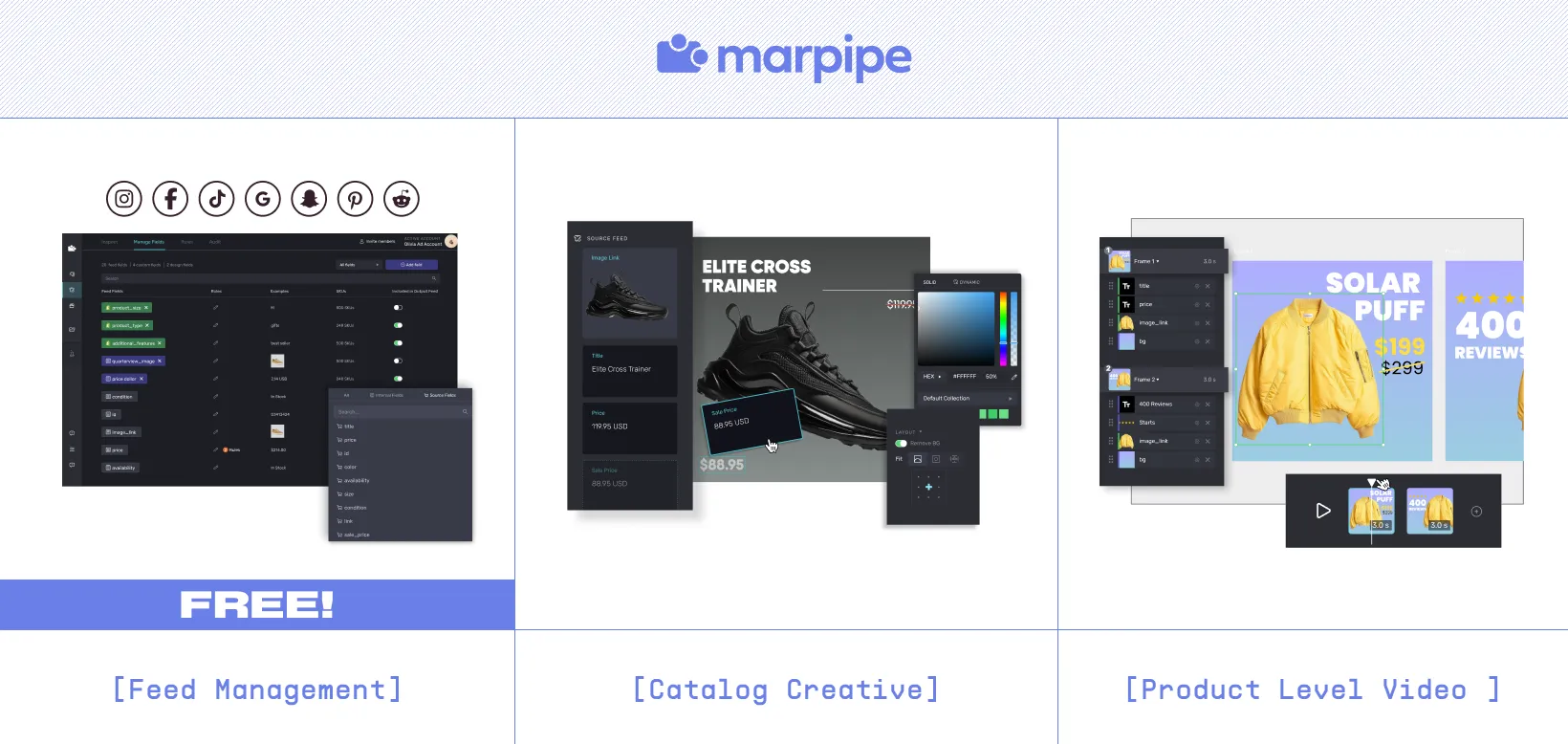
Marpipe extends that layer. The platform includes a free product feed management tool that allows brands to upload, clean, and maintain their catalog directly within Marpipe. Once the feed is ready, teams can use that same data to generate and test catalog ad creative at scale. The result is a simpler workflow where feed management supports the next step in the process: turning structured product data into stronger ad performance.
If feed management pain points show up downstream, in creative production, testing velocity, or ad performance, the right pairing can make the entire system feel lighter and easier to operate. Book a demo with Marpipe now!
FAQs
What is DataFeedWatch mainly used for?
DataFeedWatch is mainly used to create, manage, and optimize product feeds for advertising platforms and marketplaces like Google Shopping, Meta, and Amazon.
Why do teams look for DataFeedWatch alternatives?
Teams usually start looking when they want a simpler setup, more direct control over feed rules, pricing that fits their scale better, or closer alignment with ad workflows.
Are DataFeedWatch alternatives better for certain teams?
Yes. Some alternatives work better for smaller or mid-sized teams that want speed and flexibility, while others are built for large catalogs and complex data needs.
Can DataFeedWatch alternatives handle large product catalogs?
Some can. Tools like Feedonomics or Productsup are designed for large, complex catalogs, while lighter tools are better suited for simpler setups.
How should I choose a DataFeedWatch alternative?
Start by looking at where feed management causes the most friction today, whether that’s setup time, lack of control, cost, or campaign impact. The right tool usually solves that problem first.