

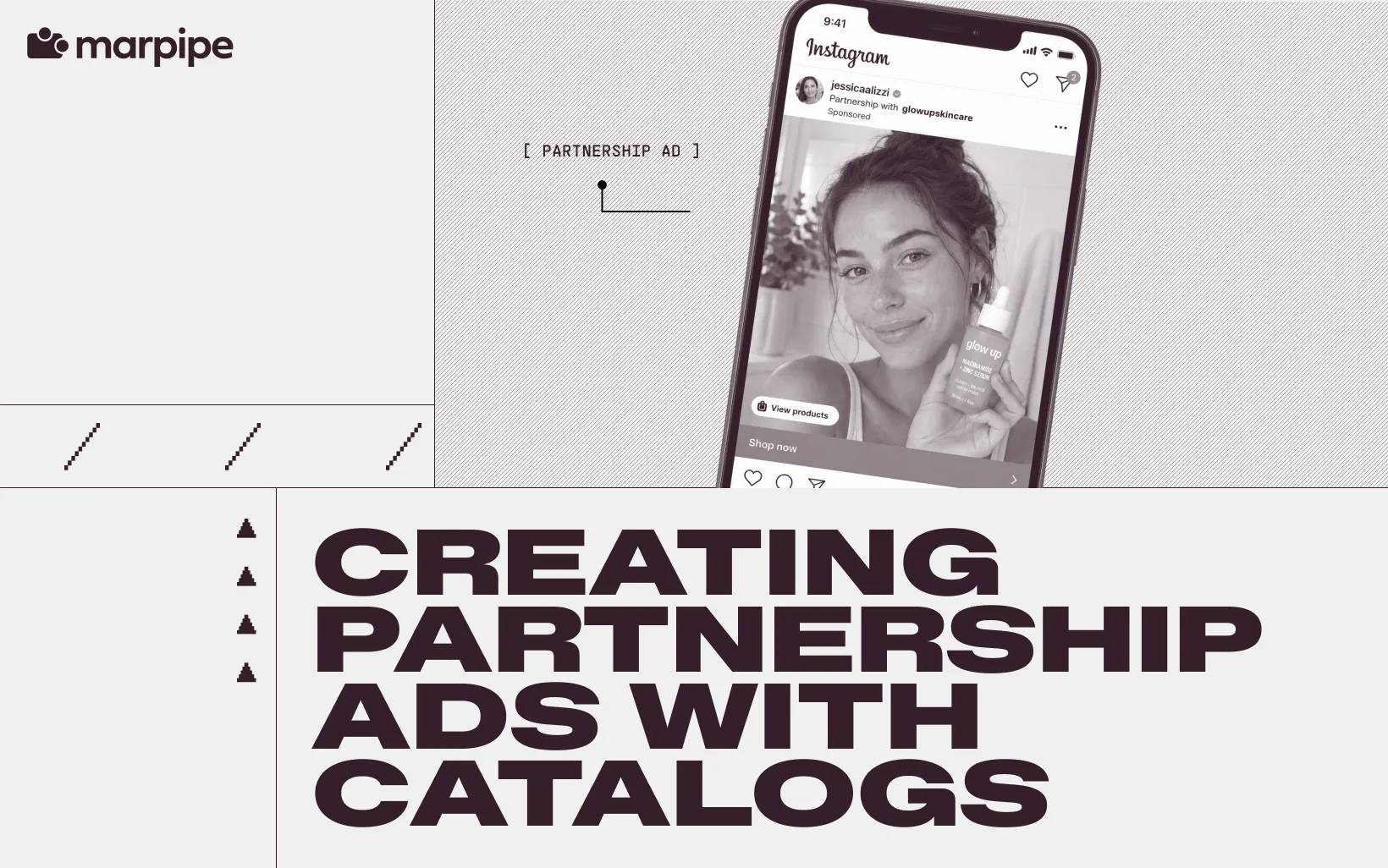
A skincare brand runs the same moisturizer two ways on Meta. One ad comes from the brand account with a clean product shot and polished copy. The other runs as a partnership ad through the creator who originally posted the product in her routine, using the same moisturizer, the same offer, and the same budget. The difference is not the product. It is the context around it.
The creator-led version tends to feel more like content people already stop to watch, which is a big reason partnership ads continue to outperform standard brand ads. Meta says partnership ads deliver 19% lower CPAs and 13% higher click-through rates than standard brand ads on average, which is a big reason more paid teams are leaning into them right now. That performance gap is exactly why partnership ads are getting more attention right now. The challenge is that most teams still treat them like one-off creator assets, which makes them hard to scale once products, campaigns, and creators start multiplying.
That is where catalogs start to matter. Once partnership ads are connected to catalog logic, creator-led performance becomes much easier to scale without rebuilding the workflow every time a product changes.
What Are Partnership Ads?
Partnership ads are paid social ads that let a brand run media through a creator, publisher, or partner identity instead of only through the brand account. The brand still controls the spend, targeting, and campaign setup, but the ad is delivered with the partner’s name, handle, and existing social proof attached to it.
In practice, that means the brand gets paid distribution and performance control, while the ad keeps more of the trust and familiarity that usually makes creator content work in the first place.
That is what makes partnership ads different from standard creator whitelisting or influencer content. The creator is not just supplying an asset. Their identity becomes part of the ad itself, which usually makes the impression feel more native and less like traditional paid media.
Why Most Partnership Ad Workflows Break at Scale
Partnership ads usually perform well. The problem is that most teams still build them like one-off creator campaigns. One creator makes one asset, tied to one product, for one campaign. That can work at a small scale, but it breaks quickly once more creators, more SKUs, and more campaign variations start stacking up.
Then every new product needs another asset. Every new creator needs another round of production. Every variation turns into more manual work, more approvals, and more creative overhead. That’s where most partnership ad workflows start losing efficiency.
How Catalogs Change the Partnership Ad Workflow
Traditional partnership ad workflows can work well, but they are usually limited by how much product context the ad can carry before the workflow becomes too manual to scale. One creator asset gets tied to one product, one variation, and one campaign. That can perform well in isolation, but it usually gets harder to repeat once more SKUs, more creators, and more offers start stacking up. Catalogs make partnership ads easier to scale because they separate the creator layer from the product layer.
That changes the workflow in a useful way. The creator still does the part partnership ads are best at, which is earning trust, holding attention, and making the ad feel more native in-feed. The catalog handles what changes more often, like product selection, pricing, availability, and which SKUs should actually be shown.
It leads to a more efficient system in practice:
- stronger click quality because creator trust and product relevance stay connected
- lower creative fatigue because the creator asset is not carrying the full variation load
- faster merchandising updates without rebuilding the ad
- more product coverage without multiplying production work
- more consistent performance as campaigns scale across larger catalogs
How to Build Partnership Ads with Catalogs on Marpipe
Step 1: Build the catalog inside Marpipe
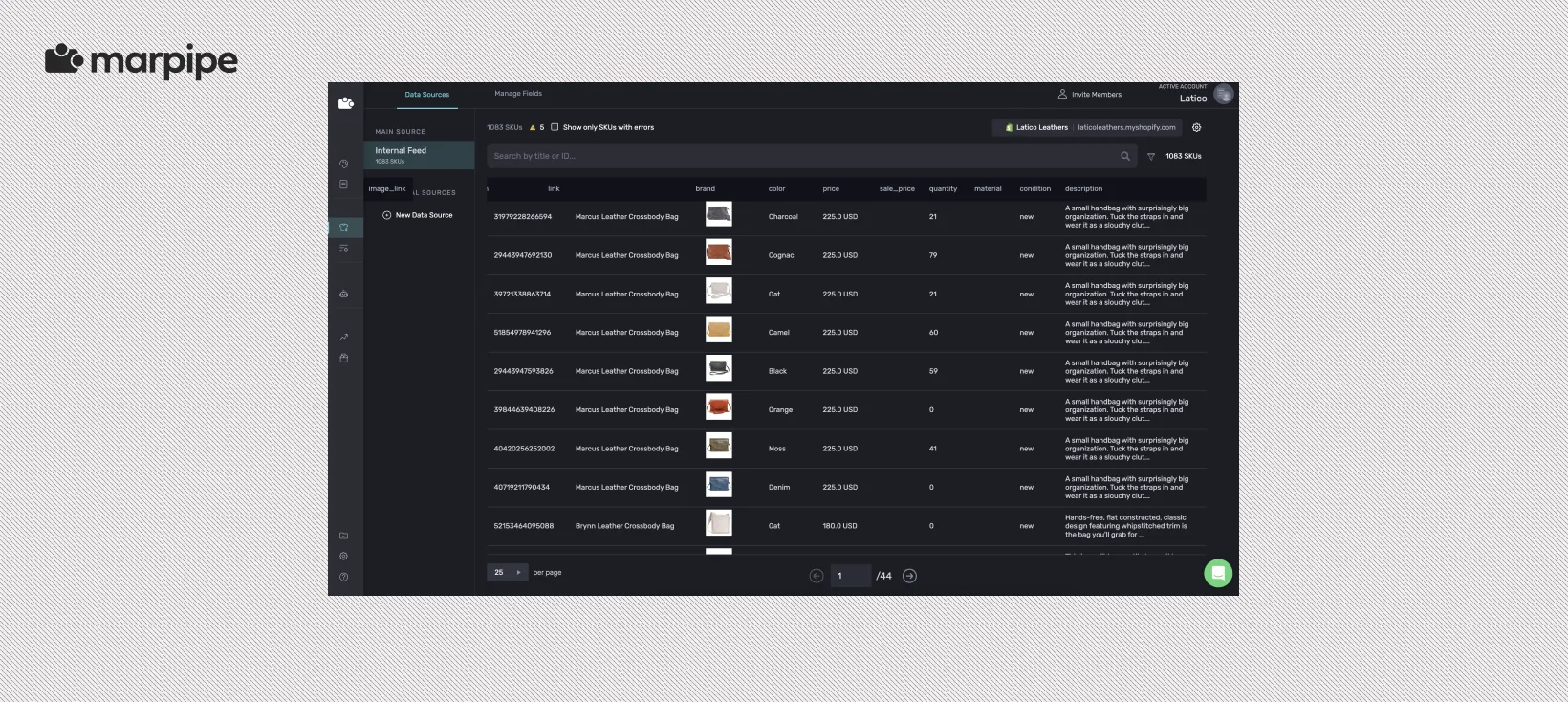
Start by connecting your ecommerce catalog to Marpipe, whether that is Shopify or another commerce source. This gives Marpipe the product feed it needs to power the ad underneath the creator layer.
From there, the goal is not just to sync products. It is to make the catalog more useful before it ever reaches Meta.
Step 2: Add creative to the feed before it reaches Meta
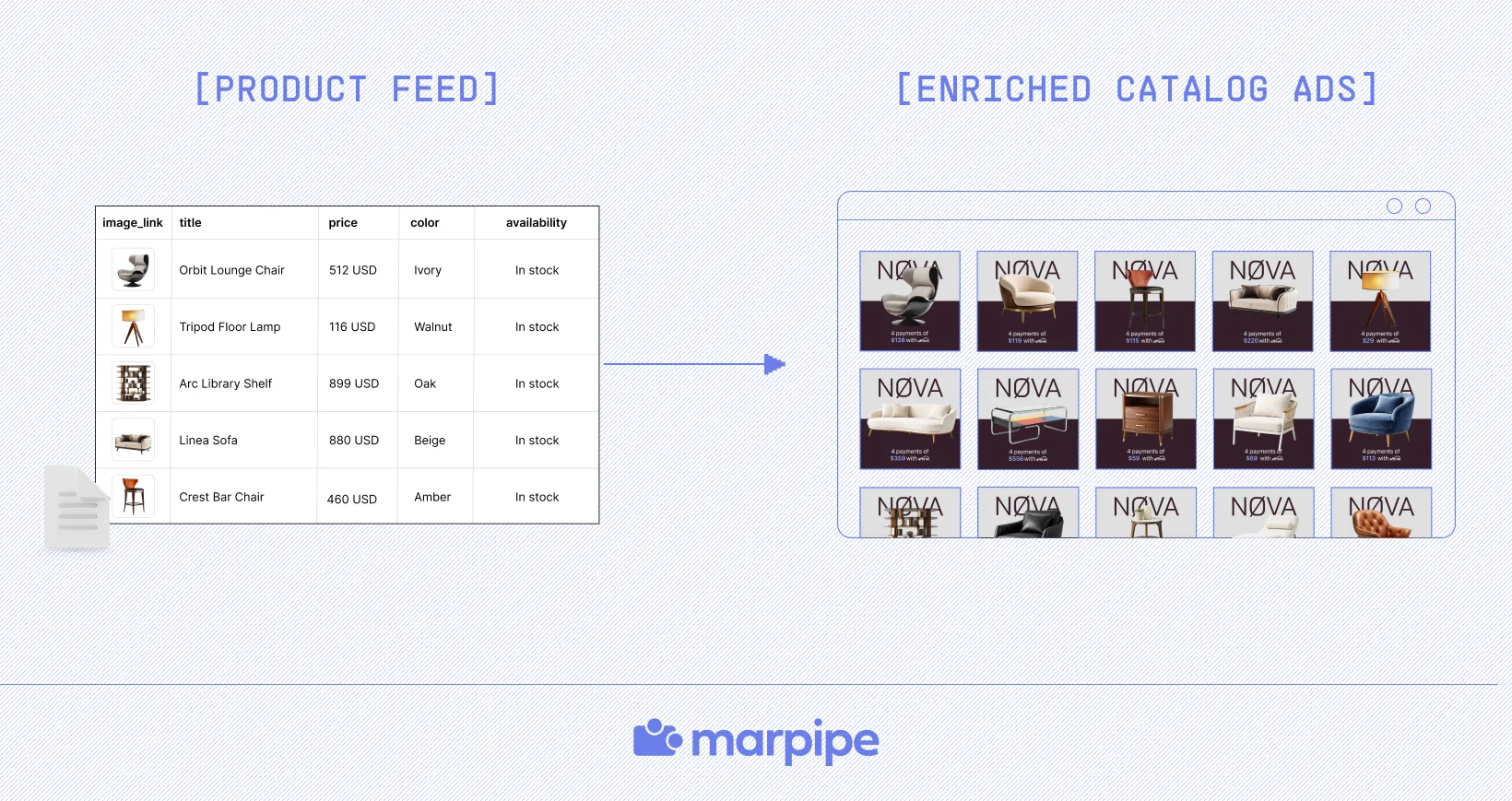
Inside Marpipe, enrich the catalog with the creative layer you want the ad to carry. That can include branded overlays, pricing treatments, social proof, testimonials, visual templates, or product-level video. This is what turns the catalog from a static product feed into something more usable inside a partnership ad.
Step 3: Push the enriched catalog into Meta
Once the catalog is enriched, push that version into Meta Commerce Manager. This gives Meta the same product catalog, but with the creative layer already built into the feed. At this point, the catalog is ready to support partnership ads without requiring the product layer to be rebuilt inside each ad manually.
Step 4: Build the partnership ad in Ads Manager
Inside Meta Ads Manager, create a Sales campaign and enable Advantage+ catalog ads. Then turn on the Partnership Ads toggle and select the creator or partner identity tied to the ad.
From there, choose the catalog you enriched in Marpipe and decide how the creator and catalog should work together.
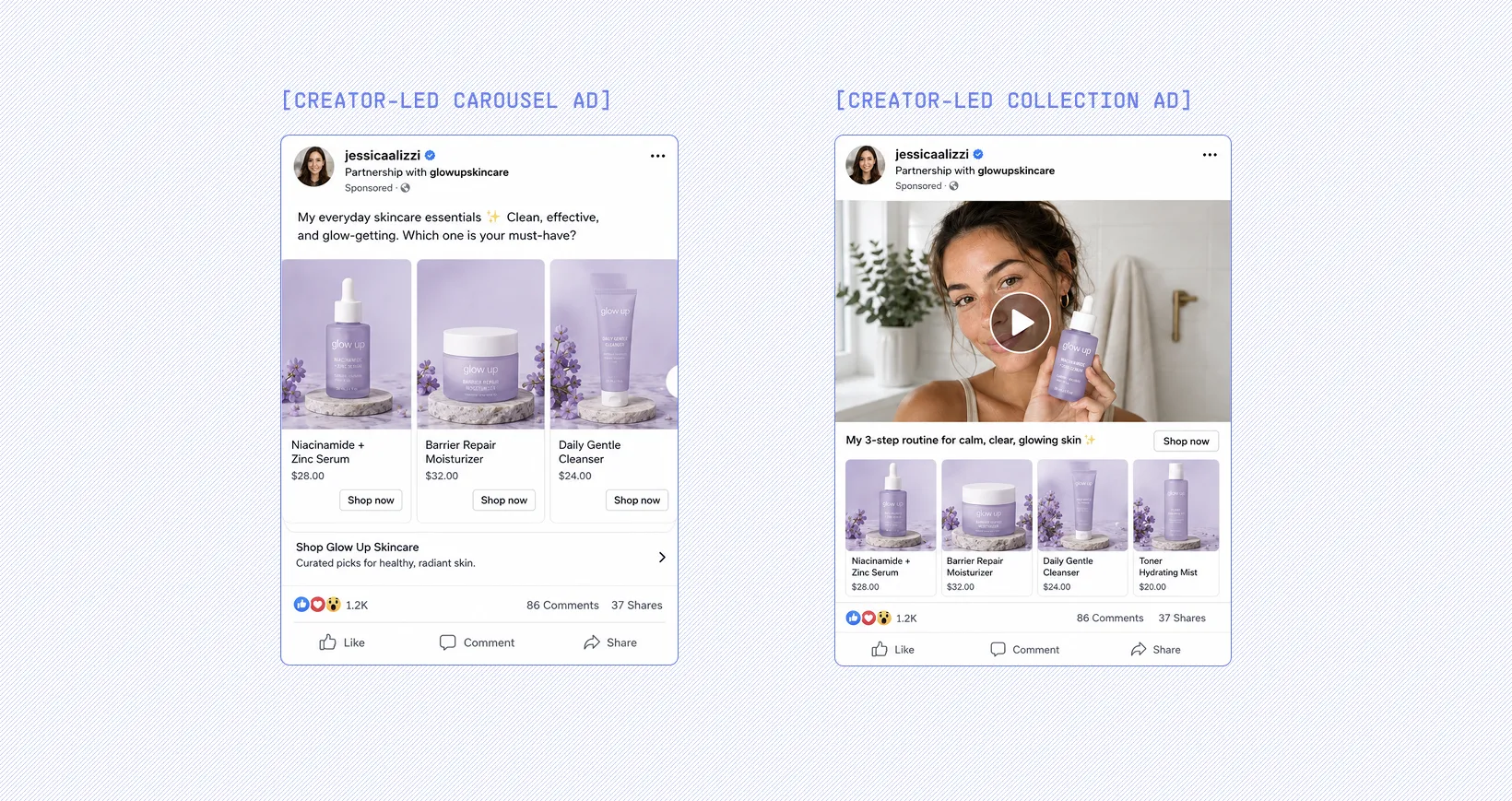
- Carousel ads work well when you want multiple products to inherit the partner identity
- Collection ads work well when you want the creator asset to lead as the hero, with the product catalog merchandised underneath it
Step 5: Launch, then optimize the system
Once the ad is live, keep the feed updated so pricing, availability, and product logic stay current. Then give the campaign enough time to stabilize before making heavy changes. The real optimization happens after launch. Test which creator assets hold attention, which products convert best underneath them, and which catalog treatments improve performance once the creator has earned the click.
Why Partnership Ads Are Getting More Attention Right Now
Partnership ads are getting more attention because the performance gap has become hard to ignore, and standard paid social is getting more expensive to brute-force with brand creative alone. Meta ad CPMs rose more than 20% in 2025, which has made creative efficiency much more important than simply spending harder into the auction.
At the same time, creator-led formats continue to outperform. Meta reports partnership ads deliver 19% lower CPAs and 13% higher click-through rates than standard brand ads, and 71% of consumers make a purchase within days of seeing creator content on Meta. Partnership ads are giving brands a more efficient way to buy trust, not just reach.
Where Partnership Ads Tend to Outperform Standard Brand Ads
They often perform especially well in:
- beauty and skincare, where routine, texture, and proof matter
- wellness and supplements, where trust tends to drive conversion
- apparel, where fit and styling context help reduce hesitation
- DTC products, where creator framing can make unfamiliar products easier to understand
- products with higher skepticism, longer consideration, or stronger education needs
In those cases, partnership ads usually work better because the creator helps close doubt faster than the brand can on its own.
The Bigger Opportunity in Partnership Ads
Most teams still treat partnership ads like better influencer ads. That is useful, but it is not the full opportunity. The bigger upside is using partnership ads to make creator trust more operational. Once the creator layer is separated from the product layer, the trust stays intact while the catalog handles the scale underneath it.
That’s when partnership ads stop being one-off creator wins and start becoming a much more scalable paid acquisition system. If your team is ready to make partnership ads easier to scale, book a demo with us and see what that workflow looks like in practice.
Frequently Asked Questions
Do partnership ads only work on Meta?
No. Meta is where most teams start because the partnership ad infrastructure is more mature, but the same model can extend to other paid social channels. The core idea stays the same: creator trust drives the impression, and the product feed handles what gets merchandised underneath it. That is also why the same logic can carry into channels like TikTok once the product layer is structured correctly. Read this blog to understand the workflow in more detail.
Why do partnership ads work especially well for apparel brands?
Partnership ads tend to work especially well for apparel because the product usually benefits from more context before the click. Fit, movement, styling, and how the product looks on-body are often easier to trust when they come through a creator instead of a standard brand ad. That is the same pattern behind many high-performing clothing ads, where the product becomes easier to understand because the creative feels more native and more believable in use.
How should partnership ads be tested?
The most useful way to test partnership ads is not just by comparing creators. The stronger approach is testing the system underneath them: which creator holds attention best, which products convert best underneath that creator, and which merchandising logic improves performance once the click is earned. That is where multivariate testing becomes much more useful than simple creator A/B tests.
What usually improves partnership ad performance the fastest?
In most cases, the fastest gains come from improving what happens underneath the creator asset. The creator usually earns the trust, but product selection, pricing logic, merchandising, and how the product is presented tend to decide whether the click converts. That is the same reason many focus less on the impression itself and more on what the product layer is doing underneath it.