

Most ecommerce catalog ads still look the same. Plain product images, basic pricing, and very little brand identity. That works at a small scale, but once you’re managing hundreds or thousands of products, it becomes harder to stand out or improve performance.
Now imagine if every product ad looked like it was designed by your creative team, not pulled from a feed. And you could also test multiple creative variations across your entire product catalog, rather than guessing what works. That is where dynamic product ads start to shift from simple automation to real performance drivers.
According to 2026 benchmarks, dynamic product retargeting can generate CPA (Cost Per Acquisition) improvements of 20%–35% compared to generic display campaigns. Furthermore, personalized retargeting ads that show the exact product a user viewed increase conversion rates by up to 150%.
But not all platforms approach this the same way. Some focus on product data, others on campaign delivery, and a few focus on improving the creative itself.
Below are some of the most commonly used platforms for ecommerce teams creating dynamic product ads today.
The Best Platforms for Ecommerce Dynamic Product Ads in 2026
- Marpipe
- Hunch
- Smartly.io
- Confect
- ROI Hunter
- Socioh
- Feedonomics
1. Marpipe: Focused on Scalable Catalog Ad Creative
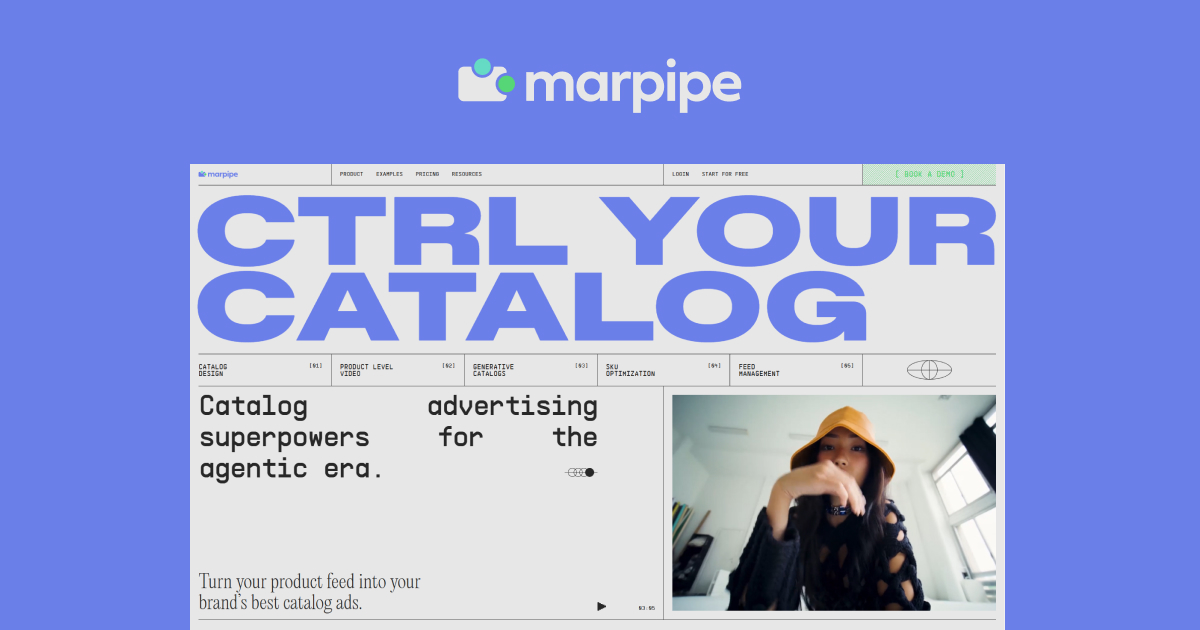
Marpipe is built to help ecommerce teams improve both the look and performance of their dynamic product ads at scale. Instead of relying on standard product images pulled directly from a feed, the platform enables teams to generate enriched ad creatives across entire catalogs.
By connecting directly to a product feed, Marpipe automatically applies branded templates, messaging, and visual elements. This allows catalog ads to move beyond basic product listings and feel more like structured marketing campaigns.
For teams managing large product catalogs, this completely changes the workflow. Instead of creating ads one by one, teams can produce and update creative variations across hundreds or thousands of products at once.
Marpipe also makes it easier to test and iterate on creative. By generating multiple variations across a catalog, teams can identify what actually drives engagement and conversions, rather than relying on a single static format.
This approach is especially valuable for ecommerce brands looking to improve performance without increasing manual creative production.
Highlight features
- Creative automation across large product catalogs
- Branded overlays including pricing, reviews, and messaging
- AI-generated backgrounds and layout variations
- Ability to convert static product images into motion or video formats
- Built-in product feed management and filtering tools
- Scalable creative testing across multiple product variations
2. Hunch: Designed for Enterprise Creative Workflows

Hunch is often used by larger ecommerce teams that need structured creative workflows across multiple channels. It focuses on automating the production and deployment of creative assets, especially in enterprise environments.
The platform supports template-based creative generation and integrates with major ad platforms, making it easier for teams to maintain consistency across campaigns. It’s often compared with other creative-first DPA platforms, especially when teams are deciding how much control they want over design and messaging. This breakdown helps clarify those differences practically.
Highlight features
- Template-driven creative production
- Workflow automation for large marketing teams
- Multi-channel campaign deployment
- Integration with major advertising platforms
- Creative versioning at scale
3. Smartly.io: Combined Creative with Campaign Management

Smartly.io brings creative production and media buying into a single platform. Instead of separating creative and campaign execution, it allows teams to manage both in one place.
This makes it a strong option for teams looking for a centralized system to run dynamic product ads, especially across multiple channels. Teams comparing creative control and automation depth often look closer at how different platforms approach catalog ads. For a clearer breakdown, see how Marpipe stacks up against Smartly.io in real campaign scenarios.
Highlight features
- End-to-end campaign management
- Cross-channel advertising support
- Automated creative production
- Performance tracking and reporting
- Built-in optimization tools
4. Confect: Focused on Branded Catalog Ads

Confect focuses on improving the visual quality of catalog ads by adding branding elements directly into product creatives. It is often used by teams that want quick improvements to the look of their catalog ads without overhauling their entire workflow.
The platform works by applying design templates to product feeds, helping ads feel more aligned with brand identity.
Confect is a popular choice for brands focused on feed-based creative overlays, but it is not the only option. If you are exploring similar tools with different capabilities, this guide covers several alternatives worth considering.
Highlight features
- Branded templates for catalog ads
- Feed-based creative customization
- Quick setup and implementation
- Visual overlays such as pricing and messaging
- Integration with ecommerce platforms
5. ROI Hunter: Built Around Feed and Performance Optimization
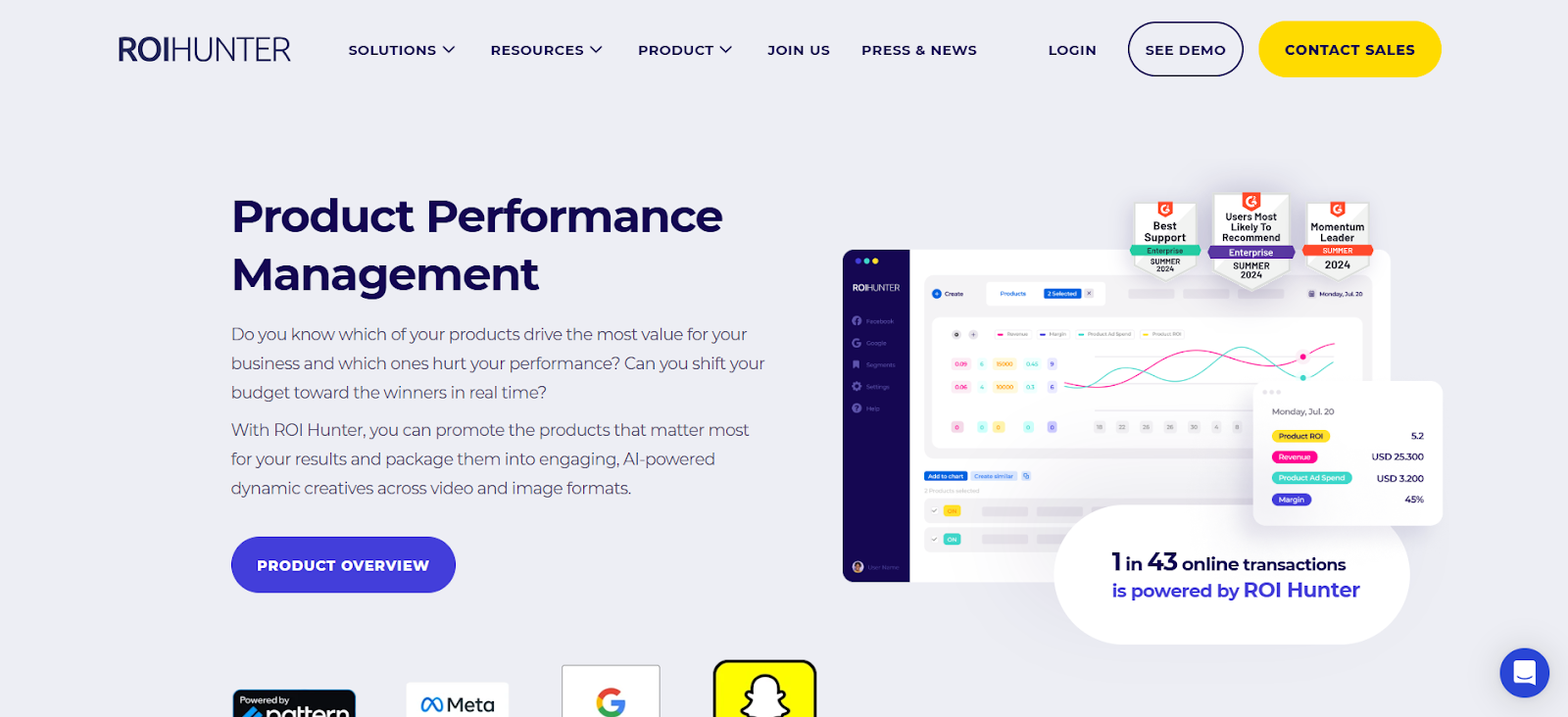
ROI Hunter focuses on the performance side of dynamic product ads. It combines feed management with campaign optimization tools, helping teams decide which products to promote and how to allocate budget.
This makes it useful for teams that prioritize efficiency and return on ad spend over creative experimentation.
Highlight features
- Product segmentation and prioritization
- Feed optimization tools
- Performance tracking and reporting
- Campaign automation features
- Cross-channel advertising support
6. Socioh: For Small to Mid-Size Ecommerce Teams
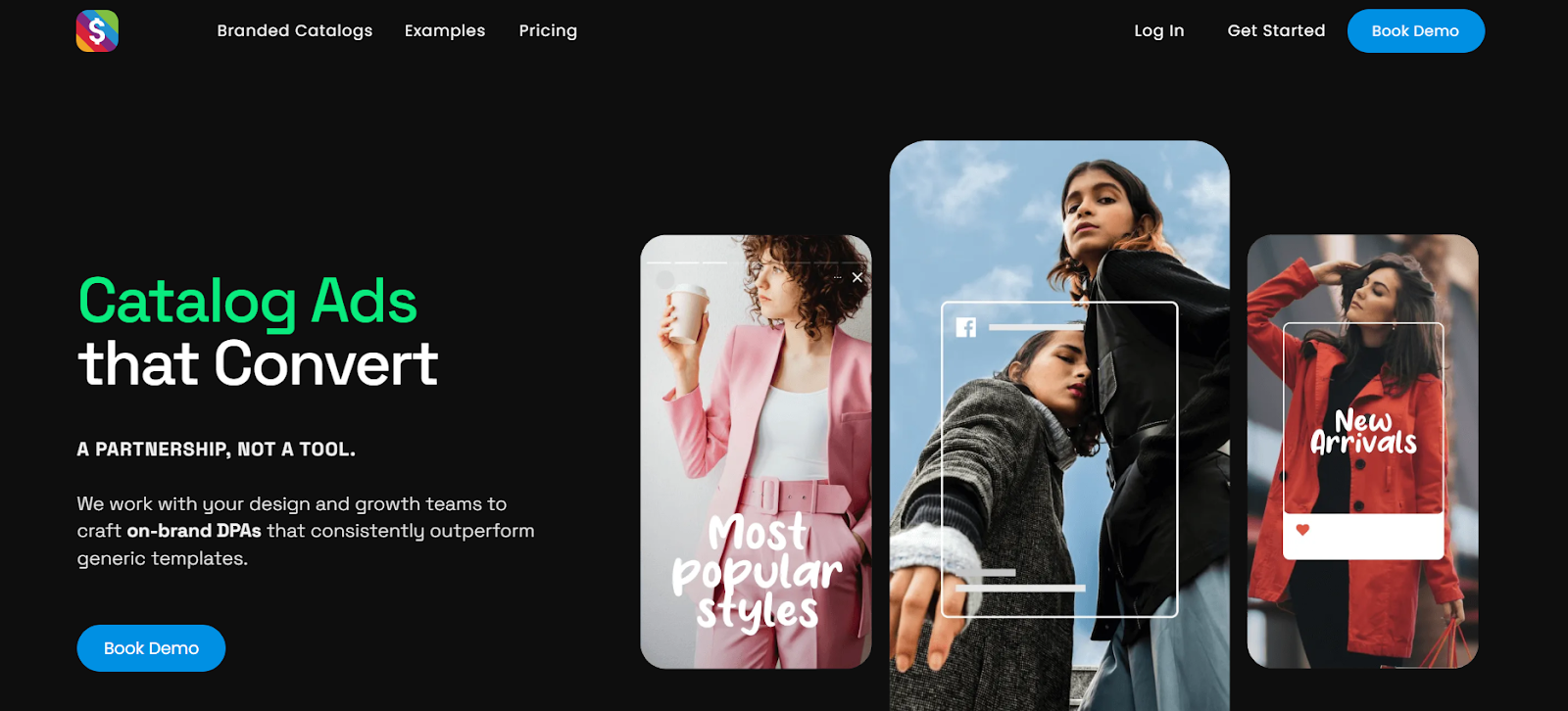
Socioh is designed for smaller ecommerce teams that want to get started with dynamic product ads without complex setup. It simplifies turning product feeds into ads using templates and automation.
The platform is often used by teams that need a practical, easy-to-manage solution without enterprise-level complexity. While Socioh focuses on feed-based ad automation, some teams want more flexibility on the creative side. If you are weighing those differences, this comparison highlights where each platform stands.
Highlight features
- Simple onboarding and setup
- Template-based creative generation
- Budget-friendly pricing structure
- Integration with popular ecommerce platforms
- Basic automation for catalog ads
7. Feedonomics: Specialized in Product Feed Management
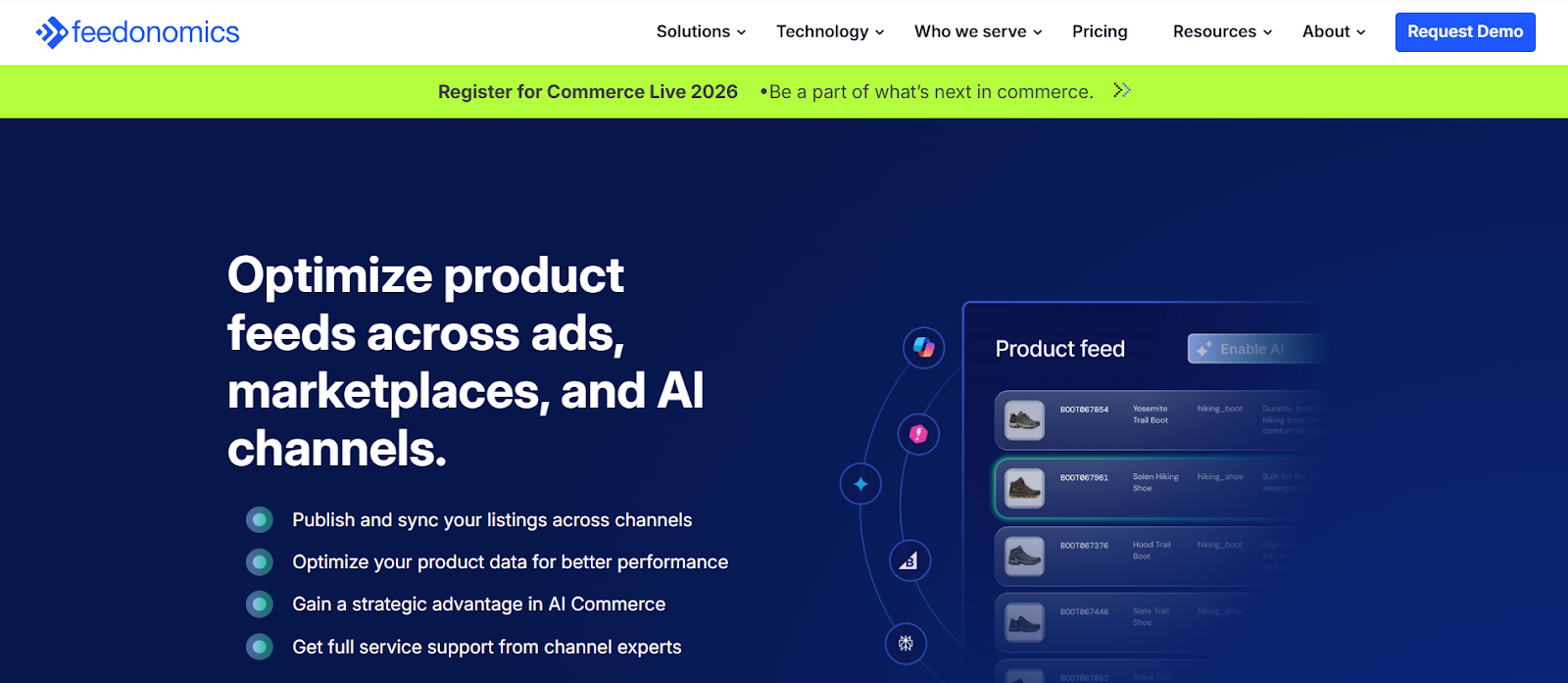
Feedonomics focuses on the foundation of dynamic product ads: the product feed itself. It helps ecommerce teams clean, structure, and optimize their product data for use across advertising channels.
While it does not handle creative production directly, it plays an important role in ensuring product data is accurate and usable.
Highlight features
- Advanced feed cleaning and transformation
- Product data optimization for multiple channels
- Integration with ecommerce platforms and ad networks
- Automated feed updates
- Scalable infrastructure for large catalogs
Comparing the Top Dynamic Product Ads Platforms
The table below breaks down the key differences so your ecommerce teams can quickly understand which platform aligns with their workflow and growth stage.
Rethinking How Your Product Ads Should Perform
Dynamic product ads are not just about filling templates anymore. As catalogs grow, what matters is how well you can scale creative, test variations, and keep ads aligned with your brand. Some platforms focus on product data, others on delivery, but the real difference today still comes from creativity.
Teams that move beyond basic catalog ads and improve how their ads look tend to see better engagement and more consistent results. If your ads still look like everyone else’s, that is usually the first place to fix.
If you are ready to move beyond standard catalog ads and explore what creative-led dynamic product ads can actually do, book a demo with us here.
Frequently Asked Questions
What are dynamic product ads?
Dynamic product ads automatically show products from your catalog to the right audience based on their behavior. Instead of creating each ad manually, the platform pulls product details like images, pricing, and descriptions directly from your feed and turns them into ads.For instance, if someone visits your store and looks at a pair of shoes but does not buy, they might later see an ad for that exact pair while scrolling Instagram or Facebook. This saves time and helps you show highly relevant products to people who are more likely to convert.
At the same time, how these ads look matters just as much as who sees them. Recent 2026 research shows that consistent branding across advertising platforms can increase total revenue by up to 23%. This is why many teams are moving beyond basic catalog ads to make their dynamic product ads visually consistent with their brand.
How is it different from a dynamic search ad?
A dynamic search ad (DSA) differs from product ads but follows a similar automation model. Instead of using keywords you manually choose, Google scans your website and automatically matches your pages to relevant searches. If you sell “running shoes” and someone searches “best lightweight running shoes,” Google may generate an ad using your product page without you creating that keyword manually.
What is the best platform for dynamic product ads?
The best platform for dynamic product ads depends on what your team is trying to improve. Some platforms focus on managing product data, others on campaign automation, and some focus on creative, like Marpipe. These tools are built to improve how ads look and perform, not just how they are delivered. If your ads already run but feel generic or underperform, a creative-first platform is usually the better fit. If your main issue is messy product data or campaign setup, then a feed or all-in-one platform may make more sense.
Do I need a separate tool for creative and product feeds?
Not always, but it depends on your setup. Some platforms combine both feed management and creative features in one place, which can simplify your workflow. Others specialize in one area. For example, feed tools focus on organizing product data, while creative tools focus on improving the look of ads. Many ecommerce teams use both, especially as they scale. A common setup is using one tool to manage clean product data and another to enhance the creative, giving you more control over performance without changing your entire system.
When do dynamic product ads make sense for ecommerce brands?
Dynamic product ads make the most sense when you have multiple products and want to scale your advertising without creating each ad manually. They are especially useful once your catalog grows beyond a small number of items, or when you want to retarget visitors with the exact products they viewed. Instead of building ads one by one, you can automate the process while still keeping ads relevant to each user. For ecommerce brands trying to grow efficiently, dynamic product ads help save time, improve targeting, and increase the chances of converting interested shoppers.