


If you’ve spent any time running paid campaigns, you already know this scenario. You’re scrolling through Instagram or TikTok, not looking for anything in particular, when a clean, simple image ad catches your eye. No animation. No sound. No hyper-personalized product recommendation creeping on your browsing history. Just a crisp static image that delivers its message in a split second. And even with everything the industry has evolved towards in the last decade—video, UGC, dynamic creative, AI—the humble static ad still has the power to stop you mid-scroll.
Static ads are having an interesting moment right now. They aren’t flashy, but they’re consistent. They aren’t automated, but they’re easy to control. And even though the advertising world keeps evolving, static ads continue to show up in winning ecommerce strategies because they do one thing exceptionally well: they get to the point. They make your value proposition clear, fast, and hard to miss. And in a feed where attention spans shrink every year, sometimes simplicity is the very thing that cuts through.
The question isn’t whether static ads still matter—they do. The better question is how to use them strategically. Understanding what static ads are, how they differ from dynamic formats, and why so many brands still rely on them will help you decide when they should play a leading role in your own marketing efforts.
So, What Are Statics Ads?

Static ads are single-frame image ads that deliver the same visual to every viewer. Nothing animates, nothing adapts based on user behavior, and nothing updates in real time. What you publish is exactly what people see.
They’re the digital equivalent of a billboard or a magazine spread. A single, consistent message. A single visual identity. And while that may sound simple, it’s that simplicity that makes static ads effective in 2026—especially as digital platforms get louder and more crowded.
You’ll find static ads across nearly every ad ecosystem: Meta, TikTok, Pinterest, Google Display Network, programmatic placements, retail media networks, and more. Despite all the innovations in ad formats, static still accounts for a major share of display inventory, according to reporting from Statista on digital ad distribution. Static formats remain a core part of how advertisers reach large audiences quickly and consistently.
Why Static Ads Still Work in 2026
Static ads endure because they excel at something audiences crave: clarity. A good static ad tells you in seconds what the brand offers and why it matters. That’s not just good creative—it’s good psychology. Even platforms like Instagram and TikTok, which traditionally favor motion-heavy formats, still reward strong static visuals with high engagement when the message lands immediately.
Static ads also behave in a way that performance marketers love: predictably. Things don’t break, feeds don’t misfire, and templates don’t glitch. They load quickly, they scale easily, and they maintain a reliable level of quality across every placement. This makes them perfect for campaigns when consistency is more important than personalization, such brand launches, holiday occasions, and full-funnel storytelling.
Hootsuite’s recent social advertising trends report points out that image ads remain one of the most commonly deployed formats by ecommerce brands because they are quick to produce and easy to optimize. That matters in modern marketing, when production timelines are tighter, teams are leaner, and platform complexity continues to rise.
And from a social behavior standpoint, Sprout Social reports that customers still respond strongly to clean product photography, especially in categories like beauty, apparel, home goods, fitness, and accessories. Sephora, for example, has over 21 million followers, and the beauty brand’s Instagram page shows a mix of clean product shots, UGC, helpful makeup tips, and stories of belonging. That’s exactly where static ads shine most.
The Real Difference Between Static and Dynamic Ads
Static advertising shows the same ad to everyone. Dynamic advertising combines a product feed, user behavior, location, purchase history, and real-time data to make themselves more relevant to each person.
A static ad is made to be clear.
A dynamic ad is made to be useful.

Who Should Use Static Ads
- New companies that are beginning their advertising journey, and want to focus on building brand awareness
- Small businesses looking to target locally
- Large brand campaigns that require consistency in messaging
Static ads are perfect for brand storytelling, consistent top-of-funnel messaging, and quick iteration. You control the photography, the headline, the layout—every pixel. Nothing shifts automatically.
Who Should Use Dynamic Ads
- Large to enterprise-level companies that have an extensive product catalog who can target different segments of their audience according to preferences
- Businesses looking to retarget people who have visited their website in the past
- Brands that have an emphasis on personalized advertising
Dynamic ads are ideal when personalization improves performance—think retargeting or showing someone the exact item they viewed yesterday. Platforms like Meta, Pinterest, and TikTok pull data from your product feed and build personalized experiences on the fly. According to Meta’s Performance 5 research, dynamic product ads often outperform static formats for catalog-heavy brands with strong feed hygiene.
But here's the most important thing to remember: you don't have to choose one or the other. Smart marketers use both. Static ads help customers remember your brand and create an emotional connection. Dynamic ads capitalize on intent by suggesting products that are right for the user. When combined, they make the funnel bigger, smarter, and more efficient.
If you want to dive deeper on when to use dynamic vs static ads, check out our guide where we discuss in great detail the differences between the two types of ads. It looks at performance differences, workflows, and real-world use cases for ecommerce companies.
How to Make Static Ads Perform Better
Static ads succeed when they feel intentional, focused, and visually clean. Audiences scroll fast. A static ad needs to deliver its meaning immediately.
Clean Imagery
One of the biggest performance drivers is photography. A strong product photo communicates trust, quality, and clarity faster than any headline. The right crop, lighting, and background can completely transform the effectiveness of an ad.
Having a Clear Message
Another driver is message simplicity. The best static ads have one idea, not five. They aren’t crowded with copy or competing visuals. They’re direct. Google Ads’ creative guidelines emphasize that clean composition and minimal text consistently produce higher engagement across display inventory—and you’ll see the same pattern across social platforms.
Always Be Testings
Testing matters too. Because static ads are easy to produce, marketers can iterate quickly. Changing a background color, CTA, or product angle can reveal valuable insights about audience preferences. Even small adjustments can significantly shift performance at scale.
Incorporate Static and Dynamic Ads into Your Strategy
And here's something that people often forget: static ad learnings can help you make dynamic ad templates. When you discover which colors, photography styles, or text treatments consistently outperform, you can add those elements into your catalog creative so your dynamic ads improve alongside your static ones.
Partner Spotlight: How Darkroom optimizes static ads
Darkroom treats static ads as a creative product first. The agency blends art direction with a suite of AI tools to accelerate concepting and production without sacrificing craft. AI is used to generate dozens of high-fidelity concept frames, automate retouching and layout variants and surface promising creative directions. The result is a modular creative system: brand-safe templates and hero assets that scale across placements while retaining editorial quality.
Core pillars of the approach:
- Human-first craft: designers set the visual standard, brand voice and final decisions.
- AI-accelerated ideation & production: fast concepting, high-quality asset creation and automated cleanup.
- Modular creative systems: templates and components that preserve brand while enabling scale.
- Channel-ready deliverables: production assets and specs prepared for any placement, output or ad format.
Pros & Cons of Static Ads
Learn about the pros and cons of static ads in this section to ensure you make an informed choice when integrating them into your marketing strategy:
Pros of Static Ads
- Affordability: Static ads are affordable as you only have to make one advertisement to target a segment of your base rather than developing ads for each individual.
- Simple to make: Because static ads don't use any interactive elements, they tend to be easy to develop. Additionally, they can be made quickly with minimum resources.
- You're in charge: As there will be only one ad, you and your creative team can take full control of it and carry out A/B tests on the different elements to see which one suits your brand's image. Whereas, with dynamic ads, there are so many versions that staying on top of them would be a painstaking process.
- They can be personalized (you read that right): It's a commonly held but incorrect belief that static ads can't be personalized, but they can. While they may not be as targeted as dynamic ads, you'll still be able to design certain elements to hit people in different locations and play on their interests.
Cons of Static Ads
- Lack of interactive elements: If an ad doesn't have many interactive features, it comes across as quite boring and may reduce the possibility of someone clicking on it. Unfortunately, this can heavily impact your click-through rate and cut into your revenue.
- High chance of ad fatigue: Because static ads don’t change, people may feel overly fatigued from seeing your messaging over and over again.
- Absence of live information: Since you can't update static ads in real time, you can’t display any live information like flash sales, or discounts on popular products.
Examples of Static Ads in the Wild
Static ads show up everywhere once you start noticing them. You’ll see them in seasonal apparel campaigns, beauty launches, electronics promos, home goods showcases, and more.
A few common examples include:
• A bold product close-up with a simple headline like “Meet Your New Everyday Sneaker.”
• A seasonal banner announcing a sale with a clean, bright background.
• A lifestyle photo paired with a succinct brand statement or value prop.
• A minimalist cosmetics shot with “Shop the New Collection” as the only CTA.
These ads work because they take advantage of design clarity. They let the product speak. They let the message breathe. And they approach advertising with the same instincts that make print ads timeless.
How Marpipe Helps Brands Scale Static Ads
Static ads may be simple, but scaling them never is. Creative teams struggle when they need dozens of variations for testing, multiple sizes across placements, or constant refreshes during seasonal spikes. Production becomes a bottleneck. Consistency slips. And connecting your static creative to your product data becomes harder the more your catalog grows.
This is where Marpipe’s feed-first creative workflow changes everything. Marpipe gives ecommerce teams a unified system where product data and creative design function together rather than as separate processes. Even when you’re building static ads, having clean, structured product data helps keep your creative aligned with your storefront.
Marpipe lets you:
• Maintain accurate, up-to-date product data
• Connect that data directly to catalog creative
• Design static and dynamic assets within the same workflow
• Produce variations quickly without reinventing the process every time
• Keep creative consistent across Meta, TikTok, Google, Pinterest, and more
Static ads become easier to produce, easier to manage, and easier to test because everything lives in one place instead of being scattered across disconnected tools, spreadsheets, and design files.
And when you’re ready to expand into catalog ads or AI-supported creative testing, that same feed-first foundation ensures your dynamic creative performs at its best. Marpipe’s work on product-feed-aligned creative testing explores how data hygiene drives better outcomes in dynamic ad ecosystems—and many marketers don’t realize that static and dynamic workflows share the same underlying data problem.
Should You Use Static Ads in Your 2026 Strategy?
Absolutely, when they’re used intentionally. Static ads aren’t outdated or overshadowed by dynamic formats. They’re a different tool for a different job. They build recognition, reinforce brand stories, support launches, and anchor creative direction. They move fast, test easily, and set the tone for all the creative that comes after.
Dynamic ads are powerful because they personalize. But static ads are powerful because they persuade.
The brands performing at the highest levels combine both: static ads for clarity and consistency, dynamic ads for relevance and conversion. When the two formats work together inside a feed-first infrastructure, your entire creative strategy becomes smarter, faster, and far more scalable.
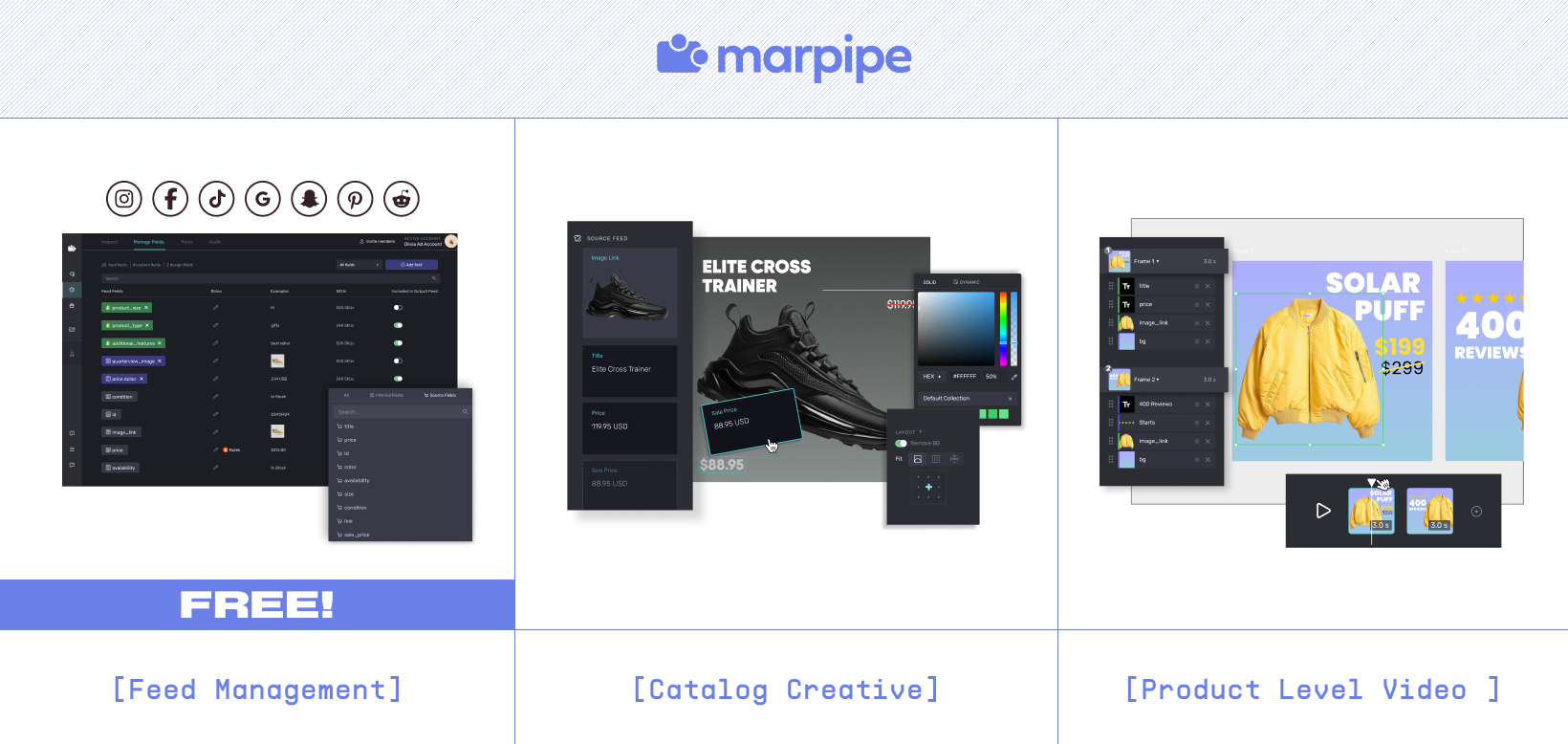
And if you want to simplify how you produce both, Marpipe gives you the system to do exactly that—feed management tools, stronger catalog creative, and a central place to build, test, and scale ads.
Frequently Asked Questions
What is an example of a static ad?
A static ad is any single-frame image that presents the same visual to every viewer, no matter who sees it or where it appears. A common example is a clean product photo paired with a short headline like “New Spring Collection Now Live” or “Meet Your New Everyday Sneaker.” You’ll see static ads all over Instagram, TikTok, Pinterest, and Google Display Network—often as simple, well-designed images that introduce a product, announce a promotion, or reinforce brand identity. Because the creative never changes, a static ad behaves almost like a digital poster: clear, consistent, and instantly recognizable.
What is the difference between static and dynamic ads?
Static ads display one fixed image to everyone, while dynamic ads automatically adjust their content based on the viewer, their browsing behavior, or your product feed. A static ad is built for clarity and control—you choose the photo, headline, and CTA, and that exact combination is shown to every user. On the other hand, a dynamic ad gets real-time data from your product catalog and changes itself so that different viewers see various products, pricing, or suggestions. Static advertisements are great for building a brand and presenting a story, whereas dynamic ads are great for retargeting and personalizing a big catalog. Most effective ecommerce advertisers employ both types of marketing. Static ads are used to raise awareness, while dynamic ads are used to get people to buy.
What are the benefits of static ads?
Static ads offer benefits that many brands still rely on in 2025: total creative control, fast production cycles, predictable performance, and simple testing. They load quickly, look clean across any device, and make it easy for teams to maintain a strong visual brand identity. Because static ads don’t rely on a product feed or automation, they’re especially helpful during product launches, seasonal campaigns, or any moment where you want a consistent message repeated across placements. They’re also budget-friendly and straightforward to optimize, which makes them a reliable part of a full-funnel advertising strategy even as newer formats emerge.
How do you make a static ad perform better?
Static ads perform best when the idea is simple and the visual is strong. The most effective ones use high-quality photography, clear hierarchy, and a single message that can be understood in a split second. Marketers often see major performance lifts by refining the product angle, adjusting the background color, improving lighting, or rewriting the headline to focus on one benefit rather than several. Testing is essential. Small creative variations—different crops, CTAs, or color palettes—can reveal what an audience responds to most. The goal is to make the ad instantly readable while keeping the design clean enough to stand out in a busy feed.
What are the three types of ads?
Most digital advertising falls into three broad creative categories: static ads, video ads, and dynamic ads. Static ads are single-image ads that don't change for each viewer. Video ads use motion and sound to tell a story or demonstrate a product. Dynamic ads automatically tailor themselves to your audience using information from your product feed or user activity. This makes them great for catalog and retargeting ads. These three categories often overlap across platforms, and make up a strong paid media strategy. They represent the core formats used by ecommerce brands to build awareness, engage audiences, and drive conversions in a full-funnel strategy.