


Rithum is one of those names that come up whenever ecommerce teams start to outgrow basic feed tools. It covers a lot of ground, feeding multiple marketplaces, syncing inventory, helping with orders, and tying all of that together into analytics and ad reporting.
But in 2026, more teams are realizing that what Rithum offers might be more than they need, or at least not focused enough, where they feel the pain. Some teams want simpler feed management, others want faster setup, and others want pricing that does not feel tied to enterprise scale.
This article walks through the most relevant Rithum alternatives today, why teams look beyond it, and what each option tends to be best at in the messy reality of ecommerce data and ads.

What Pushes Teams to Reconsider Rithum
Rithum grew by bringing together several legacy platforms, most notably the technology behind ChannelAdvisor. That legacy shows up in how comprehensive it can be. It tries to solve a lot of problems at once: feed management, marketplace listings, fulfillment, order routing, and more. While that breadth is useful for some, it can feel heavy or slow for teams who primarily need solid feed tools.
Some common reasons teams start looking for Rithum alternatives:
- They want something focused on feed quality and distribution
- The setup feels long or complex relative to the real needs
- Pricing feels oriented to large enterprises rather than mid-market
- They want more hands-on control over rule logic
These are not criticisms of Rithum so much as reflections of how different teams work. A tool built for end-to-end commerce operations is not always the best for straightforward feed management. That gap is where alternatives start to make sense.
What to Look for in Rithum Alternatives
Choosing between tools is as much about philosophy as features. Before you land on one, it helps to know where your pain points are:
- Do you want feed control without a long setup?
- Do you want an interface where you can tweak rules yourself?
- Are you trying to keep costs down until feed ops get complicated?
- Do you need deeper automation tied to ad performance?
Different alternatives solve different parts of these questions, and none is perfect for every team. The goal here is to give a sense of what each option actually feels like in practice.
Top 6 Rithum Alternatives
1. Marpipe
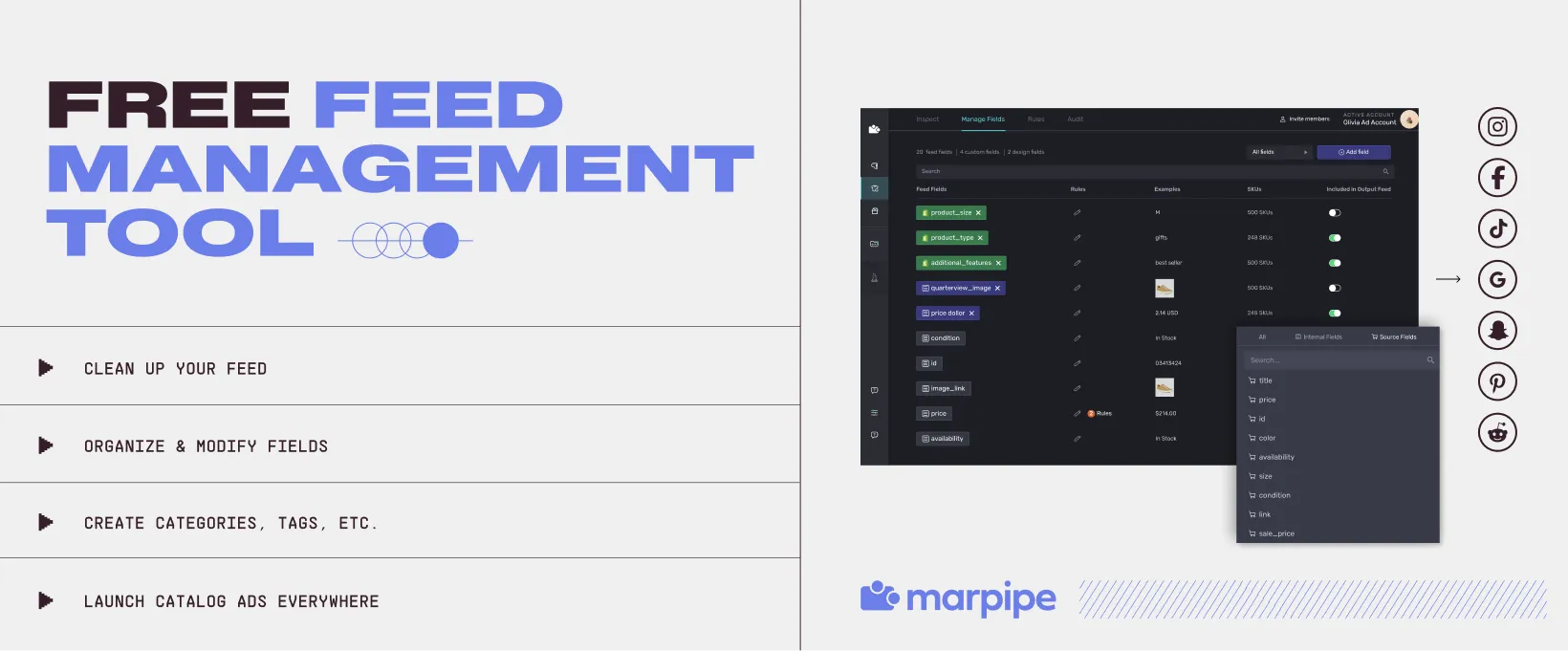
While many teams know Marpipe for catalog ad creative testing, the platform has expanded to include product feed management as part of its workflow. Instead of treating feed quality and creative performance as separate problems, Marpipe lets brands handle both inside the same environment. Product catalogs can be uploaded directly into the platform, giving teams a place to review, organize, and prepare product data before it’s used in advertising.
Some of the core capabilities include:
- Uploading and managing product feeds directly in-platform
- Cleaning and structuring product attributes to improve catalog organization
- Preparing feed data for dynamic ads and shopping campaigns
- Maintaining a consistent, ad-ready catalog without additional tools
- Access to feed management features at no additional cost
This approach makes Marpipe a practical option for brands that want fewer disconnected tools in their ecommerce stack. By keeping feed management and catalog ad creation in the same platform, teams can move more quickly from organized product data to testing and scaling ad creatives that actually drive performance.
2. DataFeedWatch
DataFeedWatch shows up on nearly every list of feed tools for a reason. It is approachable, with an interface that lets you build and edit rules yourself without waiting on support. Many teams switch to it from larger platforms because they want to iterate quickly.
DataFeedWatch feels comfortable for mid-sized brands that want flexibility. The rule builder is straightforward. You can tailor feeds to match channel requirements without jumping through too many setup hoops. It is not going to manage orders or inventory, but for feed quality and distribution, it usually gets the job done.
Where it can feel limiting is at a very large scale, or when your feeds require dozens of complex conditional rules across dozens of destinations. Then the DIY environment starts to shift into something that takes real discipline to manage well.
3. GoDataFeed
GoDataFeed is another alternative that leans toward simplicity. Some teams pick this because they want straightforward syndication without a bunch of extras they do not use.
GoDataFeed gets product data into marketplaces and ad channels reliably. The interface feels less heavy than a full commerce suite, and many teams appreciate not having to learn a big backend just to correct mapping errors. It handles updates and automated submissions, so you are not constantly exporting CSVs.
The trade-off is flexibility. If your feeds start needing a lot of custom transformations or channel-specific business logic, you might bump up against its limits sooner than with more flexible tools.
4. Productsup
Productsup sits closer to the enterprise end of the spectrum. Like Rithum, it can handle complex catalogs, multiple regions, and lots of channels all at once. But it does so with a different wheelhouse.
Productsup’s strength shows up when your data is messy or deeply varied, with hundreds of marketplaces, languages, formats, and regional needs. It lets you shape, test, and adapt feeds with precision. For brands with this level of complexity, that precision is worth the steeper learning curve.
For teams without a dedicated data operations person or team, it can feel like too many tools.
5. Channable
Channable sits between pure feed management tools and platforms that also touch campaign activation. Unlike some alternatives, Channable lets you build feeds and then also create and manage campaigns for certain channels within the same interface.
That combination clicks for teams that want to keep feeds and ads tight and reduce tool switching. It is not trying to replace Rithum’s entire commerce suite, but it does give practical control over feed logic and activation workflows in one place.
It often lands well for growing teams that see feed quality as part of ad performance, not just a backend hygiene task.
6. VersaFeed
VersaFeed is a specialist in full-service product feed management, particularly for performance advertising. Unlike bigger commerce operations platforms, its focus is on feed quality and optimization for paid media channels.
Teams that pick VersaFeed often want to boost return on ad spend from channels like Google, Meta, Microsoft, and TikTok. It pairs hands-on support and optimization workflows with feed delivery. If your primary metric is better performance in ads rather than marketplace sync or order tracking, a specialist tool like this can feel better aligned.
Focus vs Breadth: How These Tools Compare
Rithum is broad. It is built to handle connections across hundreds of marketplaces, end-to-end commerce workflows, and inventory or order orchestration. The tools listed above are narrower in scope. That is by design.
Here is the rough practical distinction many teams notice:
- Rithum feels like an all-in-one commerce operations suite
- DataFeedWatch feels like a lean, hands-on feed tool
- GoDataFeed feels like straightforward syndication
- Productsup feels like a high-precision enterprise layer
- Channable feels like feed plus activation
- VersaFeed feels like feed optimization for advertising
None of these is “wrong.” They just match different needs. And your context: team size, catalog complexity, channel mix- should drive the choice more than brand name recognition.
Picking the Right Alternative for Your Team
There is no single “best” Rithum alternative for everyone in 2026. The right choice usually starts with where feed ops cause the most friction today.
If your team is constantly redoing rules, waiting on support, or manually correcting exports, a lean, flexible tool might be the answer. If your catalog is huge and varied, deeper transformation logic matters more. If your primary goal is ad performance, a specialist feed optimizer will feel aligned.
The key question is simple: where do you lose the most time? The answer to that tells you which tool is worth exploring first.
How Marpipe Extends Feed Management
Product feed management keeps catalogs organized and synced across advertising platforms. Clean data ensures products can appear correctly in dynamic ads, shopping placements, and marketplaces. But managing the feed is only one part of the equation.
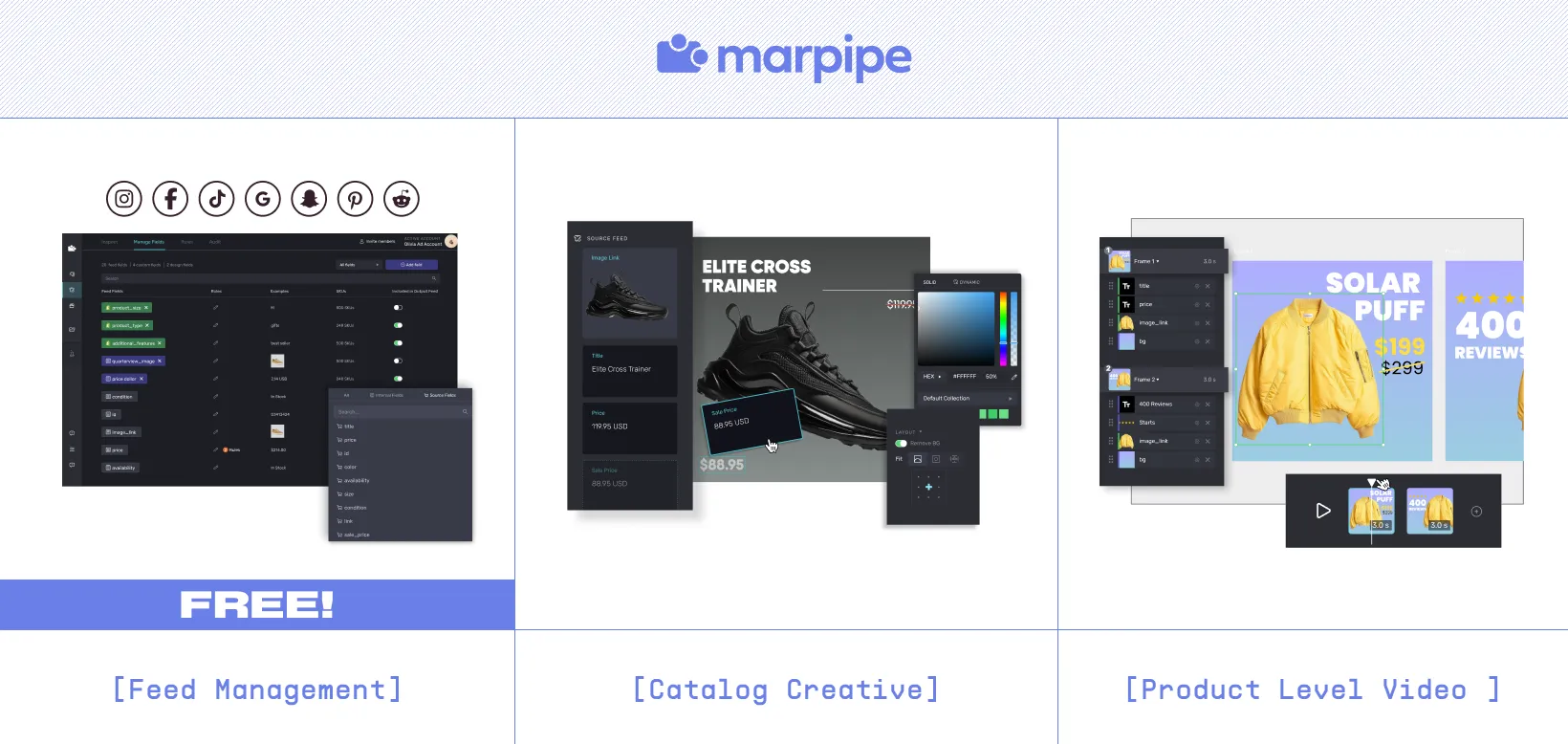
Marpipe builds on that foundation. The platform includes a built-in product feed management tool where brands can upload, clean, and manage their catalog directly inside the platform, available at no cost. Once the feed is structured, teams can use the same product data to generate and test catalog ad creative at scale. Instead of managing feeds in one system and building ads in another, Marpipe connects both layers, helping teams move faster from clean product data to high-performing advertising.
If your goal is fewer moving parts, faster iteration, and better-performing ads without added operational overhead, this kind of setup delivers the flexibility modern ad teams need. Book a demo with Marpipe today!
FAQs
What is Rithum mainly used for?
Rithum is typically used to manage product feeds, marketplace listings, and broader commerce operations across multiple channels, especially for larger or more complex catalogs.
Why do teams look for Rithum alternatives?
Most teams start looking when Rithum feels heavier than what they actually need, whether that’s long setup times, higher costs, or features they’re not really using.
Are Rithum alternatives better for feed management only?
Often, yes. Many alternatives focus specifically on feed quality, optimization, and distribution, without trying to handle orders, fulfillment, or full commerce operations.
Can Rithum alternatives handle large catalogs?
Some can. Tools like Productsup are built for large and complex catalogs, while others work better for mid-sized teams that want flexibility and speed.
How do I choose the right Rithum alternative?
Look at where feed management slows you down today. If it’s setup time, lack of control, or cost, that usually points you toward the right alternative quickly.