

If you’ve spent any time in Meta Ads Manager lately, you’ve probably noticed the same thing. Prompts to try Advantage Plus. Suggestions nudging you toward it. Sometimes it feels optional. Other times, it feels like Meta is quietly telling you to stop doing things the way you used to.
Meta Advantage Plus sits right at the center of that shift.
Some advertisers lean into it and never look back. Others test it once, get nervous, and switch it off. Most end up somewhere in the middle, running it alongside manual campaigns and trying to figure out whether it’s helping or just behaving differently.
This guide looks at Meta Advantage Plus in practical terms. What it actually is. How it works. Where it tends to shine. Where it causes frustration. And how to think about using it without either blindly trusting the automation or dismissing it too quickly.
What Is Meta Advantage Plus
Meta Advantage Plus is a set of automated campaign features inside Meta Ads Manager. When advertisers talk about it, they’re usually referring to Advantage Plus Shopping Campaigns, which are designed mainly for ecommerce brands focused on conversions.
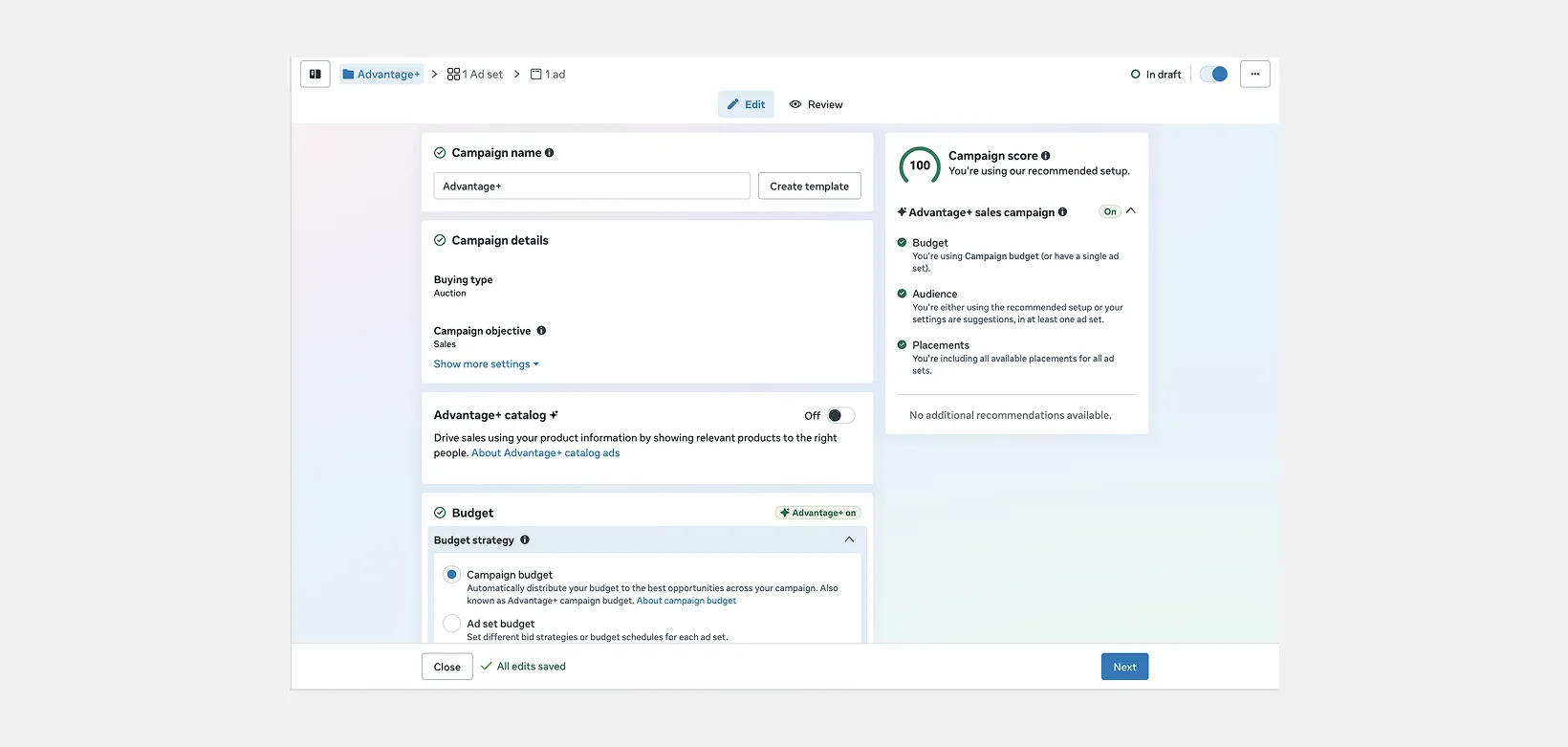
The setup is intentionally minimal. You choose your objective, add products or creatives, set a budget, and let Meta handle most of the decisions that used to live inside ad sets.
That simplicity is the draw. It’s also where a lot of hesitation starts.
How Meta Advantage Plus Actually Works
Advantage Plus relies heavily on Meta’s machine learning to decide who sees your ads, where they appear, and which creative combinations get delivery.
Instead of breaking campaigns into multiple ad sets, audiences, or placement groups, everything runs through a single structure. Meta reallocates spend continuously based on performance signals.
You still choose your goal. You still upload creatives. But how those pieces come together is largely handled by the system.
On paper, this should allow Meta to find performance opportunities faster than a manually built account. In practice, results depend a lot on how much data the account already has. Accounts with history behave very differently from brand-new ones.

Why Meta Is Pushing Advantage Plus So Hard
This push didn’t come out of nowhere. Privacy changes reduced the reliability of granular targeting. Signal loss made manual optimization harder to sustain. Meta’s response has been to move optimization deeper inside the platform.
Advantage Plus is part of that strategy. By centralizing decisions, Meta can use signals advertisers can’t see or directly control. It also simplifies setup. Fewer levers mean fewer ways to misconfigure a campaign.
For Meta, this makes the system more efficient. For advertisers, it introduces a trade-off that not everyone is comfortable with right away.
The Upside of Meta Advantage Plus
When Advantage Plus works, it usually works for a few clear reasons. Setup is fast. You don’t spend hours building audiences or debating placement splits. Campaigns can launch quickly, which matters when timing is tight.
Scaling can feel smoother. With enough conversion data, Meta tends to push the budget toward what’s working without constant manual adjustment. You’re not watching bids all day.
Account structure also gets simpler. Instead of dozens of overlapping ad sets competing with each other, everything runs through a cleaner setup. That alone can reduce wasted spend.
Advantage Plus also pairs well with creative volume. When you upload multiple variations, Meta can test combinations fluidly and adjust delivery in real time. For teams managing large catalogs or limited bandwidth, that flexibility matters.
Where Meta Advantage Plus Falls Short
The problems usually show up around control and clarity. One common frustration is visibility. Because so many variables are optimized at once, it’s harder to pinpoint why performance changes. You don’t always know which audiences or placements are driving results.
Creative learning can suffer too. Advantage Plus will tell you what performed best, but it doesn’t always help you understand why. For teams that rely on structured testing insights, this can slow learning.
Budget control is another sticking point. You set the total spend, but Meta decides how it’s distributed. For advertisers used to tight guardrails, that takes some adjustment.
Smaller or newer accounts tend to struggle the most. Without enough historical data, the system can behave unpredictably, especially early on.
When Meta Advantage Plus Tends to Work Best
Advantage Plus usually performs better once an account already has momentum. Accounts with steady conversion volume give Meta more signals to work with. Learning happens faster, and optimization decisions tend to stabilize.
Broad appeal products also benefit. When the potential audience is wide, automation has more room to find efficient pockets of demand. Creative depth matters more than many teams expect. Multiple strong creatives give the system options. One or two assets limit what it can do, no matter how good the targeting is.
Teams that are comfortable stepping back often get more out of Advantage Plus than teams that try to micromanage every outcome.
When It’s Probably Not the Right Fit
Advantage Plus isn’t a great fit for every situation. New accounts without conversion history often see uneven results. The system simply doesn’t have enough data to make confident decisions.
Highly niche products can struggle too. When the audience is very specific, broad automation may miss important context.
It can also be frustrating for teams focused on learning. If your main goal is understanding exactly what works, Advantage Plus can feel like a black box. In those cases, more manual structures still have a place.
Advantage Plus vs Manual Campaigns
This usually isn’t a clean either-or decision. Manual campaigns give you control. You can isolate audiences, test creative deliberately, and learn from cleaner experiments. Advantage Plus leans toward efficiency. It reduces setup work and lets Meta optimize holistically.
Most advertisers end up using both, even if they don’t plan to. Manual campaigns for learning. Advantage Plus for scaling once the winners are clearer. That balance often feels more sustainable than committing fully to one approach.
Creative Becomes the Real Lever
One thing Advantage Plus makes very obvious is how much creativity matters now. When targeting and placements are automated, the creative does most of the work. Messaging, visuals, and formats drive performance more than audience tricks.
Brands that struggle with Advantage Plus often blame the system. In reality, the creative inputs may be the limiting factor. The better your creative variations, the better Advantage Plus performs. Automation doesn’t fix weak inputs. It amplifies whatever you give it.
Common Mistakes Advertisers Make
A lot of frustration comes from expectations rather than the system itself. Launching with too little creativity is common. So is making frequent changes before the system has time to learn.
Over-restricting inputs can also hurt results. Advantage Plus needs flexibility. Too many constraints limit optimization.
And expecting instant performance is unrealistic. Like any automated system, it improves over time with consistent data.
How to Decide If Meta Advantage Plus Is Right for You
The best way to evaluate Advantage Plus is to be honest about your priorities.
If faster launches and easier scaling matter most, it’s worth testing.
If tight control and clear learning matter more, manual campaigns may still be a better fit.
You don’t have to choose one forever. Running controlled tests side by side often gives the clearest answer.
Making Meta Advantage Plus Work Better With Marpipe
Meta Advantage Plus is not a shortcut to results. It is a different operating model, one that rewards clean inputs, strong creative, and a willingness to let automation handle distribution. When those pieces are in place, it can simplify workflows and support scale. When they are not, the system can feel opaque or limiting.
What matters most is alignment. Advantage Plus works best when teams understand where to apply judgment and where to step back. Automation should reduce manual effort, not creative thinking. That balance becomes much easier to maintain when creative and product data are structured to support ongoing testing.
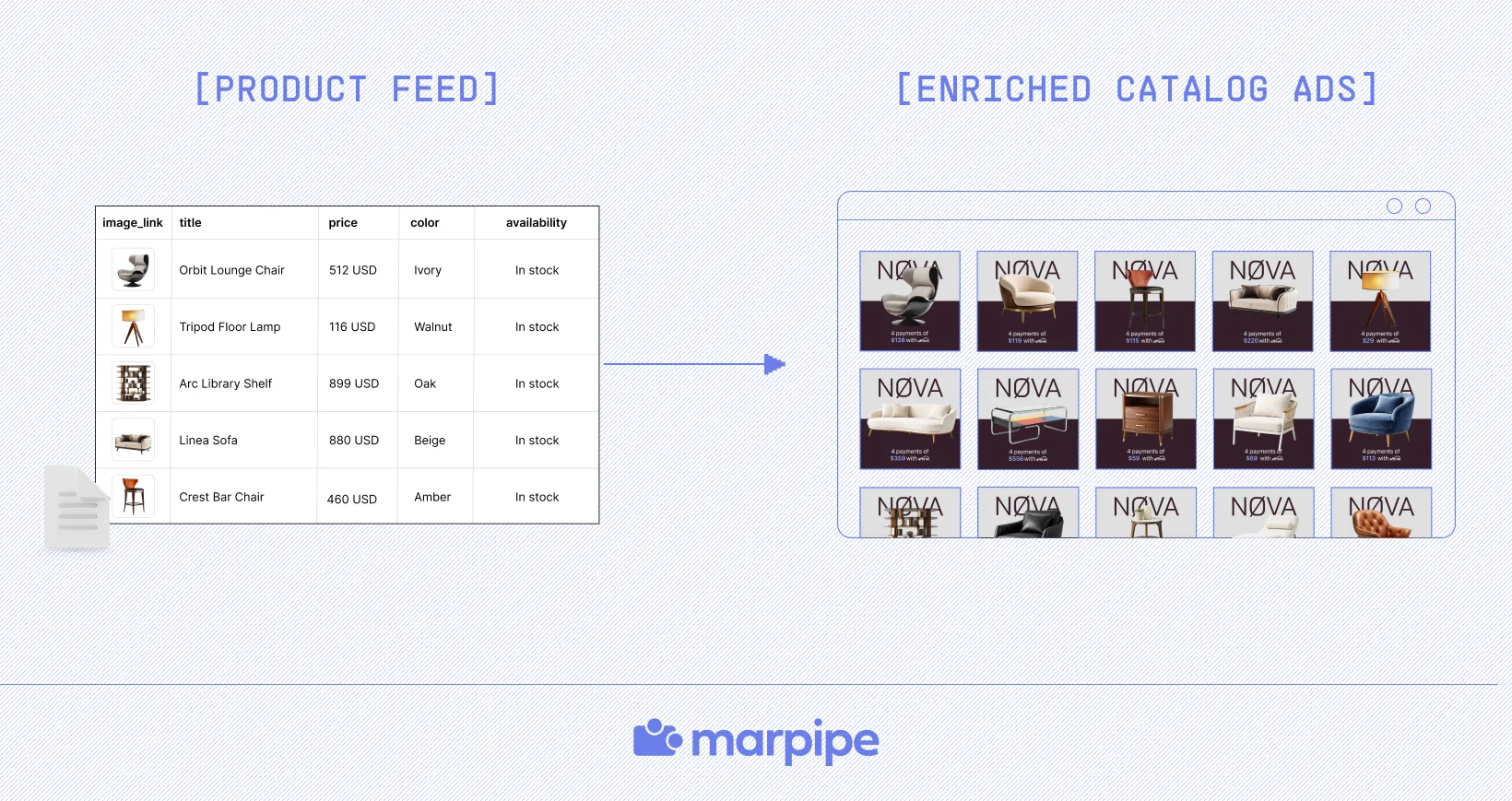
By using a creative and feed-driven ad platform like Marpipe, teams can give Meta’s automation a steady stream of fresh, structured ad variations, making it easier to let the system work without sacrificing control.
FAQs
What is Meta Advantage Plus used for?
Meta Advantage Plus is used to run automated campaigns where Meta handles audience selection, placements, and optimization, mainly for conversion-focused ecommerce ads.
Is Meta Advantage Plus better than manual campaigns?
Not always. It can work well for scaling, but manual campaigns are still better when you want tight control or clear testing insights.
Who benefits most from Meta Advantage Plus?
Accounts with steady conversion data, broad audiences, and strong creative usually see the best results.
Why does Meta push Advantage Plus so much?
Meta is moving toward more automation as targeting gets harder. Advantage Plus lets Meta optimize using signals advertisers can’t manage directly.
When should you avoid Meta Advantage Plus?
If your account is new, very niche, or focused on learning rather than scaling, manual campaigns are often a better starting point.