


Most ecommerce teams already have a product catalog. The issue is whether that catalog was built to do more than store products.
That’s the real reason more teams are rethinking how to make a product catalog today. Most were designed to store SKUs, sync inventory, and move product data between systems. That made sense when the catalog’s job was mostly operational. It needed to be accurate, complete, and easy to export. That’s no longer enough.
Today, the product catalog influences how products are merchandised, how they appear in paid media, how they adapt across channels, and how much creative context they carry before a shopper ever clicks. The issue is usually not that the catalog is missing products. It is that the catalog was never designed to do the creative and merchandising work modern performance channels now expect from it.
What Is a Product Catalog?
A product catalog is the structured product database that stores and organizes everything a business needs to sell its products across digital channels.
At the simplest level, it holds the core information tied to each SKU: product names, descriptions, pricing, images, variants, inventory status, categories, and other product attributes. This is the data layer that keeps products organized and makes them usable across ecommerce systems.
But for most ecommerce teams, a digital product catalog does more than store inventory. According to IRP, The average ecommerce conversion rate still sits around 1.65%, which is a useful reminder that most product traffic does not convert by default. That puts more pressure on the catalog to do more than store product data. How products are grouped, described, and merchandised now plays a much bigger role in how effectively that traffic converts. It controls how products are grouped, how they are described, how they are merchandised, and how they appear across paid and owned channels. That includes ecommerce storefronts, marketplaces, paid social, Shopping feeds, email, and anywhere product data is being turned into a sellable experience.
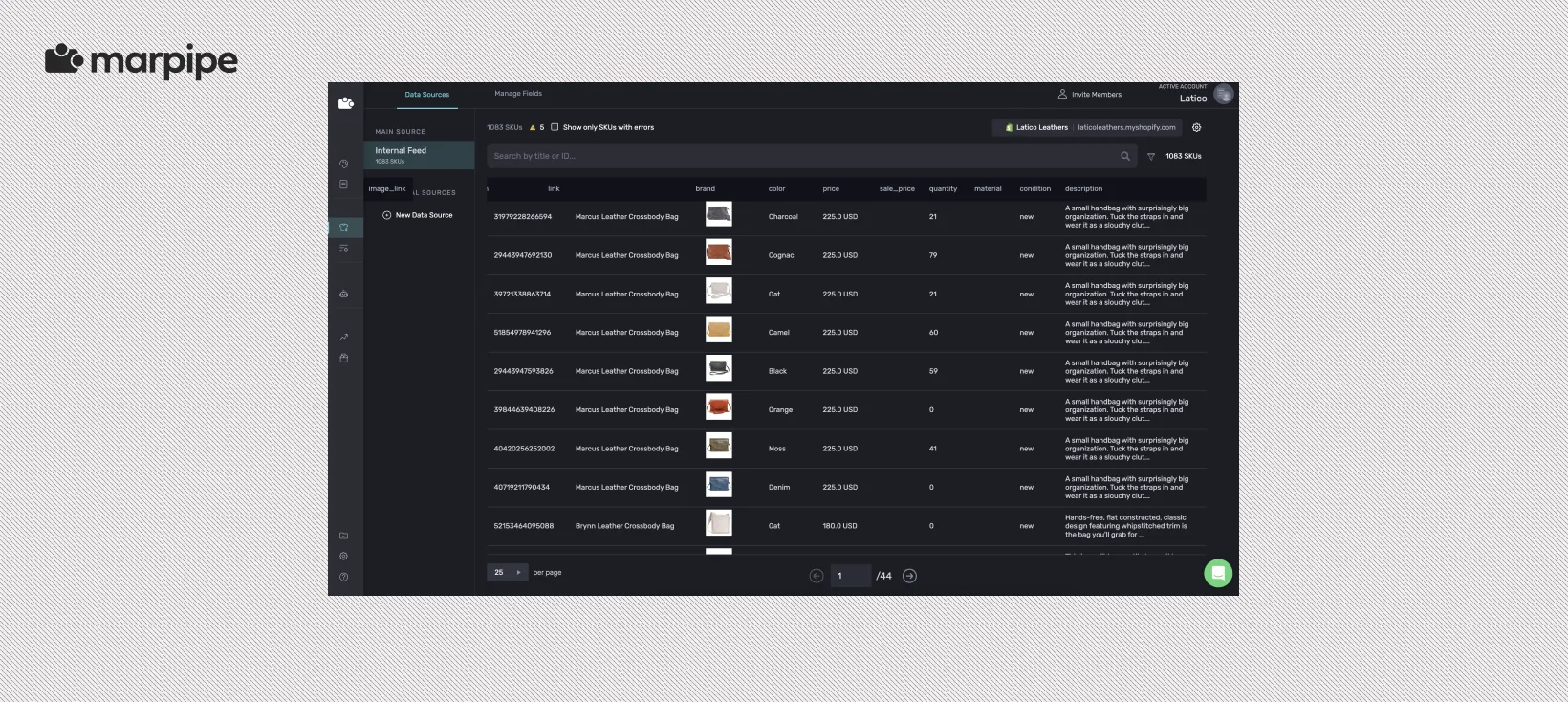
What AI Changes in Product Catalog Design
With the help of AI, the catalog becomes a system that can be restructured, enriched, and merchandised more dynamically based on where products are being shown and what they need to do there.
That changes what the catalog can support. AI can help clean and restructure weak product data, improve product grouping, enrich missing attributes, generate stronger product copy, and create more useful creative inputs from the same catalog that used to function only as backend inventory. That matters because stronger product data directly affects performance once products leave storage and enter the market. Shopify reports that AI-powered product recommendations can more than double conversion rates, while broader ecommerce benchmarks show AI-driven personalization can lift conversions by up to 23%.
It also makes the catalog much more flexible once products leave storage and enter paid media. Products can be framed differently by channel, grouped differently by performance, and merchandised with much more variation than a static catalog usually allows.
How to Redesign Your Product Catalog with AI
Step 1: Audit what the catalog is actually built to do
Start by looking at what the catalog currently does well and where it starts falling short. Most catalogs are already functional in the operational sense. The bigger question is whether the catalog is doing anything useful once those products enter paid media. Product data may be complete enough to publish, but still too weak to support stronger merchandising, better creative variation, or channel-specific product presentation.
Step 2: Clean and restructure the product data
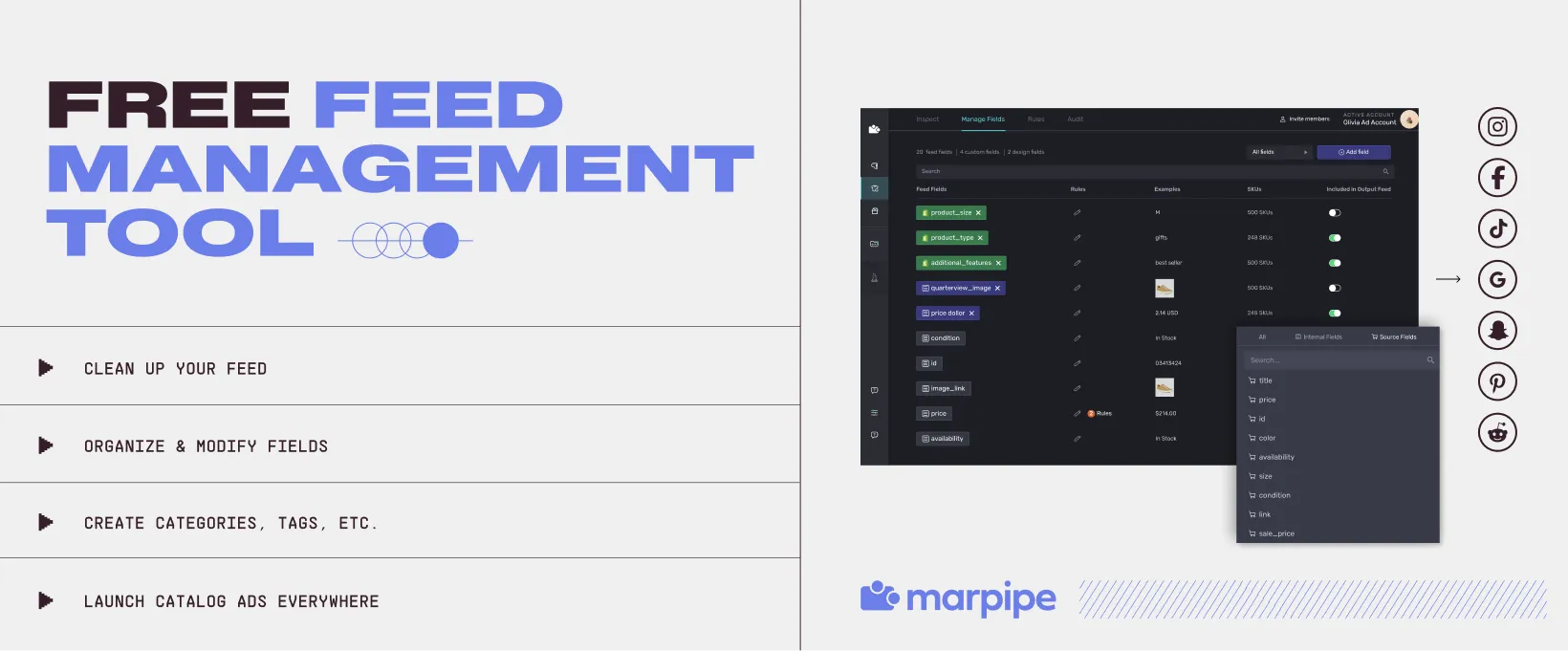
Before AI can improve the catalog, the structure underneath it has to be usable. That usually means cleaning product titles, standardizing attributes, improving taxonomy, removing duplicate logic, and making sure the catalog is structured consistently enough for AI to generate useful outputs from it.
This is one of the more practical places to use Marpipe’s Feed Management tool. Before anything gets turned into creative, Marpipe helps clean and restructure the feed so product data is more usable, more consistent, and easier to adapt across channels.
Step 3: Turn product data into creative inputs with Generative AI
Once the feed is structured properly, our Generative AI can start turning product data into usable creative inputs instead of static catalog fields.
That can include generating alternate product messaging, rewriting weak product copy, creating promotional overlays, building image variants, generating new visual treatments, and producing product-level video from the same catalog inputs.
Step 4: Redesign how products are merchandised by channel
Once AI can generate stronger creative inputs, the next step is changing how products are actually presented by channel. The same product does not need to look the same everywhere. What works in Meta may not work in TikTok. What works in Google Shopping may need different framing than what works in email or on-site merchandising.
This is where the catalog becomes much more flexible. Inside Marpipe, product-level creative can be adapted by channel using different layouts, messaging, treatments, and creative logic without rebuilding the catalog each time. The product stays the same. The merchandising layer becomes much more adaptive.

Step 5: Optimize the catalog like a creative system
Once the catalog is structured, enriched, and connected to generative creative, it evolves from a static infrastructure and into a system that can be tested and improved. Products can now be grouped differently, framed differently, merchandised differently, and tested more intentionally based on what actually improves performance.
Pro Tips to Get More Out of AI When Redesigning Product Catalogs
Build creative rules around margin, not just category
Most teams group products by type. Fewer groups by profitability. AI becomes much more useful when it can generate different treatments for high-margin, low-margin, and discount-sensitive products instead of treating every SKU the same. That is also where stronger AI for product feed optimization usually starts, by deciding which products deserve different creative treatment before spend is applied evenly across the catalog.
Use return rate as a creative signal
Products with high return rates often need different merchandising before they need more spend. AI can help reframe sizing, expectation-setting, and product context to reduce bad clicks before they happen.
Build creative variation around inventory risk
AI can help change how products are merchandised based on inventory pressure. Overstocked SKUs, low-stock winners, and aging inventory often benefit from different framing long before pricing changes are needed. This is one of the more practical ways to make the catalog more responsive, especially when paired with the kind of structure that shows why better product feeds improve AI ad creative testing in the first place.
Use AI to identify products that should not be merchandised the same way
Some SKUs need stronger social proof. Some need cleaner utility messaging. Some need visual simplification. AI is useful for identifying which products need different selling logic, not just different assets. That is where AI tools for product feed automation become more useful than simple asset generation, because they help change how the product is framed before they change how the product looks.
Train variation around product velocity
Fast-moving products and slow-moving products usually should not inherit the same creative treatment. AI becomes more useful when it helps separate momentum products from stagnant ones and merchandises them differently.
Use paid media behavior to reshape the catalog itself
One of the most underused AI inputs is ad performance data. Click-through rate, conversion rate, bounce behavior, and drop-off patterns can all help reshape how products are grouped and merchandised inside the catalog, not just how they are advertised.
The Next Version of the Product Catalog Is Already Taking Shape
The next version of the product catalogs will behave more like a live system that adapts how products are grouped, framed, and merchandised based on what actually improves performance.
That is where AI is pushing the catalog next. Not toward more automation for its own sake, but toward a model where the catalog can respond faster to creative fatigue, product velocity, inventory pressure, and changing buyer behavior without forcing teams to rebuild the system every time.
The teams that move first here will have a much easier time turning product data into usable creative across every paid channel it touches. If that is the direction your team is moving, book a demo with us and see what a more adaptive catalog workflow looks like in practice.
Frequently Asked Questions
How does AI change product catalog strategy beyond basic automation?
AI becomes much more useful when it is used to improve how products are merchandised, not just how quickly product data gets cleaned or exported. The biggest shift is that AI can start influencing how products are grouped, framed, prioritized, and adapted by channel based on what actually improves performance, not just what keeps the catalog organized.
What product catalog data matters most before using AI?
The most important inputs are usually the ones that shape merchandising decisions, not just operational ones. Product titles, categories, attributes, image quality, margin signals, inventory status, and performance data all become much more useful once AI starts generating creative or reshaping how products are presented.
How should AI product catalog workflows change by channel?
The strongest AI workflows usually treat the catalog as one product system with multiple merchandising outputs. Meta may need stronger social proof and visual framing, Google Shopping may need cleaner product clarity, TikTok may need faster creative context, and email may need stronger promotional sequencing. The product stays the same, but the merchandising logic should change by channel.
What is the biggest mistake teams make when applying AI to product catalogs?
Most teams use AI to generate more assets before fixing what the catalog is actually teaching the system. If product logic is weak, AI usually scales weak decisions faster. The biggest mistake is using AI to accelerate output before improving the structure underneath it.
What should teams measure after redesigning a product catalog with AI?
The most useful signals usually go beyond asset production. Teams should look at changes in click quality, conversion rate, creative fatigue, product-level efficiency, merchandising lift, and how much faster products can be adapted across channels without rebuilding the workflow. Those are usually the first signs the catalog is doing more than storing product data and is starting to influence performance directly, which is also where it becomes much easier to see why when the product layer is strong enough to support the creative on top of it.