

Your product feed is not just a data file. It powers shopping ads. It fuels dynamic product ads. It feeds marketplaces. It determines how your products appear across Google, Meta, Amazon, TikTok, and retail media networks. And this year, enrichment is no longer optional.
Platforms reward complete, structured, attribute-rich product feeds. The more context you provide, the better your products match search queries and user intent. But the more you optimize your product feed for performance, the easier it is to drift away from brand voice. Overstuffed titles. Robotic keyword additions. Disjointed descriptions that read like they were written for an algorithm.
Enriching a product feed should improve discoverability without turning your brand into a spreadsheet. This guide explains how to enrich product feeds properly while protecting brand consistency.
What is Product Feed Enrichment
Product feed enrichment is the process of improving and expanding the data inside your catalog to increase visibility, relevance, and performance.
It typically involves: adding missing attributes, improving product titles, expanding descriptions, refining category mapping, enhancing image metadata, aligning pricing and inventory signals, etc.
Enrichment is about clarity. Platforms like Google Shopping and Meta Catalog Ads use feed attributes to match products to queries and behaviors. The more structured and accurate your feed, the better the match. But keep in mind: structured doesn’t mean generic.
Why Product Feed Quality Matters More in 2026
Advertising platforms rely heavily on structured data.
For example:
- Google Shopping matches queries to feed titles and attributes
- Meta uses catalog fields to personalize dynamic product ads
- Amazon relies on product data for ranking and discoverability
- Retail media networks require strict attribute compliance
If your product feed is incomplete, products lose impressions. If it is inconsistent, ads become less relevant. If it is keyword-stuffed, brand perception weakens.
Improving feed quality improves both eligibility and efficiency. But it must be done carefully.
Start With Structured Data, Not Marketing Copy
The first mistake brands make when enriching product feeds is rewriting everything in promotional language.
- A product feed is structured data.
- Begin by ensuring:
- All required attributes are present
- Optional but high-impact attributes are filled
- Categories align with platform taxonomies
- GTIN, SKU, and brand fields are accurate
- Size, color, material, and technical specs are consistent
Completeness improves discoverability before copy ever does. Platforms reward structured accuracy.
Improve Product Titles Without Breaking Voice
Product titles are one of the most important feed fields. They influence: search relevance, ad matching, click-through rate, etc. But they are also where brands lose consistency.
Enrichment often means adding qualifiers such as:
- Material
- Size
- Color
- Gender
- Model
- Primary use case
Instead of:
“Classic Jacket”
You might shift to: “Men’s Waterproof Hiking Jacket, Black, Medium”
That is better for discoverability. The key is balance. Do not turn titles into keyword blocks. Keep brand tone intact. Maintain readability. Add structured qualifiers logically, not mechanically.
If the title sounds awkward in a store, it likely needs refinement.

Expand Descriptions With Purpose
Product descriptions inside a feed often differ from website copy. They should clarify use cases, include important specifications, support search matching, and always remain readable
Avoid generic marketing filler. Focus on functional clarity.
If a product has technical specifications, include them in a structured way. Platforms parse data fields differently from human readers. Being precise improves matching.
That said, avoid robotic formatting. Descriptions should still sound like your brand. Consistency in tone builds trust, even inside feeds.
Use Custom Labels Strategically
Many ecommerce teams overlook custom labels in their product feed.
Custom labels allow segmentation based on:
- Margin tiers
- Seasonality
- Best sellers
- Clearance
- New arrivals
- High return rate products
These labels do not change how customers see your brand. They change how you manage campaigns. Enrichment is not only customer-facing.
Internal segmentation improves bidding efficiency and return on ad spend. Custom labels allow you to enrich performance logic without altering visible copy.

Align Image Strategy With Feed Enrichment
Images are part of feed quality. High-resolution product images improve ad performance. But consistency matters.
Maintain consistent backgrounds, brand-aligned lighting, uniform cropping, and accurate color representation.
When enriching a product feed, review image naming conventions and URL stability. Broken image links reduce eligibility. Inconsistent visuals weaken brand perception. Feed enrichment should reinforce visual identity, not dilute it.
Maintain Brand Voice Across Platforms
Your product feed may serve multiple channels: Google Shopping, Meta Dynamic Ads, Amazon listings, Pinterest catalogs, and Retail media networks. Each platform has slightly different requirements. The temptation is to customize copy heavily for each. But that can create brand fragmentation.
Instead, define brand voice guidelines at the feed level, apply structured enrichment consistently, and use rules to adjust platform-specific formatting without changing core messaging.
For example, if a platform requires shorter titles, truncate intelligently. Do not rewrite from scratch. Brand consistency is all about recognition.
Avoid Keyword Stuffing
Enrichment does not mean inserting every possible search term.
Search algorithms evaluate relevance contextually. Overloading titles or descriptions with repetitive keywords can reduce readability and lower click-through rates.
Add keywords naturally. If your product is a stainless steel insulated water bottle, use that phrasing. But do not repeat “water bottle” five times in different permutations. Clarity always beats density.
Keep Feeds Updated in Real Time
Enrichment also means accuracy; pricing changes, inventory shifts, product discontinuations, and variant updates. Outdated feed data leads to disapproval and poor user experience.
Platforms penalize inconsistencies between landing pages and feed data. Automation helps here. Whether you use scheduled uploads or API-based feeds, ensure updates reflect real-time inventory as closely as possible. Brand consistency includes operational consistency.
Use Performance Data to Refine Enrichment
Once your product feed is enriched, monitor performance signals.
Look at:
- Click-through rate by title structure
- Conversion rate by product category
- Return on ad spend by custom label
- Search term matching
If certain phrasing improves CTR without harming brand voice, scale it. If certain formats reduce conversion, adjust.
Enrichment evolves. It is not a one-time cleanup project.
Where Creative Fits Into Product Feed Strategy
Enriching a product feed improves discoverability and eligibility. But conversion often depends on presentation.
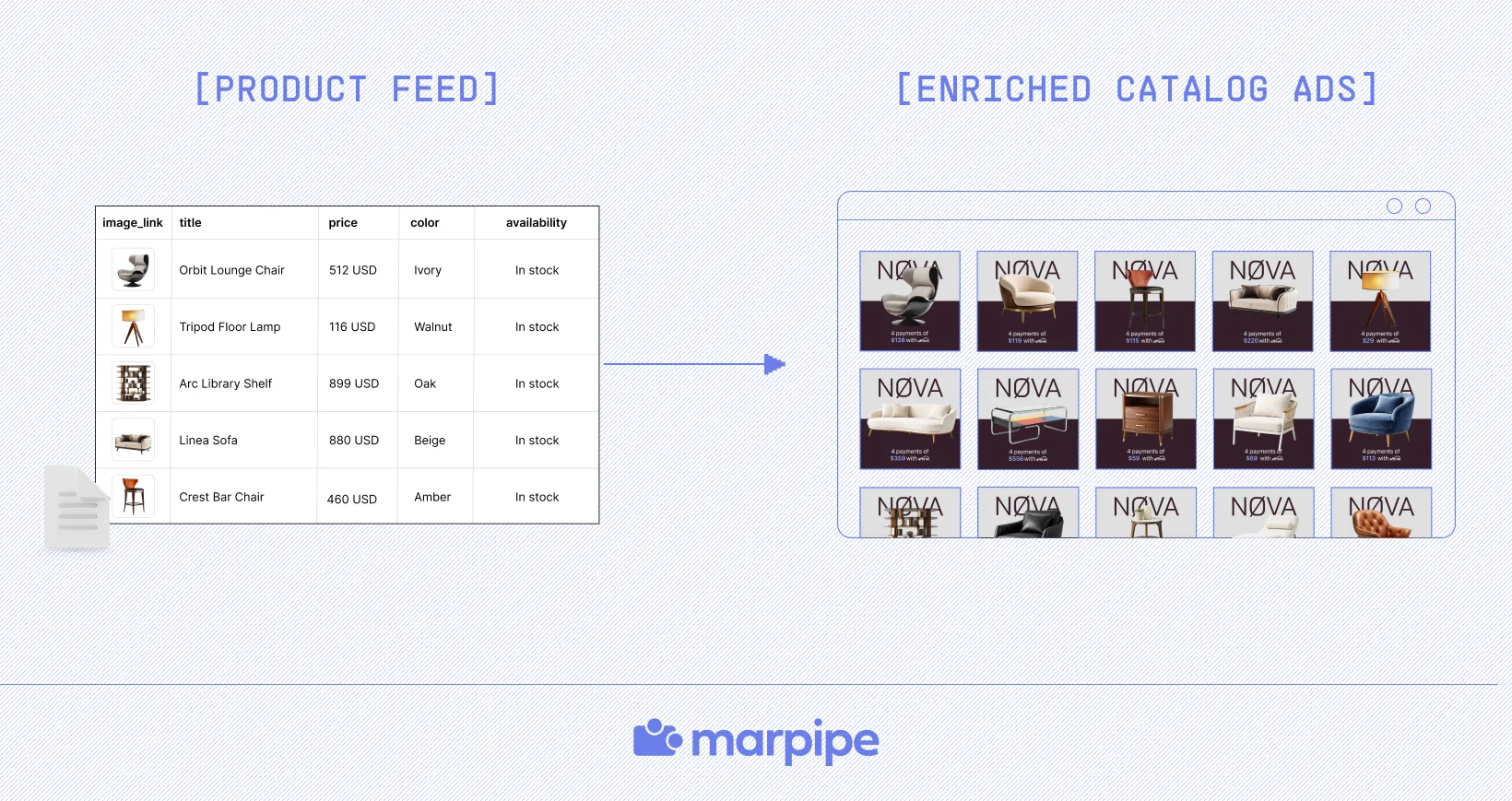
Dynamic product ads, shopping ads, and retail media placements all rely on feed data as a foundation. Once enriched, the next step is testing how products are presented visually and structurally.
That is where feed data and creative variation intersect.
Connecting Product Feeds and Creative Testing With Marpipe
A product feed is the engine behind your ecommerce advertising. Enriching a product feed improves visibility, matching, and efficiency. But it must be done thoughtfully: structured attributes first, clear titles second, balanced descriptions third, and strategic segmentation throughout.
If your enriched product feed is already structured and clean, the next performance lever is creative variation.
Marpipe connects directly to your product feed and turns structured data into scalable, testable ad creatives. Instead of manually building variations, you generate controlled experiments that reveal what resonates.
If you want to see how enriched product feeds can power structured creative testing, book a demo today!.
FAQs
What is product feed enrichment?
Product feed enrichment is the process of improving and expanding product data, such as titles, attributes, and descriptions, to increase discoverability and ad performance across platforms.
How can I enrich a product feed without hurting brand voice?
Focus on structured clarity first. Add relevant attributes and qualifiers naturally, keep titles readable, and follow brand tone guidelines across all feed fields.
Does product feed quality affect dynamic ads performance?
Yes. Platforms use feed data to match products to queries and user behavior. Cleaner, more complete feeds typically improve relevance, click-through rate, and overall ROI.