


Most ecommerce teams encounter Flexify early because it solves a clear problem: getting product catalogs from your store into social platforms quickly and with minimal setup. It feels simple, it works fast, and it often removes the need for manual CSV exports or complicated integrations when launching shoppable feeds.
But simplicity sometimes comes with limits. As catalogs grow, as channels demand more structured data, or as teams want feed logic tied closer to campaigns or performance, people start asking whether there is something that fits their workflow better.
This article walks through the top Flexify alternatives for 2026, not just on paper, but based on how teams actually end up using them in the real world. Some tools lean into simplicity, like Flexify, others bring more control, and some link feeds more tightly to advertising workflows.

Why Teams Start Looking Beyond Flexify
Flexify is straightforward and works well for what it was built for: syncing product data into social catalogs and basic feed destinations. The onboarding is easy, and for many brands, that is exactly what they need.
Over time, though, different challenges tend to surface:
- Feed needs become more complex than “just get it into Meta.”
- There’s a desire for deeper rule logic or transformations
- Teams want stronger error monitoring and validation
- Cost starts to feel disproportionate as channel count grows
- Integration with ad workflows feels clunky rather than seamless
None of these necessarily means Flexify is a bad tool. It just means the way the team works has changed, and now they want a tool that reflects how they build, test, and optimize feeds in a more dynamic environment.
That is where alternatives start to look more appealing.
What Ends Up Mattering Most in Practice
Before diving into specific options, it helps to know what your real pain points are.
Most teams evaluating Flexify alternatives are trying to answer one or more of these questions:
- Do we want more control over how feed rules are built and maintained?
- Do we need better compliance and monitoring across many channels?
- Are we trying to tie feed logic closer to ad activation and optimization?
- Do we want a system that scales with catalogs that get bigger and more complex?
Different tools solve these needs in different ways. No one platform is an obvious “winner” for everyone. The question is: which trade-offs matter most to your workflow?
Top Flexify Alternatives
1. Marpipe
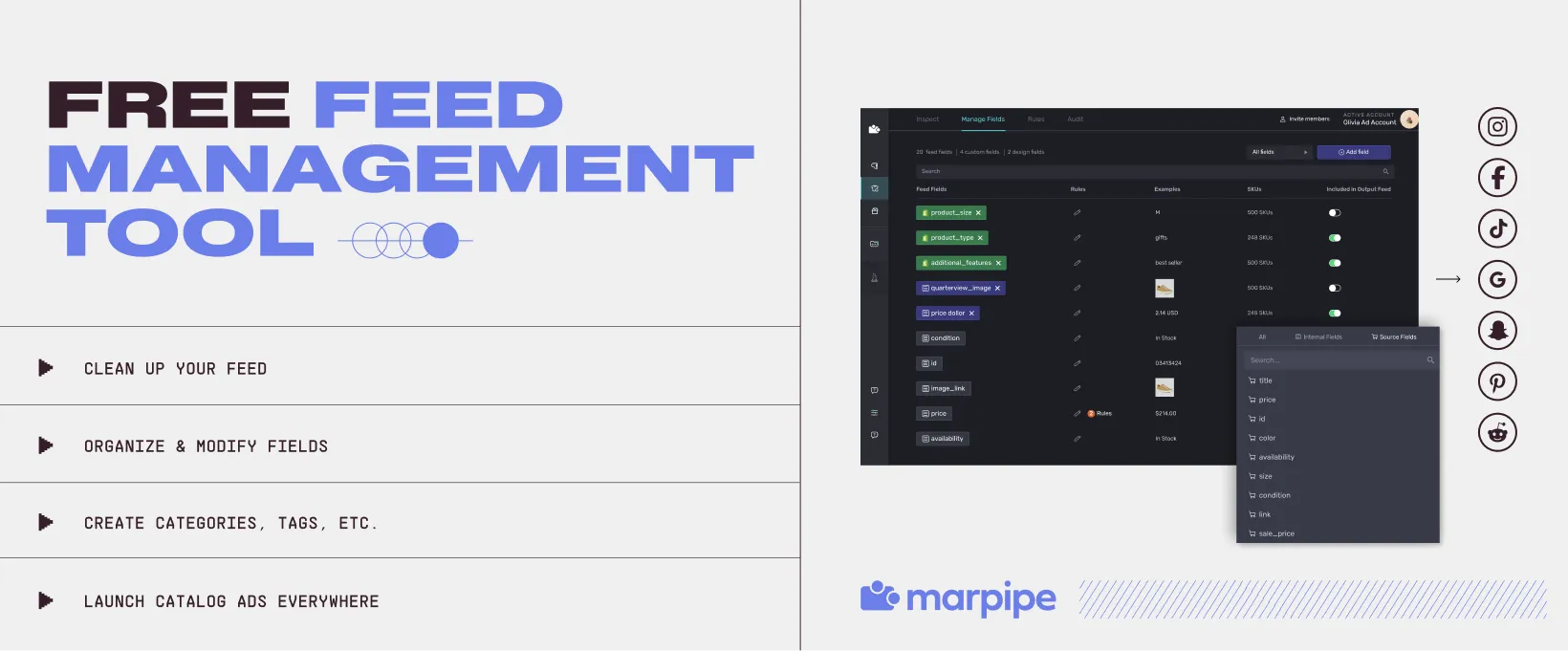
If you’ve heard of Marpipe, you probably recognize its ability to test and scale catalog ad creatives, but the platform also offers tools for managing the product data behind those ads. Instead of relying entirely on external feed management software, brands can bring their product feeds directly into Marpipe and prepare them for advertising workflows in the same place where creative testing happens.
Key capabilities include:
- Importing product feeds directly into the platform for centralized catalog access
- Cleaning and refining product data so listings stay accurate and usable
- Enhancing product attributes to support better structured advertising data
- Keeping catalogs organized for dynamic ads and shopping campaigns
- Feed management provided as a built-in feature, rather than a separate paid add-on
Because feed preparation and creative experimentation live in the same platform, teams can move seamlessly from catalog organization to ad production. For brands running catalog-driven campaigns, Marpipe provides a practical way to manage feed quality while also unlocking the creative testing needed to improve advertising performance. And if you want to talk about pricing, Marpipes Data Feed Management features is 100% free!
2. Feedonomics
If Flexify is about simplicity, Feedonomics is about stability.
Feedonomics focuses not just on getting product feeds into channels, but on keeping them clean, compliant, and updated automatically. It handles transformations, detailed attribute logic, and error detection without you needing to babysit feeds day-to-day.
Teams that move to Feedonomics typically want:
- Higher reliability as catalogs grow
- Fed health monitoring without guessing
- Managed support to resolve issues quickly
It is not as lean as Flexify and takes a little more setup, but for teams where feed errors start costing visibility and conversions, that extra legwork often pays off.
3. DataFeedWatch
DataFeedWatch is another common alternative, especially for teams that want strong control without complexity scaling too quickly.
DataFeedWatch feels familiar to many marketers because it positions itself around feed rule editing and transformation in an approachable way. You can tweak mapping, modify attributes, and see results fast without waiting on a support queue or wrestling with too many screens.
Teams tend to choose DataFeedWatch when they want:
- Direct control over attribute rules
- A broad set of supported channels beyond social feeds
- A balance between flexibility and ease of use
It is not as opinionated as some enterprise tools, but it gives you enough leverage to iterate quickly as your needs evolve beyond Flexify’s core use case.
4. GoDataFeed
GoDataFeed is another tool that sits closer to the simpler end of the spectrum but is broader than Flexify in terms of destination support.
It does feed generation and syndication without too much overhead. For teams that don’t want a deeply technical rule engine but still need to manage multiple destinations reliably, GoDataFeed often feels like a breath of fresh air.
Most teams end up here when they want:
- Rapid onboarding with minimal setup
- A platform that handles standard errors and conversions without custom logic
- A clean interface that doesn’t overwhelm
GoDataFeed won’t replace something like Feedonomics in a very complex environment, but it does a solid job when your needs are moderate, and clarity matters more than depth.
5. Channable
Channable takes a slightly different approach by blending feed management and ad campaign activation.
Instead of just preparing feeds, Channable lets teams build them and then tie them into campaign structures for certain channels. This can simplify workflows where feed quality and campaign logic need to be tightly aligned.
What teams appreciate about Channable is that it:
- Bridges the gap between backend logic and activation
- Reduces context switching between tools
- Makes it easier to reflect business rules in both feeds and campaign logic
If your team feels like feed changes and campaign outcomes are too far apart, Channable often shortens that gap.
6. Productsup
For teams operating at enterprise scale, Productsup is worth a look.
Productsup can handle very large catalogs with complex regional or channel requirements. It provides powerful transformation capabilities and supports deep logic without external workarounds.
Most teams that choose Productsup do so because they:
- Need precision across multiple regions or data formats
- Require automation that can adapt to varied channel specs
- Want granular control over a large volume of SKUs
It takes more internal expertise to manage, but for the right situation, its precision and flexibility outweigh the learning curve.
7. VersaFeed
Some specialists focus on just one part of the feed problem, optimization for paid media, error correction, or channel-specific enhancements.
Tools like VersaFeed (and a handful of other smaller players) appeal to teams that want deep help with performance advertising and zero fuss with marketplace complexity.
These options tend to be chosen when:
- Feed quality is directly tied to performance campaigns
- You want more hands-on support and optimization suggestions
- You value simplicity over breadth
They are not full commerce suites, but they handle a narrow slice very well.
How These Options Stack Up Against Flexify
At a high level, here’s how teams tend to describe the differences:
- Flexify: Simple, fast, great for social catalogs
- Feedonomics: Deep, automated, stable at scale
- DataFeedWatch: Flexible control, adaptable rule logic
- GoDataFeed: Straightforward syndication without complexity
- Channable: Feed plus campaign activation logic
- Productsup: Enterprise-level precision and automation
- Specialists (like VersaFeed): Performance-centric feed support
No tool is “the best” universally. They are just better fits for different needs.
How to Pick the Right Flexify Alternative in 2026
Start with where you feel the most friction today.
Is it setup time? Do feeds break often? Do you want tighter ad integration? Do you need deeper transformations for multiple regions?
If setup speed is the biggest bottleneck, platforms like GoDataFeed or DataFeedWatch can feel like an upgrade from Flexify without a ton of overhead.
If getting out-of-date or malformed feeds is your biggest issue, Feedonomics or Productsup gives you stronger governance.
If your team feels ad campaign logic needs to live closer to feed logic, Channable often shortens that gap.
The right choice usually becomes obvious when you spotlight the part of the feed process that feels least “done.”
Marpipe Goes Beyond Feed Management
Managing a product feed is only the first step. Clean data ensures products can appear correctly across shopping ads, dynamic catalogs, and marketplaces, but it does not automatically improve how those products perform in ads.
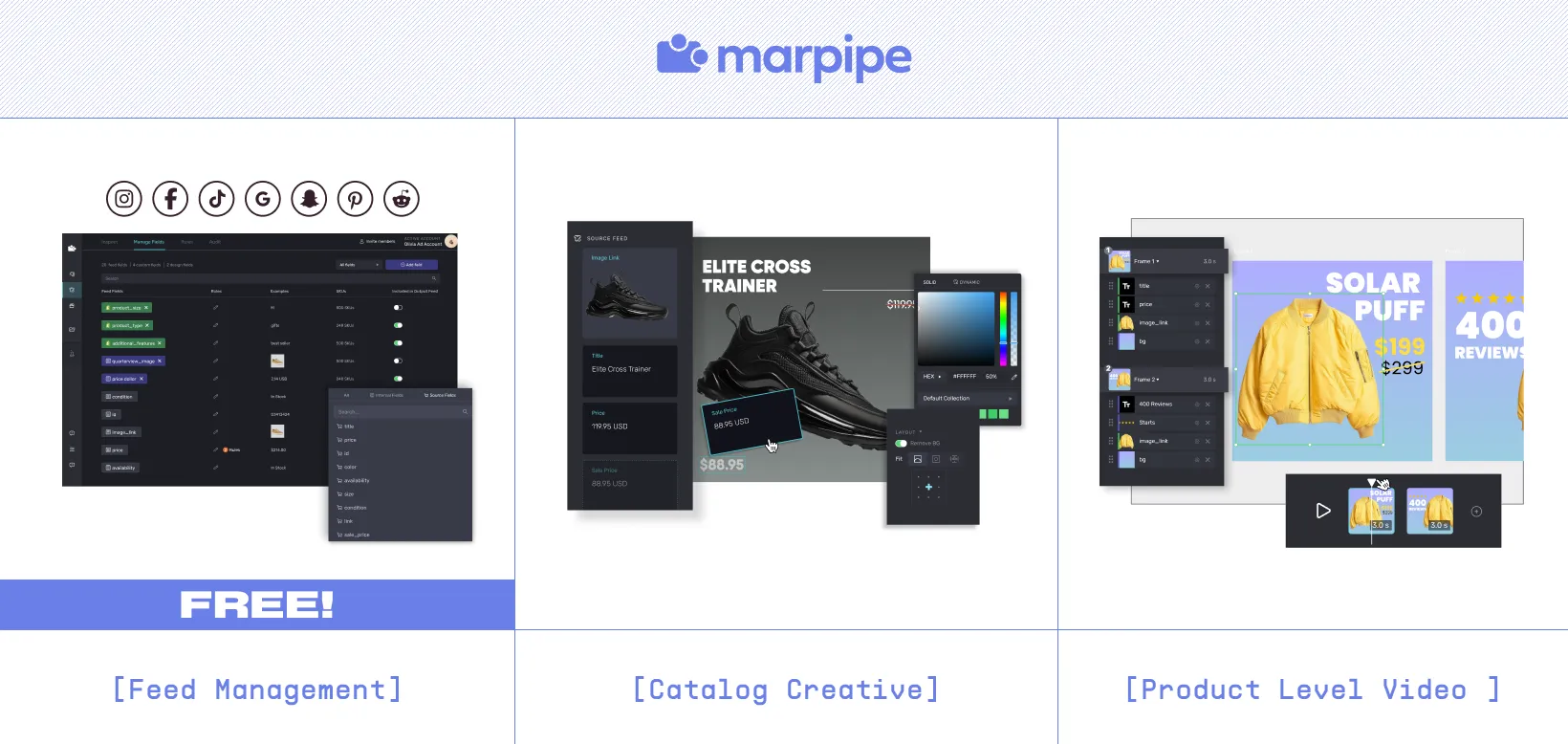
Marpipe builds on that foundation. The platform includes a built-in product feed management tool where teams can upload, clean, and manage their catalog directly inside Marpipe, available at no cost. Once the feed is structured, the same product data can power catalog ad creative and structured testing inside the platform. Instead of managing feeds in one tool and ads in another, Marpipe connects both layers so teams can move faster from organized product data to better advertising performance.
If your catalog has outgrown basic syncs and your performance goals require closer alignment between data and creative, the right pairing can bridge that gap without overcomplicating your stack. Book a Marpipe demo now!
FAQs
What is Flexify mainly used for?
Flexify is mainly used to sync product catalogs from ecommerce platforms into social channels like Meta, Instagram, TikTok, and Pinterest quickly and with minimal setup.
Why do teams look for Flexify alternatives?
Teams usually look for alternatives when feed needs go beyond basic social syncs and require more control, deeper rule logic, or better monitoring across multiple channels.
Are Flexify alternatives harder to set up?
Some are, some aren’t. Tools like GoDataFeed or DataFeedWatch can still be fairly quick to launch, while enterprise platforms like Feedonomics or Productsup take more planning but offer more depth.
Can Flexify alternatives handle larger catalogs?
Yes. Many alternatives are built specifically for larger or more complex catalogs, especially when feeds need advanced transformations or multi-region support.
How do I know if it’s time to move on from Flexify?
If feed errors are becoming harder to manage, channels are increasing, or you want feeds tied more closely to ad performance, it’s usually a sign to explore alternatives.