


Feedonomics is often the first serious product feed management platform that ecommerce teams hear about. And for good reason. It’s powerful, widely adopted, and built for scale.
But Feedonomics is not the right fit for every team.
In 2026, product feed management looks very different depending on catalog size, channel mix, and how hands-on a team wants to be. Some teams want tight governance and support. Others want flexibility and speed. Others just want feeds to stop breaking.
This article looks at the top Feedonomics alternatives for 2026. Not from a feature checklist perspective, but from a practical one. What these tools are actually good at, where they start to feel limiting, and which kinds of teams they tend to work best for.
When Feedonomics Stops Being the Right Fit
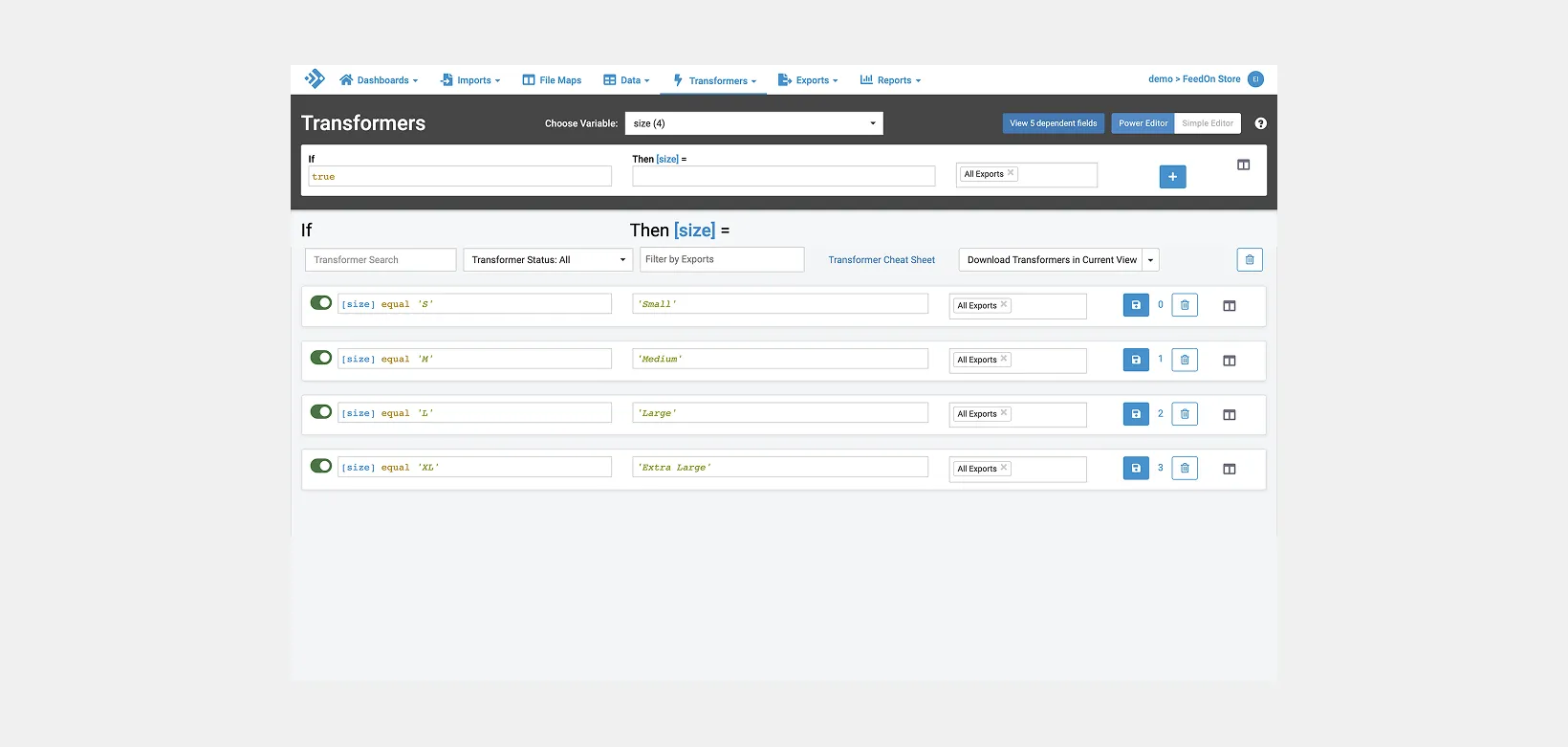
Most teams do not start out searching for a Feedonomics alternative. They usually start by trying to make Feedonomics work.
Over time, patterns show up. Setup can feel heavy, especially if your catalog or channel mix is not truly enterprise-level. Pricing can feel high relative to how much of the platform you are actively using. And some teams realize they want more direct control over feed logic, rather than relying on managed services.
That does not mean Feedonomics is a bad tool. In many cases, it is doing exactly what it was designed to do. The issue is alignment. When ecommerce operations evolve, teams sometimes outgrow the model they originally chose.
That is usually the moment alternatives enter the conversation.
What Actually Matters When Comparing Feed Management Tools
Before looking at specific Feedonomics alternatives, it helps to be honest about what your team needs today, not what you might need in the future.
Most teams comparing alternatives are optimizing for a few common things:
- Faster setup and quicker iteration
- More hands-on control over feed rules
- Strong support for advertising channels like Google and Meta
- Pricing that feels proportional to catalog size and complexity
No platform wins on all four. Each alternative makes trade-offs, which is why comparing them only on features often leads to the wrong decision.
Top Feedonomics Alternatives
1. Marpipe
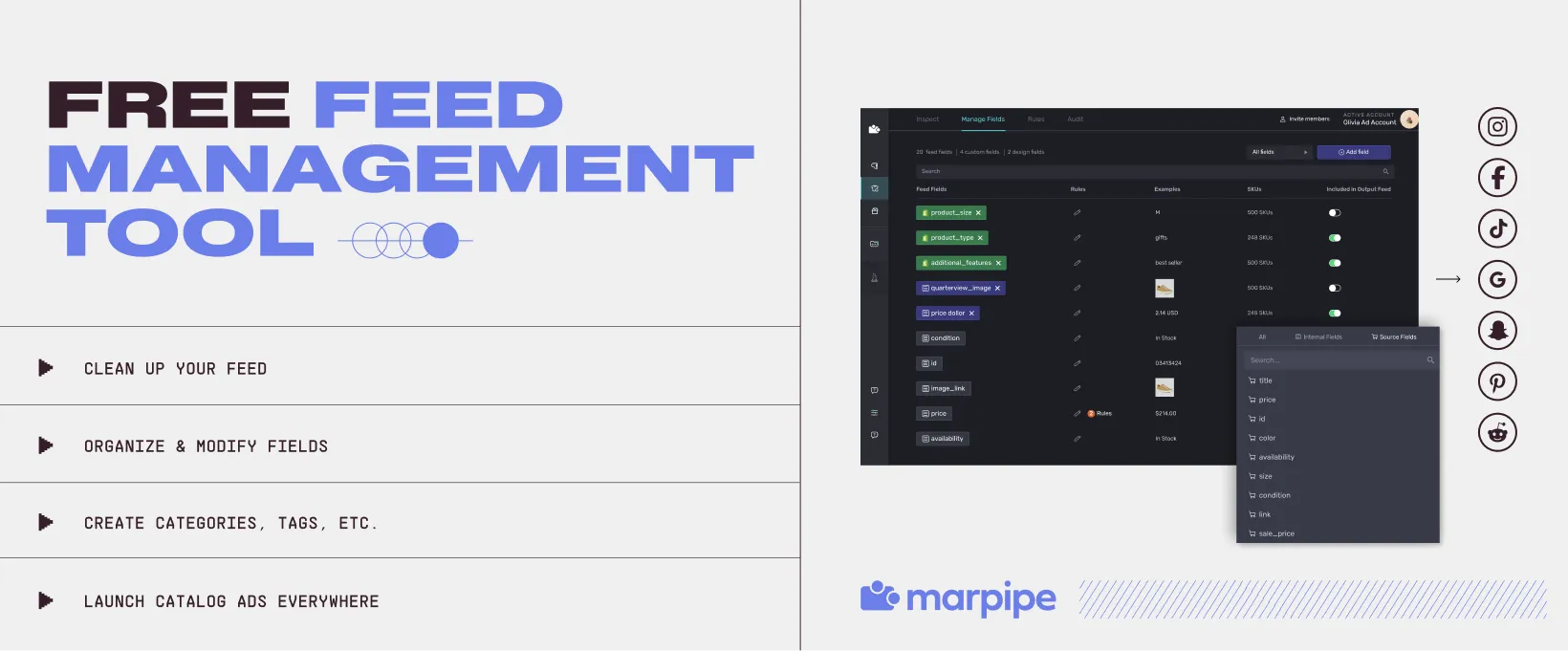
Marpipe is widely known for catalog ad creative testing, but the platform now also includes a built-in product feed management tool. Brands can upload their product feed directly into Marpipe, organize and enrich product data, and ensure their catalog is clean and ready for use across advertising platforms.
Key capabilities include:
- Direct feed uploads so brands can manage product catalogs inside Marpipe without relying on a separate feed tool
- Attribute organization and enrichment to structure product data for advertising platforms
- Improved product titles and metadata to help listings and ads perform better across channels
- Consistent catalog structure that keeps feeds clean, usable, and easier to maintain
- Feed management included at no extra cost, rather than priced as a separate feature
Because feed management lives inside the same platform as creative testing and catalog ad automation, teams can move seamlessly from clean product data to high-performing ad creative. For brands that want a simpler stack and tighter alignment between feeds and advertising performance, Marpipe brings those layers together in one place.
2. DataFeedWatch
DataFeedWatch is usually the first alternative teams evaluate when moving away from Feedonomics.
It is popular with ecommerce managers who want to work directly with their feeds. You create rules yourself. You adjust them quickly. You see changes reflected without waiting for external support.
That level of control is the main appeal. Teams that understand their product data and like to experiment tend to feel comfortable here. It fits well with fast-moving marketing teams that want to test new structures, titles, or attributes without friction.
The trade-off is ownership. With DataFeedWatch, your team is responsible for feed logic. If something breaks, it is usually on you to diagnose and fix it. For many mid-sized brands, that is an acceptable trade, and sometimes even a preferred one.
3. GoDataFeed
GoDataFeed appeals to teams that want something simpler and more predictable.
It handles feed syndication cleanly and supports a wide range of channels. The interface is straightforward, and setup is generally faster than more enterprise-focused platforms.
Where GoDataFeed works well is in stable environments. If your catalog structure is clear, your channel requirements are consistent, and you do not need heavy customization, it can do the job without much overhead.
Where it can fall short is flexibility. As feeds become more complex, with conditional logic, regional requirements, or deep transformations, teams may start to feel constrained. Still, for brands that value reliability over experimentation, it is often a solid option.
4. Productsup
Productsup sits closer to Feedonomics on the enterprise end of the spectrum.
It is built for organizations managing large catalogs across multiple regions, languages, and systems. The transformation engine is powerful, and the platform is capable of handling very complex data workflows.
That power comes with complexity. Productsup typically assumes you have dedicated resources managing feeds. Without that, it can feel like more tool than team.
For large organizations with mature data operations, Productsup can be a strong Feedonomics alternative. For leaner teams, it may introduce more complexity than it removes.
5. Channable
Channable takes a slightly different approach.
In addition to managing product feeds, it allows teams to create and manage campaigns for certain channels directly from the platform. That combination makes it attractive for smaller or more integrated teams that want feeds and activation closely connected.
Channable is not trying to compete head-on with Feedonomics at the enterprise level. Instead, it focuses on speed, accessibility, and tighter alignment between product data and ads.
For teams that are already close to campaign execution and want fewer tools in the stack, Channable often feels intuitive and quick.
How These Alternatives Compare to Feedonomics
Feedonomics remains strongest when governance, compliance, and managed support are the top priorities. It reduces operational risk for large, complex ecommerce environments.
Most alternatives trade some of that governance for flexibility, speed, or cost efficiency. That is not a downgrade. It is a different philosophy.
Broadly speaking:
- Feedonomics emphasizes stability and support
- DataFeedWatch emphasizes control and speed
- GoDataFeed emphasizes simplicity
- Productsup emphasizes enterprise-scale flexibility
- Channable emphasizes integration with activation
Understanding which of those matters most to your team usually makes the decision clearer.
Choosing the Right Feedonomics Alternative in 2026
There is no universally best Feedonomics alternative. The right choice depends on context.
Catalog size matters. Channel mix matters. Internal expertise matters. So does risk tolerance. A team that wants to move fast and experiment will make a different choice than a team that prioritizes consistency across dozens of markets.
A good way to evaluate options is to look at where feed management is causing friction today. Are people spending too much time fixing errors? Waiting on changes. Avoiding experimentation because updates feel risky.
Those pain points tend to point directly to the kind of tool that will work best.
What Marpipe Adds Beyond Feed Management
Clean product feeds are the foundation of ecommerce advertising. Structured data helps platforms ingest catalogs, match products to the right audiences, and power dynamic campaigns across channels. But feed management alone does not determine performance.
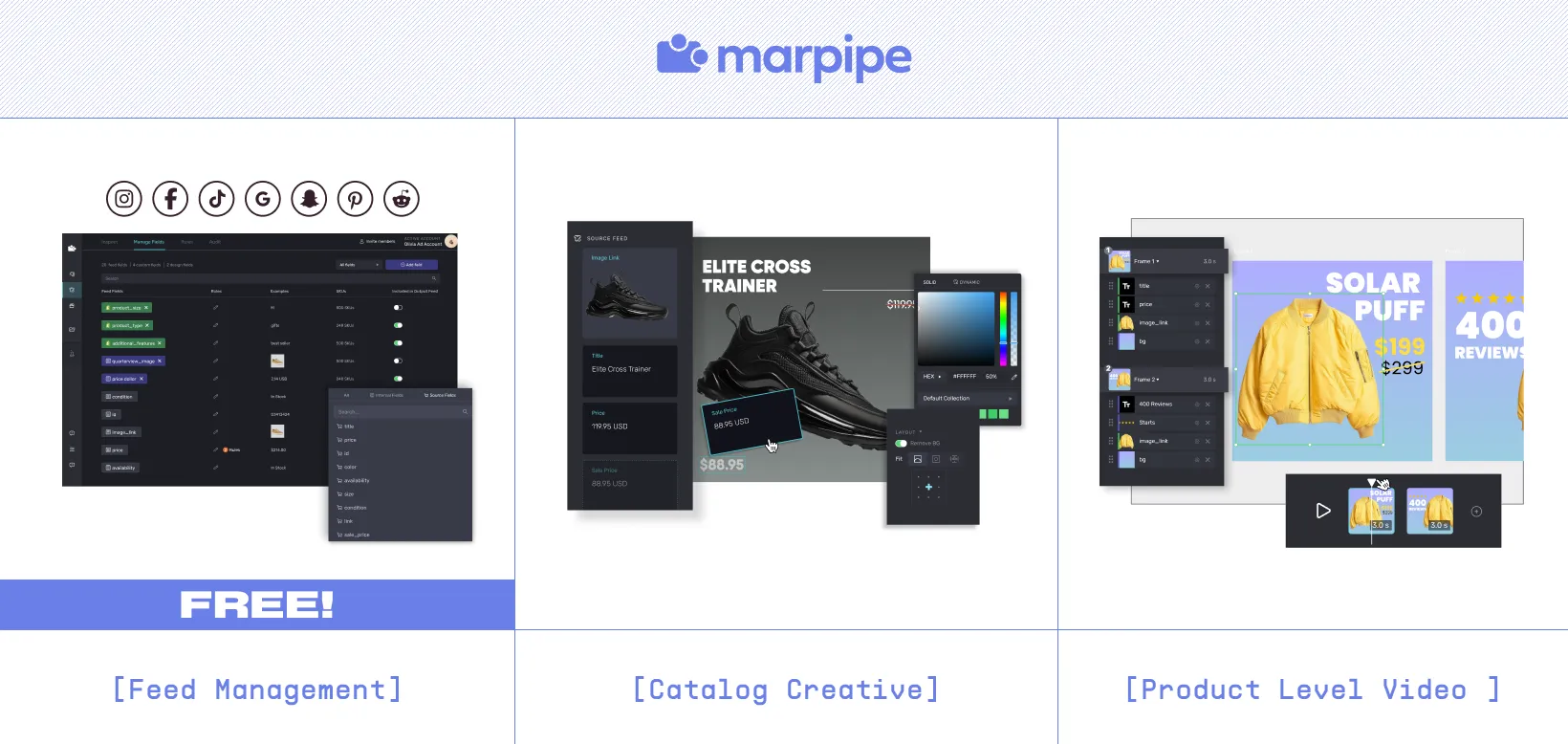
Marpipe expands that foundation. The platform now includes a built-in product feed management tool where brands can upload, clean, and manage their catalog directly. Unlike many standalone feed management platforms, this functionality is available for free. Once the feed is structured and ready, teams can use the same product data inside Marpipe to generate and test catalog ad creative at scale. Feed management becomes the starting point, while the rest of the platform helps turn structured product data into stronger advertising performance.
The right setup is the one that quietly does its job, so ads perform more consistently, creative testing scales predictably, and teams spend less time fixing data and more time improving outcomes. Book a Marpipe demo today!
FAQs
What is Feedonomics actually used for?
Most teams use Feedonomics to keep product feeds clean and consistent across channels like Google Shopping, Meta, and marketplaces. It takes a lot of the manual work out of managing large or messy catalogs.
Why do teams start looking for Feedonomics alternatives?
Usually, because something feels heavy. Setup takes longer than expected, costs feel high for the size of the catalog, or the team wants more direct control over feed changes.
Can Feedonomics alternatives handle big catalogs too?
Some can, some can’t. Tools like Productsup are built for large, complex catalogs, while others are better for mid-sized teams that want speed and flexibility more than enterprise governance.
Is Feedonomics better than self-service feed tools?
It depends on how hands-on your team wants to be. Feedonomics is great if you want support and stability. Self-service tools make more sense if you prefer to move fast and own the logic yourself.
What’s the best way to choose a Feedonomics alternative?
Look at where feed management is slowing you down today. If it’s control, cost, or speed, that usually points you toward the right alternative pretty quickly.