

An ASIN is Amazon’s unique identifier for a product in its catalog. It stands for Amazon Standard Identification Number. Every product listed on Amazon has one. In 2026, understanding ASINs is quite necessary. ASIN structure affects visibility, advertising eligibility, catalog management, and even how your brand competes on shared listings.
If you sell on Amazon or advertise there, you’ve seen the term ASIN everywhere. It shows up in product URLs. It appears in Seller Central. It’s required when launching Sponsored Ads. It determines how listings are organized and connected.
This guide explains what an ASIN is, how it works, how it differs from SKUs and UPCs, and what sellers should know to manage them correctly.
What is an ASIN?
An ASIN is a 10-character alphanumeric code assigned by Amazon to uniquely identify a product in its marketplace.
It looks something like this:
B0C123ABCD
Each ASIN corresponds to a single product listing in Amazon’s system. If multiple sellers list the same product, they share the same ASIN. That is one of the most important things to understand. The ASIN identifies the product. It does not identify the seller.
Where You Find an ASIN
You can find an ASIN in several places, for example in the product URL, on the product detail page under “Product Information”, inside Seller Central, within Amazon Advertising dashboards
For example, in a typical Amazon URL:
amazon.com/dp/B0C123ABCD
The 10-character code at the end is the ASIN. For sellers running ads, ASINs are the units you target. For brands managing catalogs, ASINs define your listing footprint.

How ASINs are Created
When a new product is added to Amazon’s catalog, an ASIN is generated. If you are the first seller to list that product on Amazon, you create the initial listing. Amazon assigns the ASIN automatically once the product information is submitted. If the product already exists in the catalog, you do not create a new ASIN. You attach your offer to the existing one.
That distinction matters because multiple sellers can compete on the same ASIN. This year, Amazon continues to emphasize catalog consolidation. Duplicate listings are frequently merged or suppressed to maintain clean product data.
ASIN vs SKU vs UPC
These identifiers are often confused, but they serve different purposes.
ASIN
Amazon’s internal product identifier, unique within Amazon.
SKU
Stock Keeping Unit, created by the seller, used internally for inventory management.
UPC
Universal Product Code, issued externally, usually by GS1, used across retailers.
Here’s how they interact:
- A single product can have one UPC.
- Amazon uses that UPC to validate the product.
- Once listed, Amazon assigns an ASIN.
- Each seller then assigns their own SKU for internal tracking.
ASINs live inside Amazon. SKUs live inside your business. UPCs live in global commerce systems. Understanding this relationship prevents catalog confusion and listing errors.
Why are ASINs Important for Sellers
At first glance, an ASIN seems like a technical detail. But it influences: visibility, buy box eligibility, advertising strategy, catalog control, brand protection. And because multiple sellers can attach to the same ASIN, listing ownership becomes strategic. If you do not control the main ASIN content, competitors can influence images, descriptions, and bullet points. For private label brands, maintaining ASIN control is critical.
ASINs and the Buy Box
When multiple sellers compete on one ASIN, Amazon determines which offer appears in the Buy Box. The ASIN stays constant. The winning seller rotates.
Factors influencing Buy Box placement include:
- Price
- Fulfillment method
- Inventory levels
- Seller rating
- Shipping speed
You are not competing for a new ASIN. You are competing for a position within one. This is why ASIN-level performance analysis matters.
Parent and Child ASINs
Many products come in variations. Different sizes. Colors. Pack counts. Amazon uses a parent-child structure for these. The parent ASIN acts as the umbrella listing. It is not directly purchasable. Each variation has its own child ASIN.
For example:
Parent ASIN
Running Shoe Model X
Child ASIN 1
Size 9, Black
Child ASIN 2
Size 10, Blue
Each variation gets its own ASIN for tracking, advertising, and inventory.
This structure allows reviews and ranking strength to aggregate at the parent level while maintaining variation-specific data. For sellers, correct variation setup affects conversion rates and ad performance.
ASINs and Amazon Advertising
If you run Sponsored Products, Sponsored Brands, or Sponsored Display ads, you target ASINs. You can promote your own ASIN, target competitor ASINs, build campaigns around high-performing ASINs.
In 2026, ASIN targeting remains one of the most powerful tools in Amazon Advertising. For example, you can show your product ad on a competitor’s ASIN page. Or you can defend your own ASIN from competitors doing the same.
ASIN-level data reveals which products drive revenue, which attract cross-sell opportunities, and which require optimization. Advertising on Amazon is structured around ASIN logic.
Common ASIN Mistakes Sellers Make
Many sellers underestimate ASIN management.
Common issues include:
- Creating duplicate listings
- Incorrect variation grouping
- Attaching to the wrong ASIN
- Failing to monitor suppressed listings
- Ignoring ASIN-level performance data
Duplicate ASINs can fragment reviews and rankings. Incorrect variation setup can confuse shoppers. Attaching to the wrong ASIN can trigger policy violations. In 2026, Amazon’s automated catalog systems are stricter. Errors are surfaced faster. Clean ASIN management prevents long-term visibility problems.
ASIN Suppression and Policy Risks
ASINs can be suppressed for policy violations or incomplete data.
Suppression usually happens when:
- Required attributes are missing
- Images do not meet standards
- Category rules are violated
- Pricing conflicts exist
When an ASIN is suppressed, your product becomes less visible or temporarily unavailable. Monitoring ASIN health inside Seller Central is essential. Ignoring warnings can reduce ranking and sales velocity.
How ASINs Impact Ranking
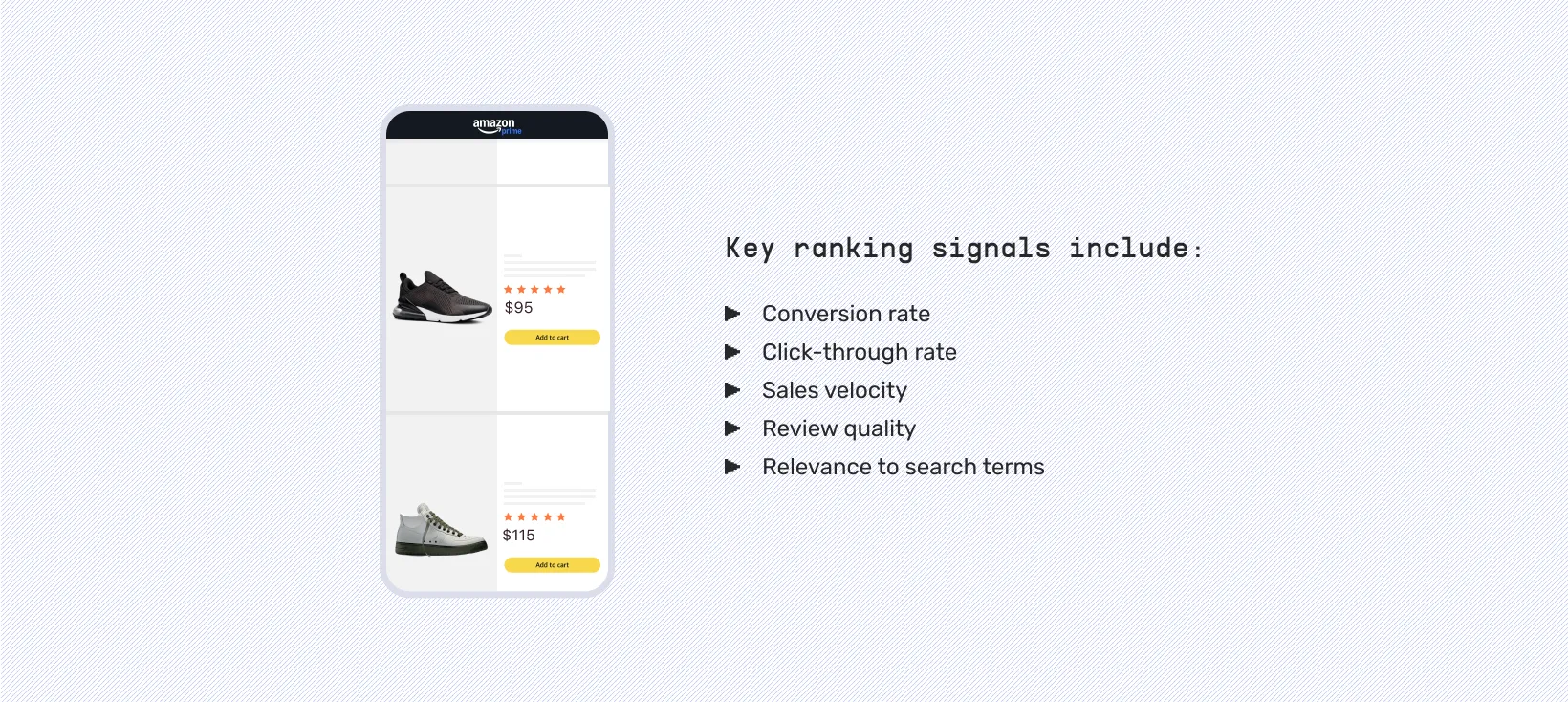
Amazon’s search algorithm, commonly referred to as A10, evaluates performance at the ASIN level. Key ranking signals include, conversion rate, click-through rate, sales velocity, review quality, relevance to search terms.
Optimizing an ASIN’s product detail page improves organic visibility which includes: clear titles, structured bullet points, high-quality images, accurate attributes, competitive pricing. ASIN optimization is not separate from advertising. Paid traffic strengthens organic ranking when conversion remains high.
ASIN Strategy for Brand Growth
Brands that scale on Amazon treat ASINs as performance assets.
They:
- Track revenue by ASIN
- Segment ad campaigns by ASIN tier
- Optimize top-performing ASINs aggressively
- Retire or consolidate underperforming ones
Instead of thinking in terms of “products,” high-performing brands think in terms of ASIN portfolios. Each ASIN has its own lifecycle: launch, scale, defend, optimize.
That strategic view becomes more important as catalogs grow.
How ASINs Connect to Broader Ecommerce Advertising
ASINs exist inside Amazon, but they influence off-Amazon strategy too.
When running external ads that direct traffic to Amazon listings, the ASIN determines the landing destination.
Tracking performance by ASIN helps brands decide:
- Which products deserve more budget
- Which SKUs perform best in certain markets
- Which variations convert more effectively
In 2026, multi-channel strategies often start with ASIN-level clarity.
Scaling Catalog-Based Advertising With Marpipe
On Amazon, every sale flows through an ASIN. Managing them carefully is not optional.
Once your ASINs are structured correctly and your catalog is clean, the next step is performance. That means turning product data into high-impact advertising across Amazon and other channels.
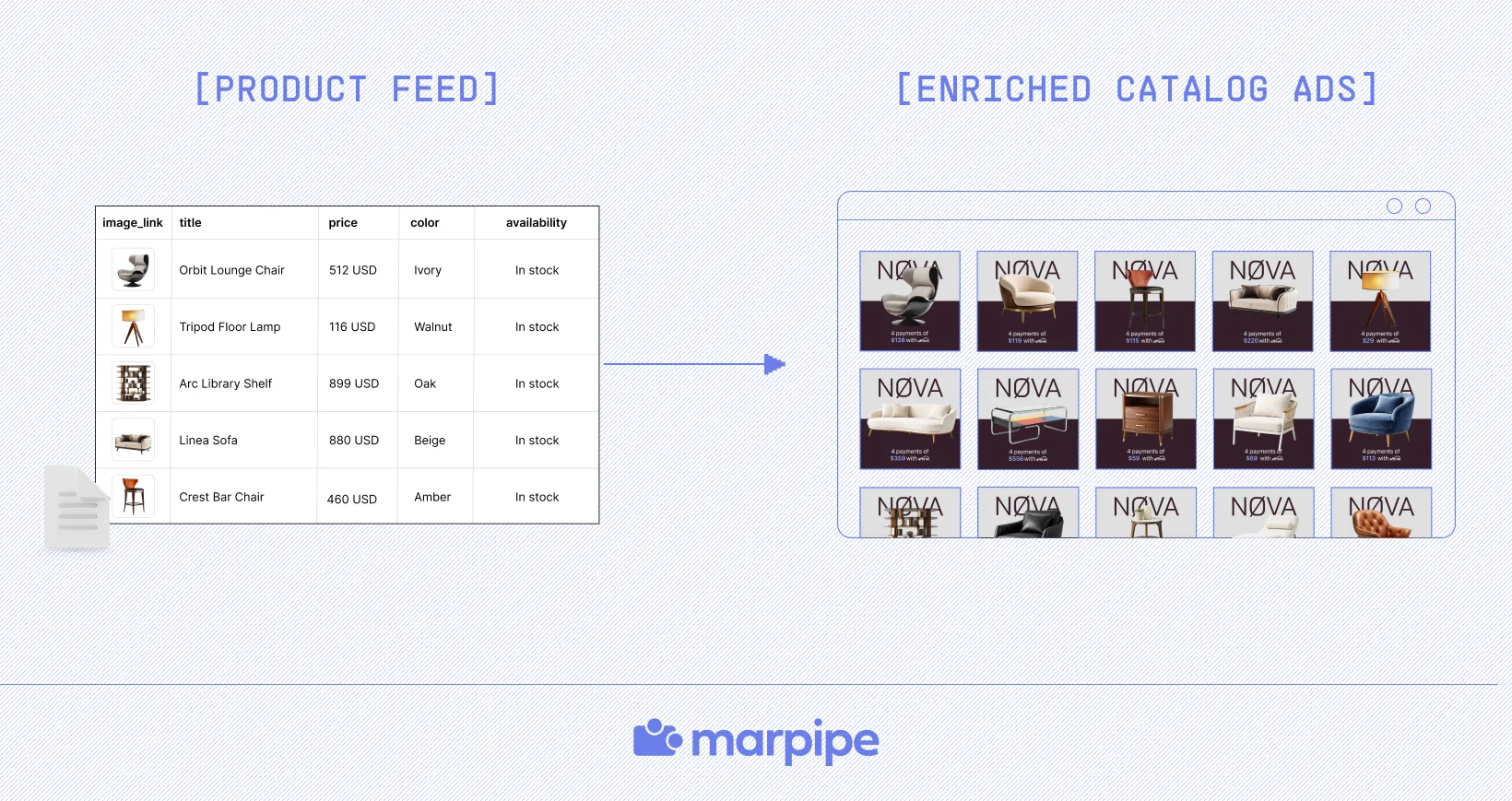
Marpipe helps brands take structured catalog data and transform it into scalable, testable ad creatives. Instead of running static product ads, you can generate variation at scale and learn what actually drives conversion.
If you want to turn your product catalog into a performance engine, book a demo to see it in action.
FAQs
What does ASIN stand for on Amazon?
ASIN stands for Amazon Standard Identification Number. It’s a unique 10-character code Amazon assigns to each product in its catalog.
Can two products share the same ASIN?
Only if they are truly the same product. Variations in size, color, or packaging require separate ASINs.
How is an ASIN used in Amazon Advertising?
ASINs are the units advertisers target in campaigns like Sponsored Products and Sponsored Brands to drive visibility and sales.