

__result.webp)
A Product Listing Ad (PLA) is a type of Google ad that displays products directly in search results using information from a retailer’s product feed, typically showing the product image, price, store name, and sometimes ratings.
They don’t look like traditional ads. There’s no headline competing for attention. No long copy explaining benefits. Just the product and the essentials. That simplicity is intentional.
A product listing ad shows the item itself inside search results, shopping tabs, or feeds. Instead of describing what you sell, it places the product directly in front of the shopper.
In 2026, that straightforward format has become one of the most common ways people discover products before ever clicking into a store.
So what is a Product Listing Ad, exactly?
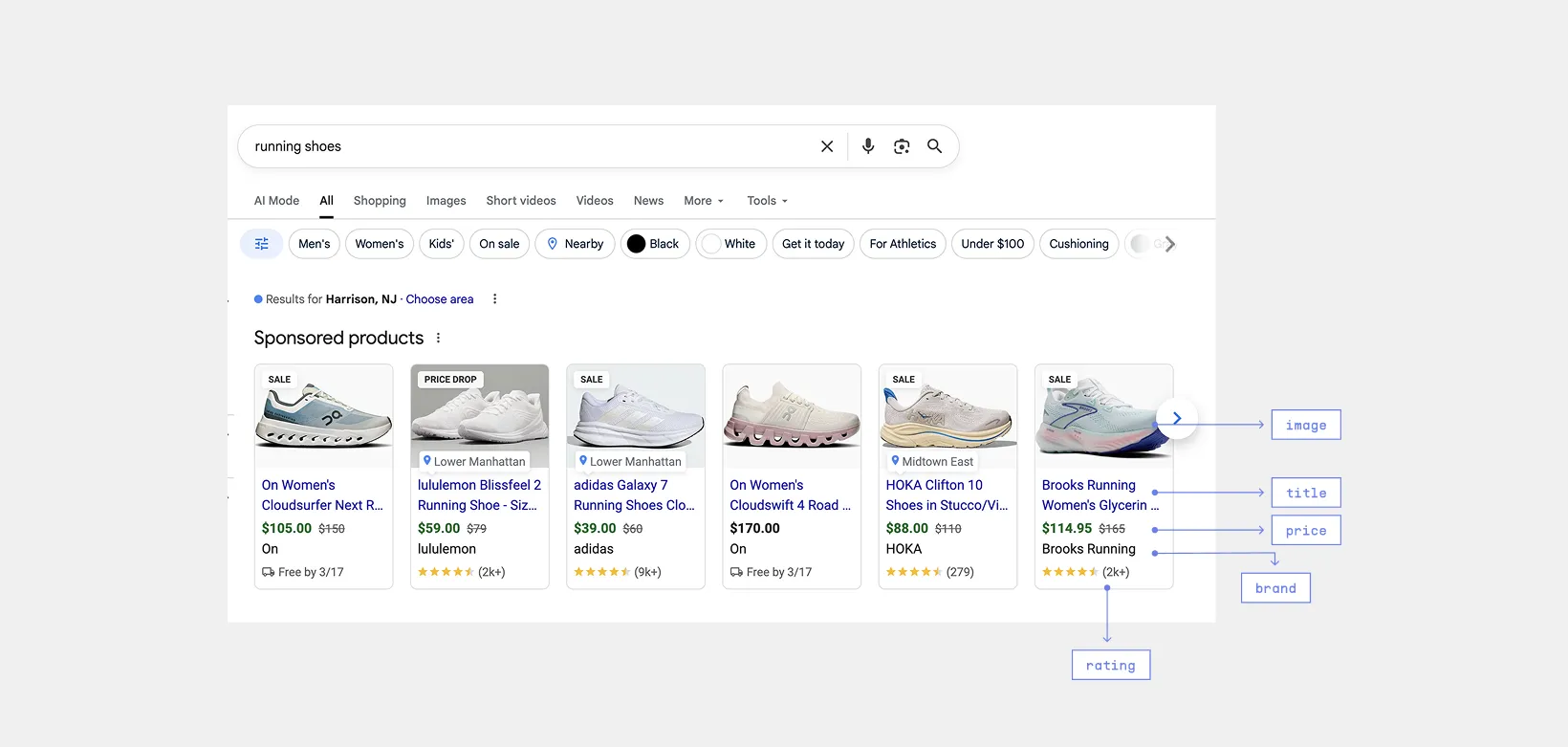
A product listing ad, often shortened to PLA, is a paid advertisement that displays a specific product along with essential information such as:
- Image
- Title
- Price
- Brand
- Merchant
Unlike text ads, PLAs are not written ad copy. They are generated from product data.You don’t “write” a PLA in the traditional sense. You structure your product feed correctly, and the platform builds the ad from that information. Which means your data is the ad.
Where you actually see PLAs
Most people associate PLAs with Google Shopping. That’s still true. But they now appear in more places than people realize.
- Search engines.
- Marketplace results.
- Social feeds.
- Retargeting placements.
If a product image appears alongside a price and clickable listing inside a paid placement, you’re likely looking at a PLA or a close variation of it.
On social platforms, the naming may differ. You might see “catalog ads” or “dynamic product ads.” Structurally, they operate on the same principle: product data drives the placement.
How PLAs work behind the scenes
A product listing ad doesn’t start in an ad builder. It starts in your product feed.
Your feed contains:
- Product title
- Description
- Price
- Availability
- Image URLs
- Identifiers like GTIN or SKU
That feed is uploaded to systems like Google Merchant Center or connected directly to ad platforms.
From there, the platform matches products to user behavior or search queries. The ad is assembled dynamically using your data. You control the structure and bidding. The platform controls which product shows to which user. It’s automated, but not passive.
Why PLAs perform differently from text ads
There’s a psychological difference. Text ads ask for attention. PLAs offer comparison.
When someone sees four similar products in a grid, they immediately start evaluating based on price, image quality, and brand recognition.
That means:
- Your product image matters more than your headline.
- Your pricing strategy is visible immediately.
- Your feed optimization directly impacts click quality.
PLAs tend to attract more qualified clicks because the shopper has already seen the product and price before visiting your site. But that also means poor pricing or weak imagery will hurt faster.
Three factors that determine PLA performance
It’s rarely just bidding. Three main factors drive results:
1. Feed quality
If your titles are vague, your categorization is sloppy, or your images are inconsistent, visibility suffers. Platforms rely on structured data to decide relevance. The cleaner the data, the clearer the match.
2. Pricing position
Because PLAs show price immediately, you are competing side by side with others.
Even a small pricing difference can impact click-through rate.
3. Campaign structure
Grouping all products together under one bid ignores margin differences.
A low-margin item should not be treated the same as a high-margin one. Segmentation matters.
A practical example
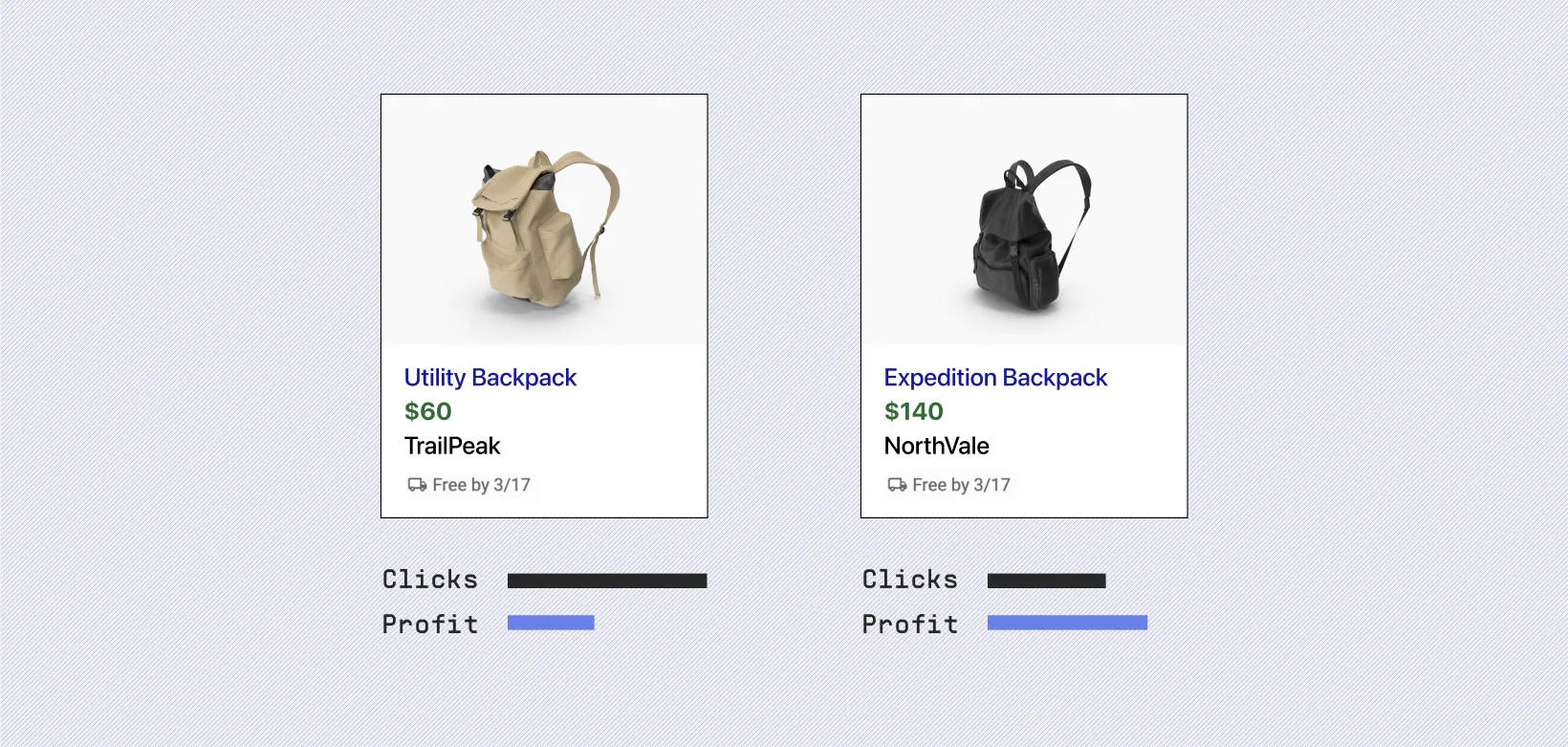
Imagine you sell two backpacks.
Backpack A
Price: $60
Margin: moderate
Backpack B
Price: $140
Margin: high
If both are in the same product group with identical bidding, the system may push whichever gets cheaper clicks. But cheaper clicks don’t always equal better economics. Segmenting by margin or priority allows you to align bidding with business goals rather than just volume.
PLA vs Dynamic Product Ads
The terminology can get confusing. Product listing ads typically refer to shopping-style placements in search environments.
Dynamic product ads, often used on social platforms, pull from the same type of feed but focus more heavily on retargeting or personalized placements. Structurally, both rely on catalog data.
The difference is often intent stage. Search-based PLAs capture demand. Social-based dynamic ads reintroduce products. Most ecommerce brands use both.
Common mistakes with PLAs
- Some patterns show up repeatedly.
- Uploading a feed and never optimizing titles.
- Ignoring image consistency.
- Failing to update pricing or availability regularly.
- Letting automated bidding run without monitoring the contribution margin.
- Treating all SKUs equally despite clear performance differences.
PLAs reward discipline.
Bidding in 2026
Automated bidding has improved, but it is not hands-off. Strategies like target ROAS can work well when conversion data is strong.
However, automation still relies on accurate signals.If your feed data is inconsistent or margins are misaligned with bids, automation optimizes toward the wrong goal. The platform cannot fix structural business issues.
How to measure success of PLA performance
PLA performance is typically evaluated through:
- Impressions
- Click-through rate
- Conversion rate
- Return on ad spend
- Cost per acquisition
But it’s worth looking deeper.
- Segment performance by category.
- Review margin-adjusted returns.
- Monitor search term relevance.
Surface metrics tell part of the story. Feed-level insights tell the rest.
Why PLAs remain foundational
Shopping journeys are fragmented now. People compare prices across tabs, they jump between marketplaces and search engines. They browse socially before they search directly. PLAs meet shoppers where they are comparing, they remove one layer of friction between intent and evaluation. That’s why they remain a core part of ecommerce advertising strategies.
Turning Product Listing Ads Into a Creative Testing Engine With Marpipe
So what is a Product Listing Ad? It’s a feed-driven ad format that displays your actual products. Product listing ads are powered by your product feed. Clean data, strong imagery, and thoughtful segmentation determine whether your products show up and earn clicks.
But visibility is only part of the equation.
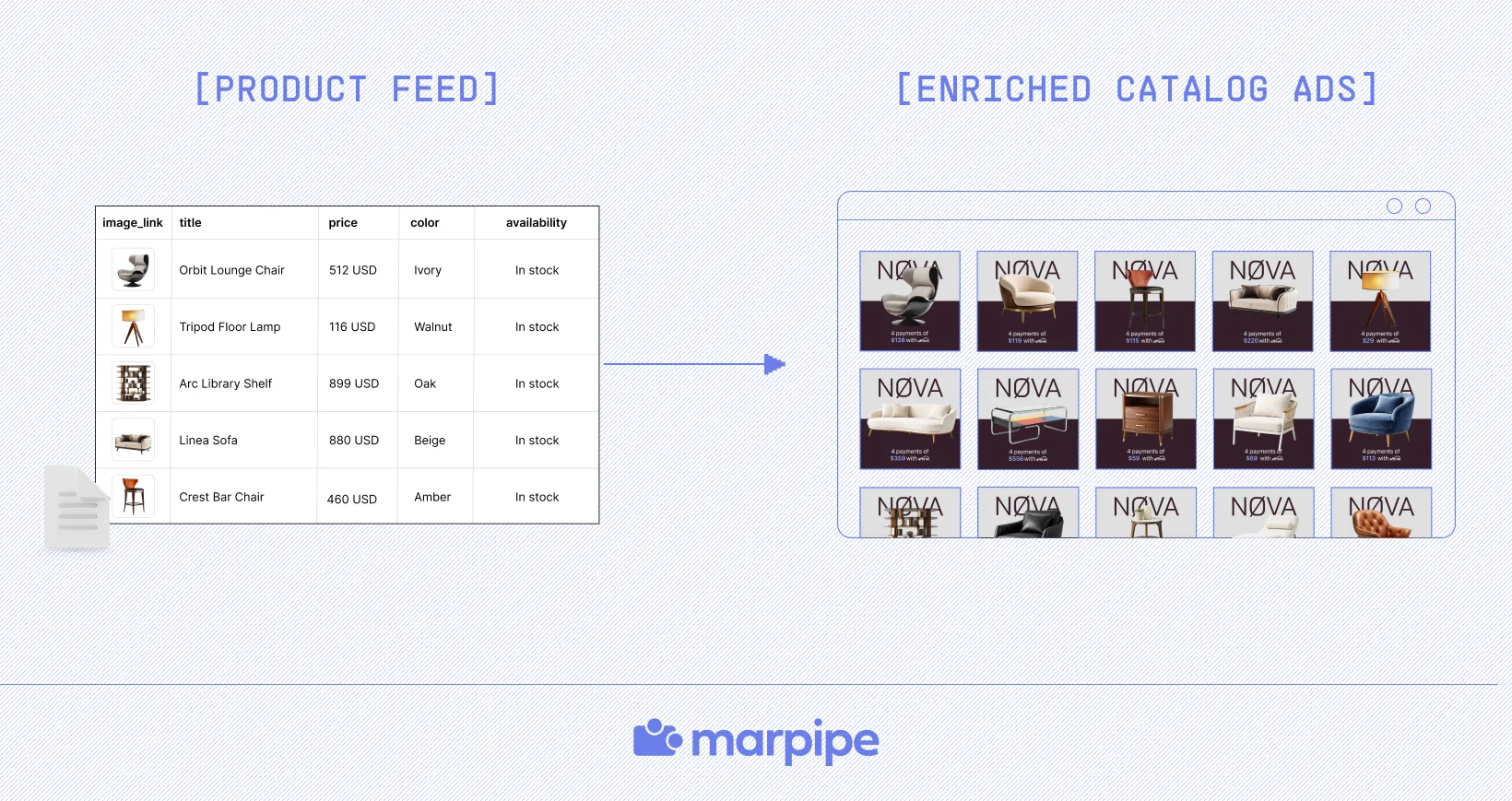
As shopping journeys expand across search and social, brands increasingly rely on dynamic product ads and catalog-based creative to stay competitive. That’s where creative variation and testing become critical.
Marpipe helps ecommerce teams take their product data and turn it into structured, testable ad variations at scale. Instead of running one version of a product ad and hoping it performs, you can systematically test layouts, messaging angles, and creative combinations to understand what actually drives results.
Strong product listing ads start with good data. Strong performance comes from testing what surrounds that data.
If you want to turn your product feed into a creative testing engine, book a demo to see it in action.
FAQs
What is a Product Listing Ad?
A Product Listing Ad (PLA) is a feed-driven ad that displays a product’s image, price, and key details directly in search results or shopping placements.
How are PLAs different from text ads?
PLAs are powered by product data instead of keywords and show actual products visually, while text ads rely on written headlines and descriptions.
What affects PLA performance the most?
Feed quality, pricing strategy, campaign structure, and bidding alignment with margins are the biggest drivers of PLA results.