


UGC ads have gone through a full hype cycle. They surged when TikTok rewrote the rules of advertising. They stalled when every brand produced the same talking-head formats. And now, in 2026, marketers are asking whether UGC ads still work or whether the moment has passed.
The short answer is yes. UGC still works, and in many cases it still works better than traditional brand content. The longer answer is that the playbook has matured. What succeeded in 2022 no longer moves the needle today. Audiences have become more discerning, algorithms have evolved, and the quality bar for UGC has risen in every category. The opportunity is still massive — but only for teams who refresh their creative strategy, diversify formats, and produce content with the volume and variety needed to win inside paid social ecosystems.
This shift is why UGC-first platforms and creator marketplaces have grown so quickly. Brands need more content, produced faster, from creators who understand the language and pacing of modern platforms. Brands can get direct access to high-volume creator pipelines, efficient campaign procedures, and the kind of cultural fluency that polished content can’t catch through marketplaces like SideShift. Their model reflects how advertising actually works today: it’s genuine, authentic, changes over time, powered by creators, and grounded in real consumer behavior.
UGC didn’t stop performing. The creative and workflow systems around it simply need to evolve.
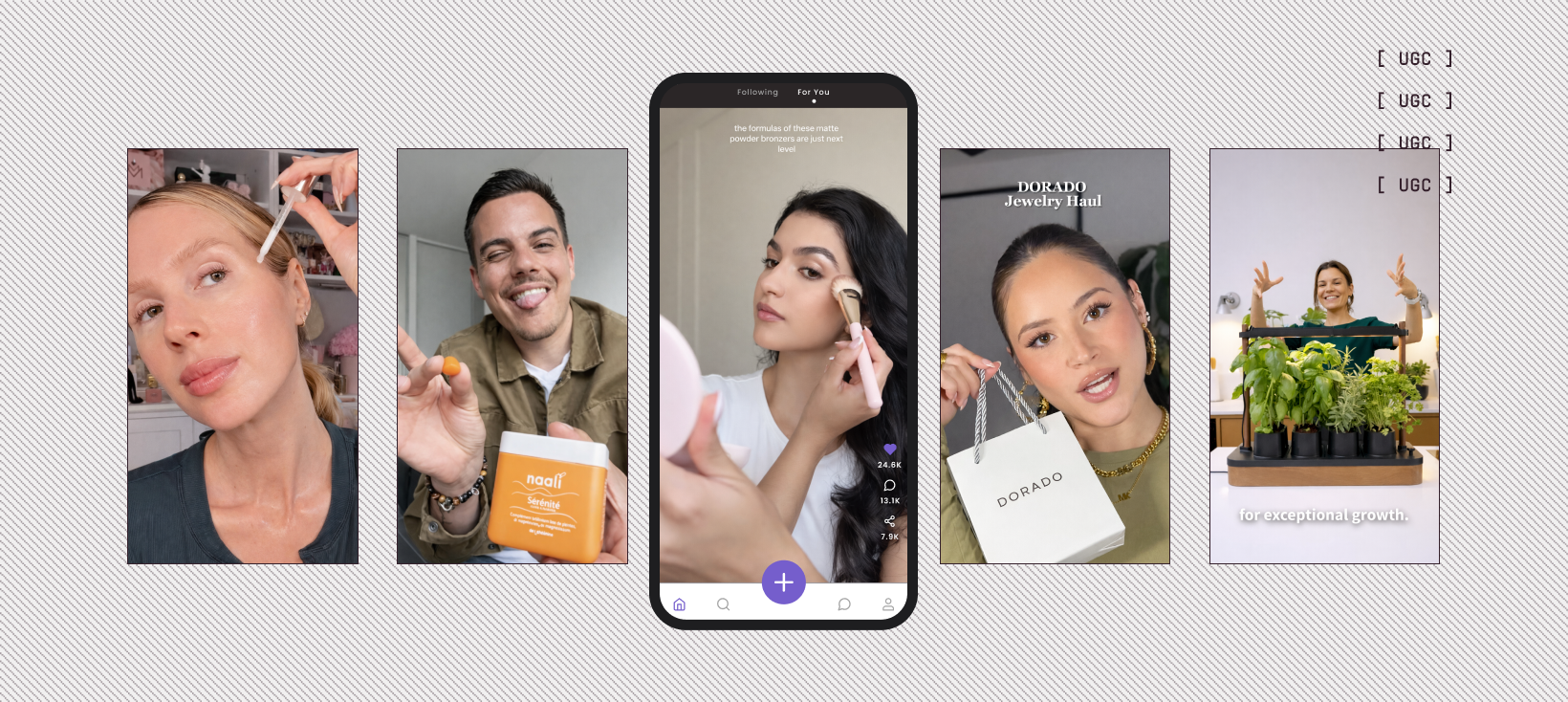
Why UGC Ads Still Work in 2026
UGC ads still work because of how people think, rather than following specific marketing trends. Consumers will always trust other consumers who are similar to them versus trusting a brand. Human psychology, am I right?
Nielsen’s research on consumer trust shows that individuals primarily depend on recommendations from friends, family, and peers when determining what to buy. This is completely in line with what TrueLoyal reports– 70% of shoppers now read (or watch) UGC reviews before buying a product. It’s even common for shoppers to read, or watch, four to seven pieces of content before they are ready to make a purchase.
UGC works because it copies how people naturally find out about product. They watch a creator post a video about how the product works, what they like, and what they dislike. And, on top of that, if they’re following that creator, it’s likely that they feel that creator is relatable. Within these pieces of content, they see moments that aren’t curated or filtered, and it’s as if they see themselves in the mirror. These types of ads really perform well. UGC ads always generate more clicks, have faster watch times, more engagement, and greater conversion rates than ads from big-budget studios.
UGC is especially effective in getting people to buy things when it is exposed early in the customer journey. Don’t want to take our word for it? Goldman Sachs thinks that the creator economy could be worth a half trillion dollars by 2027. They’re seeing major shifts in the ad space that indicate companies moving their spend towards UGC and content creators.
Why Some Brands Believe UGC Ads Are “No Longer Effective”
When brands say that UGC performance has dropped, it’s typically because of one of these reasons:
- Creative Fatigue: Using the same messaging, b-roll, creator, and call-to-action is a quick way to get less views, engagement, and conversion.
- Overproduced UGC: Your audience can immediately tell if an ad is pretending to be UGC. When it feels too scripted, too polished, and too robotic, it becomes inauthentic; therefore, ineffective.
- Not enough variation to test: UGC really succeeds when brands can test a few different creators, styles, hooks, and general formats. There are a few key takeaways here. We know that if you run only one version, you’ll experience creative fatigue. So, if you try a few different creators with different messaging, you’ll not only learn a lot about what resonates with your audience, but your content will go further.
- One creator produces too much content: this is along the same vein as creative fatigue. People can recognize anything when it’s repeated in style, tone, and storytelling. Creative diversity matters.
- No data-driven briefs: When creators don’t know your audience, the value proposition of your products, or the messaging hierarchy, content can be a little too high level. Make sure you are properly briefing your creators through a creative brief with in-depth information around the campaign.
- Poor creator fit: Even the best creator won’t perform well if the vibe, niche, or delivery style doesn’t align with your brand. Make sure you’re choosing the right content creator that truly resonates with your brand voice, vision, and mission.
The problem isn’t with UGC itself, the problem is really that the medium has changed. The brands that are seeing the most success with UGC ads are the ones who have moved away from one-time content drops, and have built a new system around iteration, authenticity, and creative volume.
Why UGC Outperforms Traditional Creative Ads
User generated content tends to outperform traditional brand creative because it matches how people naturally discover and evaluate products today. Instead of feeling like a “message from a brand,” UGC feels like a story from someone you might know. That shift changes how people pay attention, how much they trust what they are seeing, and how willing they are to take action.
Authenticity Builds Trust
Most people scroll right past anything that feels too staged or overly polished. UGC cuts through that resistance because it looks and sounds like everyday content. The lighting is imperfect, the audio is a bit raw, and the reactions are unscripted. That lack of polish is not a flaw. It is a trust signal.
When someone shares a quick story about why they love a product, what problem it solved, or how it fits into their daily routine, it feels more like a recommendation than an ad. Viewers are used to sorting through marketing claims, but they still rely heavily on the opinions of people who seem “real.” UGC taps directly into that behavior and makes it easier for people to believe what they are seeing.
Relatability Drives Action
People do not just want to know what a product does. They want to know what it looks like in a life that feels similar to their own. UGC allows brands to show that from dozens of angles. One creator might show how they use a skincare product during a busy morning. Another might talk through how it helped them fix a specific issue, like acne or dryness. Someone else might just do a casual “get ready with me” and mention it in passing.
All of these moments help potential buyers see themselves in the content. Instead of a polished storyline, they see real homes, real schedules, and real constraints. That relatability lowers the mental gap between “this is interesting” and “this could work for me,” which is where actual purchase decisions happen.
Lower Production Costs, More Output
Traditional studio shoots require planning, scripts, locations, crews, and edits. They are powerful when you need a brand film or a hero spot, but they are not built for constant iteration. UGC makes it possible to create a high volume of content without a huge production budget or long lead times.
Because creators can film on their phones, from their own homes, brands can quickly test new hooks, formats, and messages without committing to a full campaign. That flexibility is especially useful on platforms where trends shift quickly. Instead of trying to make one “perfect” asset last for months, brands can refresh creative weekly or even daily, learning as they go.
Scalability for Creative Testing
Performance teams win by learning faster than their competitors. UGC supports that because it is highly modular. You can brief multiple creators on the same product and let them each interpret the message in their own style. Some will lean into humor. Others into education. Others into storytelling or transformation.
This variety gives you dozens of combinations to test across intros, hooks, lengths, and calls to action. You can quickly see which angles pull people in, which phrasing drives clicks, and which visuals help close the sale. Once you know what works, you can double down on those themes and retire what does not, instead of guessing based on a few high-cost assets.
Built-In Social Proof
UGC naturally communicates that the product is being used and talked about by real people. Every review, testimonial, unboxing, or “here is how I use it” clip reinforces that the brand has a community behind it. That is social proof in action.
Compared with a scripted testimonial in a studio, a simple front-facing video filmed in someone’s bedroom can often feel more convincing. The imperfections act as evidence that this is not a paid actor reading lines. Even when creators are paid, the format still mimics the way people normally share their opinions online, so it feels closer to everyday word-of-mouth than to traditional advertising.
Why the Best Results Come From a Hybrid Model
Studies show that when people see both polished brand creative and UGC together, engagement goes up by about 28 percent. That is because each format plays a different role. High-production creative is great for introducing the brand, setting tone, and clarifying the core story. UGC is ideal for filling in the gaps: answering real questions, showing specific use cases, and reflecting the diversity of your customer base.
The goal is not to choose one style and abandon the other. The strongest brands treat UGC as a permanent part of their creative system. They use studio work to build a consistent, recognisable identity and UGC to bring that identity to life through real voices and real experiences. When those two elements work together, you get clarity, consistency, and authenticity in the same funnel, which is where performance really starts to compound.
Best Practices for Creating High-Converting UGC Ads
High-performing UGC doesn’t happen by accident. It comes from a clear process that blends data, creative direction, and consistent production. The framework below reflects what today’s top brands do behind the scenes, and the workflow used inside creator marketplaces like SideShift, where UGC is produced at scale.
Clarify Your Objectives
Effective UGC starts with clarity. Before anything else, brands need to know what the goal of the campaign is in order to understand the tone, pace, and messaging. An ad that is meant to encourage people to buy something will seem very different than a video that teaches people about a product or a retargeting asset. You can change the creative direction to help you reach your goal once you know if you want to raise awareness, get people to sign up, develop social proof, or help with onboarding. This option affects all the others that come after it, such as how to structure the creative work, who to choose as the creator, and where to put it.
Find and Evaluate the Right Creators
Choosing the right creator is one of the most significant things that affects performance. The creator with the most followers isn't necessarily the greatest choice. The most important thing is whether your target buyer thinks their personality, communication style, and look are real. Good UGC developers can explain things effectively, get people's attention, and bring natural excitement to the camera. They also know how the platform they are filming for works. They realize that TikTok moves at a different speed than Instagram Reels or YouTube Shorts. They know how to edit without going overboard and film in clean, bright places. People who communicate well, not just people who seem well, make the best UGC.
Build Data-Driven Creative Briefs
Clear briefs are a major reason UGC campaigns succeed. A great brief includes a description of the target audience, the key benefits of the product, the main pain points it solves, and examples of videos that have performed well in the past. It outlines the desired tone, platform preferences (i.e. where are you distributing this video), and any required talking points. But, that doesn’t necessarily mean that you should script creators. You want to equip them with enough information to talk about your products naturally. So, give creators direction while allowing room for their own style. This structure results in content that feels natural, personal, and persuasive.
Confirm Usage Rights and Permissions
Companies often forget about usage rights and content ownership. Brands should require clear agreements that specify where and how the content can be used. Usage rights determine whether you can run the content as paid ads, feature it on your product pages, add it to email flows, repurpose it for different platforms, or re-edit clips later. Clear expectations keep both the brand and the creator safe and stop future problems.
Combine UGC With Strong Creative Fundamentals
Even the most natural UGC can benefit from conventional advertising rules. In the first three seconds, you still need a solid hook. You still need captions for people who can't hear, unambiguous calls to action, and a pace that feels natural for the platform. Text on the screen helps make important information clearer and keeps the viewer interested. We also recommend captioning any video that has a creator talking. Use trends wisely and don't force them. Small changes to the structure, framing, or tempo of a UGC clip can turn it from an ordinary one into one that converts well.
Test, Iterate, and Improve
The best UGC campaigns come from continuous testing. As we mentioned before, brands should try out different creators, opening lines, visual settings, calls to action, editing approaches, and video lengths. Testing shows what works and what doesn't. When you have a few UGC ads going, teams have more data to work with, which helps them learn faster, iterate the content, and improve the campaign for next time. Brands that do well see UGC as an ongoing system instead of a one-time endeavor.
Repurpose UGC Across Every Channel
UGC performs well across the entire customer journey. With proper usage rights, a single video can appear as a paid ad, an organic TikTok post, an Instagram Reel, a website asset, product page content, an email feature, a retargeting clip, an onboarding video, or a review. This versatility is one of the reasons UGC remains one of the highest-performing and most cost-effective creative formats. Instead of creating content for one slot, you build assets that travel everywhere your audience interacts with your brand.

Track Performance and Capture Insights
The final step is to learn and report on the data. Performance data show you which producers connect with your audience, which hooks keep viewers watching, which messages lead to conversions, and which formats provide you the best return on investment. Brands get a lot of input fast and easily since UGC can be made in large quantities. This lets teams change their creative every week instead of every three months. Markets change quickly, and this speed gives brands who use UGC an edge over their competitors.
Where UGC Performs Best

UGC works well on all major platforms, but it works best in places that encourage native, low-fi material. TikTok is the best place for UGC because the whole feed is based on realness, short stories, and moments that people can relate to. Instagram Reels also works well with UGC, especially in the lifestyle and shopping categories where creators can show how things are used in real life. Short educational videos and quick product explanations generally get a lot of views on YouTube Shorts because people are looking for quick, useful information. Inside Meta's Advantage Plus system, UGC often rises to the top since dynamic ad engines favor creative that seems human and gets people to interact. Recently, we’ve been recommending to our brands to include UGC on product detail pages. It builds trust, keeps people on the page longer, and helps with conversion. It also works well in email and text messages since actual pictures make the brand seem more human and increase click-through rates. UGC works best when it is used in several places throughout the buyer's journey, not just one.
Alternatives to UGC (When Brands Need More Options)
UGC is a great format, but it's not the only way to have strong performance and creative. When organizations require high-concept stories, consistent branding, or a professional design for a big launch, they often turn to studio-produced creative.
When conversion isn't as important as reach and community legitimacy, influencers and macro creators might be helpful. Customer reviews, testimonials, and Q&A content are another good option, especially for product detail pages and remarketing sequences where consumers want to feel safe. In-house content teams may fill in the gaps with instructive content that never goes out of style or concise product descriptions that don't need outside creators.
Hybrid UGC companies provide brands both creative direction and production help, but this normally costs more. Brands may decide whether to add to their UGC strategy or completely change it based on the needs of the campaign by understanding these options.
When to Double Down on UGC (and When to Pivot)
UGC is especially effective when:
• Your product relies on visual demonstration
• Your audience skews Gen Z or Millennial
• You need large volumes of creative quickly
• You want rapid testing and learning cycles
• You’re building trust in a crowded category
It’s time to pivot if:
• Product-market fit is unclear
• Your message hierarchy is inconsistent
• Creators cannot articulate the value proposition
• You rely on a single creative angle
UGC is a tool. It’s not a cure-all. Strategic brands know when to scale it and when to adjust.
UGC Works When Your Brand Evolves its Strategy
UGC has not lost its impact, or luster. It continues to deliver strong results when it is created with care, intention, and a clear understanding of what audiences expect. People have not stopped responding to creator-led content. Instead, viewers have become more selective, and platforms have raised the level of competition. Brands that lean into experimentation, creative variety, and genuine human storytelling are still outperforming those relying on older, one-note approaches.
Teams succeed when they treat UGC as a system rather than a one-off tactic. They perform better when they produce content consistently, when creators feel like real people instead of actors, and when testing happens every week instead of every quarter. Strong workflows and utilizing platforms like SideShift make it possible to scale production, maintain quality, and learn quickly from what the data shows.
UGC remains one of the most effective ways to reach and convert modern buyers. The brands that adapt to the higher standard and evolve their creative process will continue to lead.
Frequently Asked Questions
1. Does UGC still work in 2025?
Yes, UGC does really well as long as it is made with a purpose and tested often. People are much more picky about what they watch, so stuff that doesn't take much effort doesn't work anymore. Strong storytelling, a good match between the creator and the content, and quick iteration are all important for high-quality UGC. Brands who perceive UGC as part of a bigger creative strategy still get great results on TikTok, Reels, Shorts, and Meta Advantage Plus.
2. How many UGC videos does a brand need to make every month?
Most brands see higher conversion when they have fresh creative and UGC ads rotating in on a regular basis. This usually means eight to twenty new versions each month, depending on how much money is spent on ads and what products are available. Regular testing helps companies figure out which messages, hooks, and creators work best. The idea is to make enough changes to find consistent patterns without making the workflow too hard to handle.
3. Should UGC take the role of studio creative?
No, UGC and studio creative do distinct things. Studio assets help with significant launches, branding, and clear messaging. UGC gives you authenticity, quickness, and the chance to quickly test a lot of different viewpoints. Using both gives the best results, and UGC gives you the iterative insights that help you make high-quality productions in the future.
4. What makes UGC work successfully in TikTok?
TikTok favors creative that feels native and human. UGC naturally fits that style and helps the algorithm figure out what works for a lot of people. Strong hooks, clear stories, solid product data, and regular testing all help UGC get to the top of automated systems.
5. How can brands grow UGC without losing quality?
To scale UGC, you need a well-organized system for briefings, choosing the right creators, usage rights, testing, and iterating. Teams can keep up with quality as they expand volume by using organized workflows, clear data insights, and good product feed hygiene.