

Creative automation used to mean resizing display ads. Upload a master file. Export ten formats. Done. But that is not what high-performing teams mean by automation anymore.
This year, the conversation is different. It is no longer about producing more files. It is about producing variations without multiplying manual work, reducing creative fatigue before it hurts performance, and connecting structured data to structured testing.
The best creative automation platform today does not just help you design faster. It helps you learn faster. The output is easy. Insight is not.
What makes a creative automation platform “the best” right now?
There is no shortage of tools that claim automation. But most fall into one of two buckets. They either:
- Help you produce creative assets faster
- Or help you resize and adapt existing assets
Useful, but neither guarantees performance improvement. The platforms that matter now tend to share a few traits:
- They connect to structured inputs, product feeds, messaging frameworks, audience signals.
- They generate variation intentionally, instead of random design noise, you get real, testable differences.
- And they give you some way to understand what actually worked.
If your creative automation tool cannot answer why one variation outperformed another, you are still guessing; you are just doing it at scale.
1. Marpipe
Marpipe approaches creative automation from a performance-first angle.
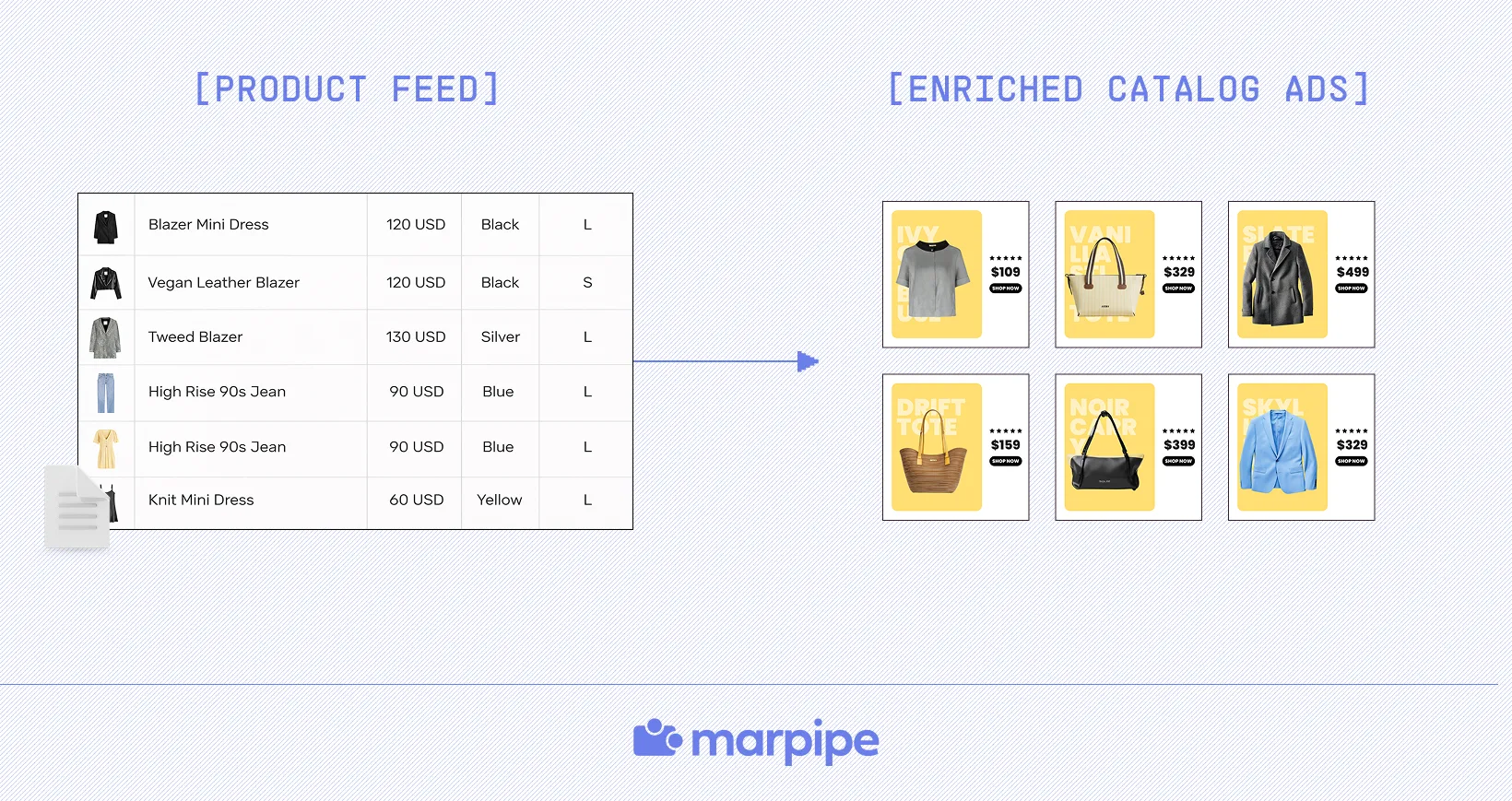
Instead of asking designers to build dozens of layouts manually, it pulls structured product data and automatically generates large sets of creative variations.
The feed becomes the raw material: titles, images, prices, attributes, promotional flags. Those pieces map into different layouts and messaging structures without manual rebuilding.
Where this becomes powerful is after launch. You are not just publishing ads. You are running structured experiments. Different visual hierarchies. Different emphasis on discounts. Different headline angles. Each is tied back to measurable outcomes.
For teams running dynamic product ads or large catalog campaigns, this matters.
Catalog advertising often becomes repetitive: same layout, same framing, same fatigue. Marpipe helps introduce controlled variation instead of creative guesswork. It is not the lightest tool on this list. It is built for teams that care about performance iteration.
If your bottleneck is creative learning, not just creative production, this is where Marpipe stands out.
2. Canva
Canva does not position itself as a performance platform. And that is fine. Its strength is accessibility. In many companies, not everyone is a designer. Canva reduces friction. Templates are easy. AI-assisted text helps spark ideas. Batch edits simplify resizing.
For teams that need to move quickly without formal design resources, Canva solves a real operational problem.
Where it falls short is feedback. You can produce variations. But the platform does not inherently connect those variations to ad performance in a structured way. That means Canva is excellent for speed. Less so for experimentation discipline.
For smaller teams or brand-heavy workflows, it makes sense. For performance-heavy catalog campaigns, you will likely need something more specialized to complement them.

3. Pencil
Video is no longer optional. Short-form formats dominate social placements, and teams that cannot produce video quickly feel it.
Pencil focuses on AI-assisted video ad generation. Scripts, visuals, pacing. It helps marketers build social-ready creative without a full production cycle. If your primary challenge is getting video assets into the market quickly, Pencil fills that gap.
But it is not a feed-driven experimentation platform. It is not built around catalog logic. Think of it as acceleration for video-first campaigns, not necessarily structured creative testing.
For brands leaning heavily into TikTok or YouTube Shorts, that may be enough.
4. Celtra
Celtra has been around long enough to understand enterprise complexity.
It shines in environments where multiple designers, brand rules, and cross-market campaigns collide. You can build template systems. You can apply rules. You can generate large numbers of assets while maintaining governance.
It is strong operationally. But like many enterprise platforms, it can feel heavy. Setup requires planning. Workflows require coordination. For large teams with distributed creative operations, that is acceptable. For lean growth teams trying to iterate weekly, it may feel too slow.
Celtra is less about scrappy experimentation and more about disciplined production at scale.
5. Smartly.io
Smartly.io sits at the intersection of media buying and creative automation. It combines automated creative generation with automated bidding and campaign management. That integration is appealing for enterprise teams running large budgets.
You can generate variations and push them directly into structured campaign frameworks. But with that integration comes complexity. Smaller teams often do not need the full suite.
If you want creative automation tightly paired with automated media execution, Smartly.io makes sense. If you only need creative iteration, it may be more than required.
6. Creatopy
Creatopy is built around template-driven scaling.
You define rules. You generate formats. You manage assets across placements. It is reliable. Especially for brands running display or multi-format campaigns. What it does well is batch production. What it does less well is creative insight. You can automate output. But interpreting which design elements drive conversion still happens elsewhere.
For structured production pipelines, Creatopy is solid. For performance-driven creative testing, it needs complementary tools.
7. AdCreative.ai
AdCreative.ai leans into generative AI.
It produces visual concepts and copy suggestions quickly. For teams staring at a blank page, that can be helpful. It is strong at ideation. But generative output is not the same as structured testing. And novelty is not the same as performance.
Use it to spark ideas. Not to replace experimentation discipline.
What creative automation looks like in 2026
There is a shift happening. Creative automation is moving from template engines to data systems. The most effective setups now:
- Pull from structured feeds.
- Generate controlled variation.
- Test systematically.
- Feed results back into the next round of production.
That loop is what separates automation from true optimization.
If your current tool only handles resizing or asset export, you are automating the least valuable part of the process.
Choosing the best creative automation platform for your team
There is no universal answer. Ask where your constraint lives.
- If designers are overwhelmed with manual resizing, you need template efficiency.
- If catalog campaigns feel stagnant, you need structured variation.
- If video output is slow, you need video acceleration.
- If you cannot explain why one ad performs better than another, you need better experimentation systems.
The best creative automation platform is the one that removes your biggest friction point without introducing unnecessary complexity.
Marpipe Leads Creative Automation in 2026
For teams running catalog campaigns, dynamic product ads, or high-volume social creatives, automation alone is not enough. You need structured variation and measurable experimentation.
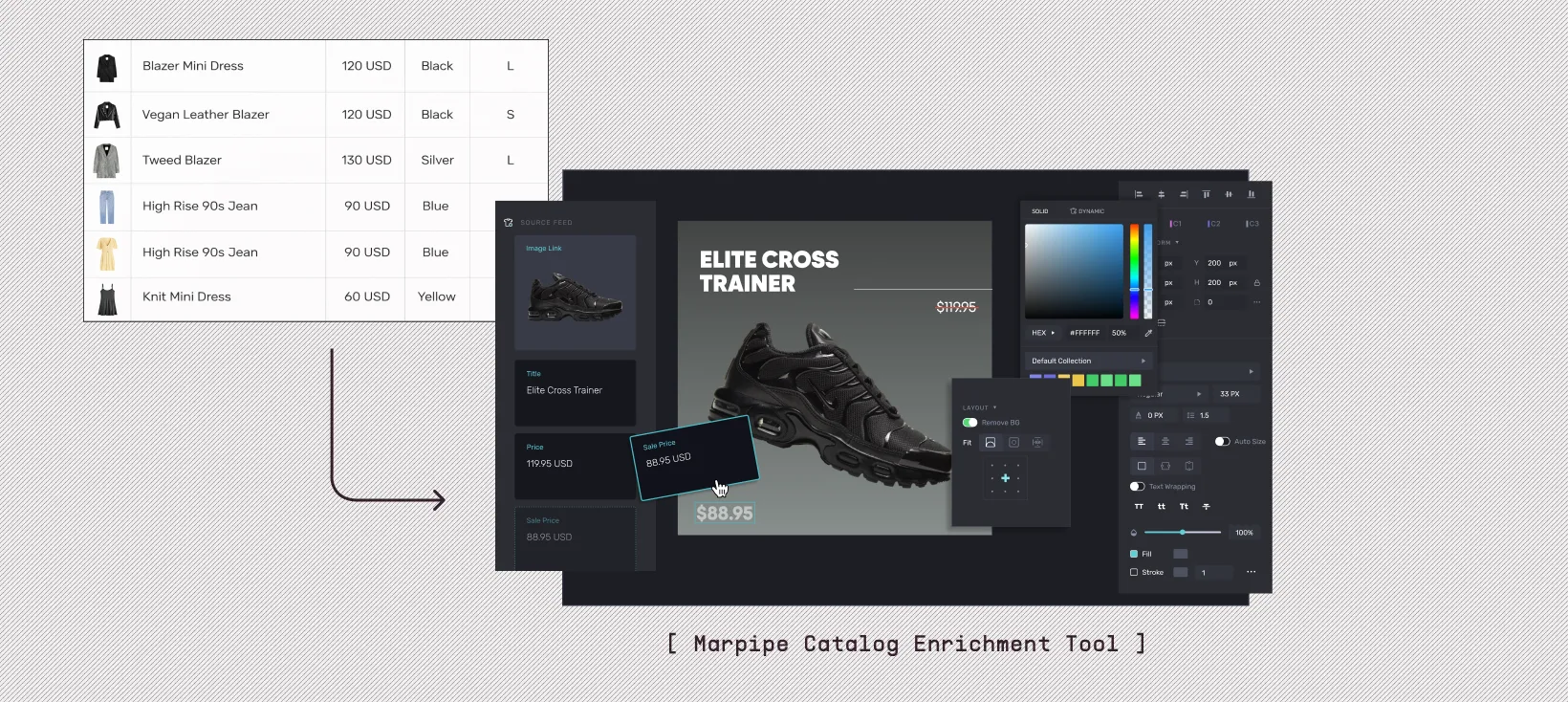
Marpipe connects directly to your product data and turns it into scalable, testable creative variations. Instead of building single ads, you build systems that learn. Instead of guessing what resonates, you measure it.
If you are evaluating the best creative automation platform in 2026, the real question is not how fast you can produce assets. It is how quickly you can identify what drives performance.
If you want to see how structured creative automation works in practice, book a demo to see it in action.
FAQs
What is a creative automation platform?
A creative automation platform helps teams generate, manage, and scale marketing creatives with less manual work, often using data and automation logic.
Do creative automation platforms replace designers?
No. They remove repetitive tasks and speed production, but work best when designers and marketers collaborate on strategy and testing.
What should you look for in a creative automation platform?
Look for feed or data integration, variation generation, performance linkage, and workflow support across channels.