

At the moment, most AI ad generator tools can generate a headline, mock up a creative, or turn a prompt into something usable in seconds. That part is no longer impressive. The problem is what happens after. Teams end up with more ads, but not always better ones. More variations get produced, but testing stays messy. Creative volume goes up, and so does the guesswork. Meta reported a 19% increase in ad impressions in Q1 2026 alone, which means teams are producing and serving more creative than ever.
That is the gap most AI ad generator tools still have not solved. Generating assets is easy. Learning what works, across products, audiences, and channels, is where most teams still lose time. The best AI ad generator tools in 2026 are not just helping marketers produce more creative layouts. They are helping teams test more deliberately, scale what performs, and reduce wasted cycles in the process. Below is a breakdown of the top AI ad generator tools this year, what they are good at, and where they tend to fall short.
The Best AI Ad Generator Tools to Know in 2026
- Marpipe
- AdCreative.ai
- Pencil
- Canva Magic Studio
- Jasper
- The Brief
- Smartly.io
- Superside
- Predis.ai
- Copy.ai
- Arcads
1. Marpipe
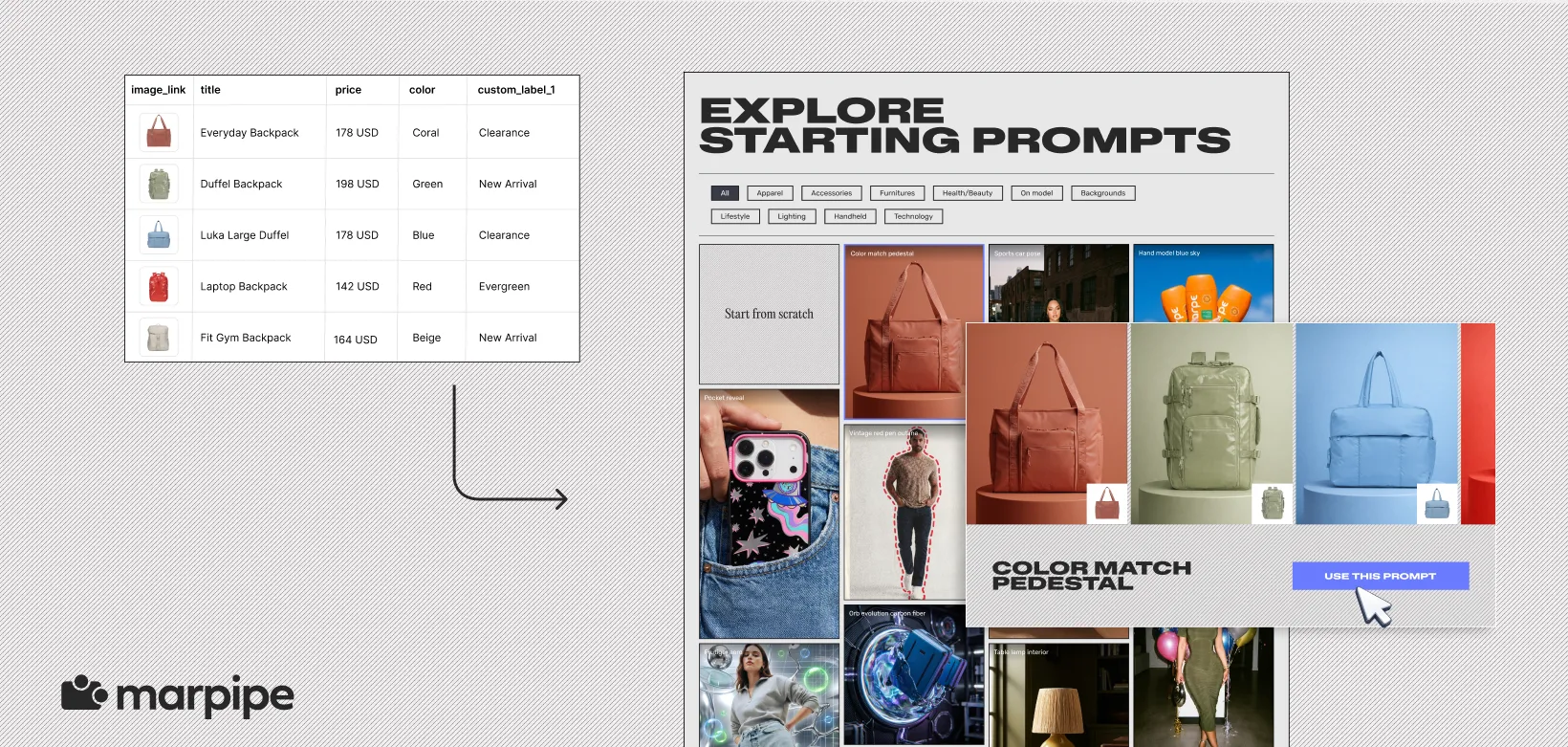
Marpipe takes a different approach compared to most AI ad generator tools. Instead of asking for prompts and producing standalone creatives, it connects directly to your product feed. From there, it builds structured variations automatically. Product attributes are mapped into design templates, and combinations are tested systematically. This makes it less of a design toy and more of a testing engine.
For ecommerce brands running catalog ads, that distinction is important. It means the AI ad generator is not just producing ads. It’s producing controlled experiments.
For teams running catalog ads, paid social, or performance creative across large product sets, that changes the workflow entirely. Instead of designing one ad at a time, you can build creative systems that generate, adapt, and scale with your catalog.
Key capabilities:
- Feed-powered creative generation turns your product feed into ready-to-launch ad creative automatically.
- Catalog creative at scale helps you generate high-volume product ads without building each asset by hand.
- Product-level variation testing makes it easy to test creative variables across products and find what actually drives performance.
- Creative automation built for ecommerce helps your team automate branded ad production across the catalog with less manual work.
- Built for paid social and beyond gives you a faster way to launch feed-driven creative across Meta, Google, and other performance channels.
Best for: Ecommerce brands and retail teams that need to scale catalog creative, test more variations, and improve ad performance across large product sets.
2. AdCreative.ai
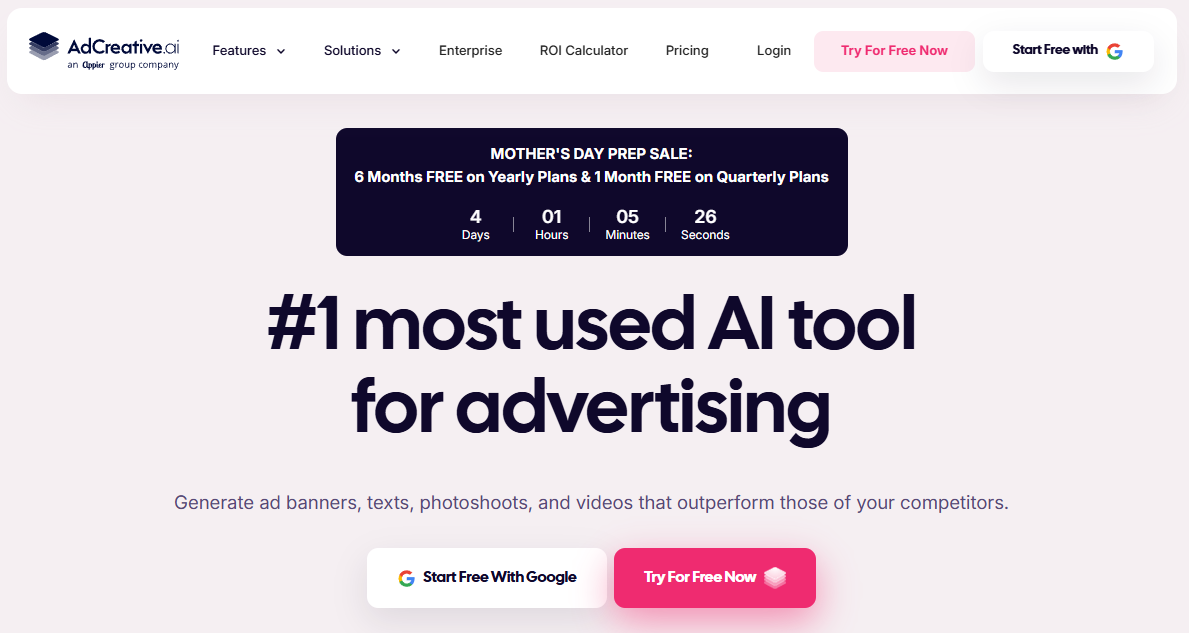
AdCreative.ai is built around speed. Upload your assets, enter a few inputs, and it produces platform-ready visuals. It also assigns predictive scores to creatives, which can be useful when prioritizing what to launch first.
It works well for teams that need to fill creative gaps quickly. But the testing layer is lighter than platforms designed specifically for structured experimentation. If speed is the main bottleneck, this tool solves that.
Key capabilities:
- AI-generated static creatives help teams produce ad concepts quickly for paid social and display campaigns.
- Built-in ad copy generation pairs headlines and short-form messaging with creative output in one workflow.
- Performance scoring gives teams a predictive signal on which creatives are more likely to perform before launch.
- Fast concept iteration makes it easy to generate and test multiple ad angles in a short production window.
- Simple self-serve workflow gives lean teams a fast way to create more ads without added design lift.
Best for: Small to mid-sized marketing teams that need fast static ad production for paid social, display, and quick-turn campaign testing.
3. Pencil
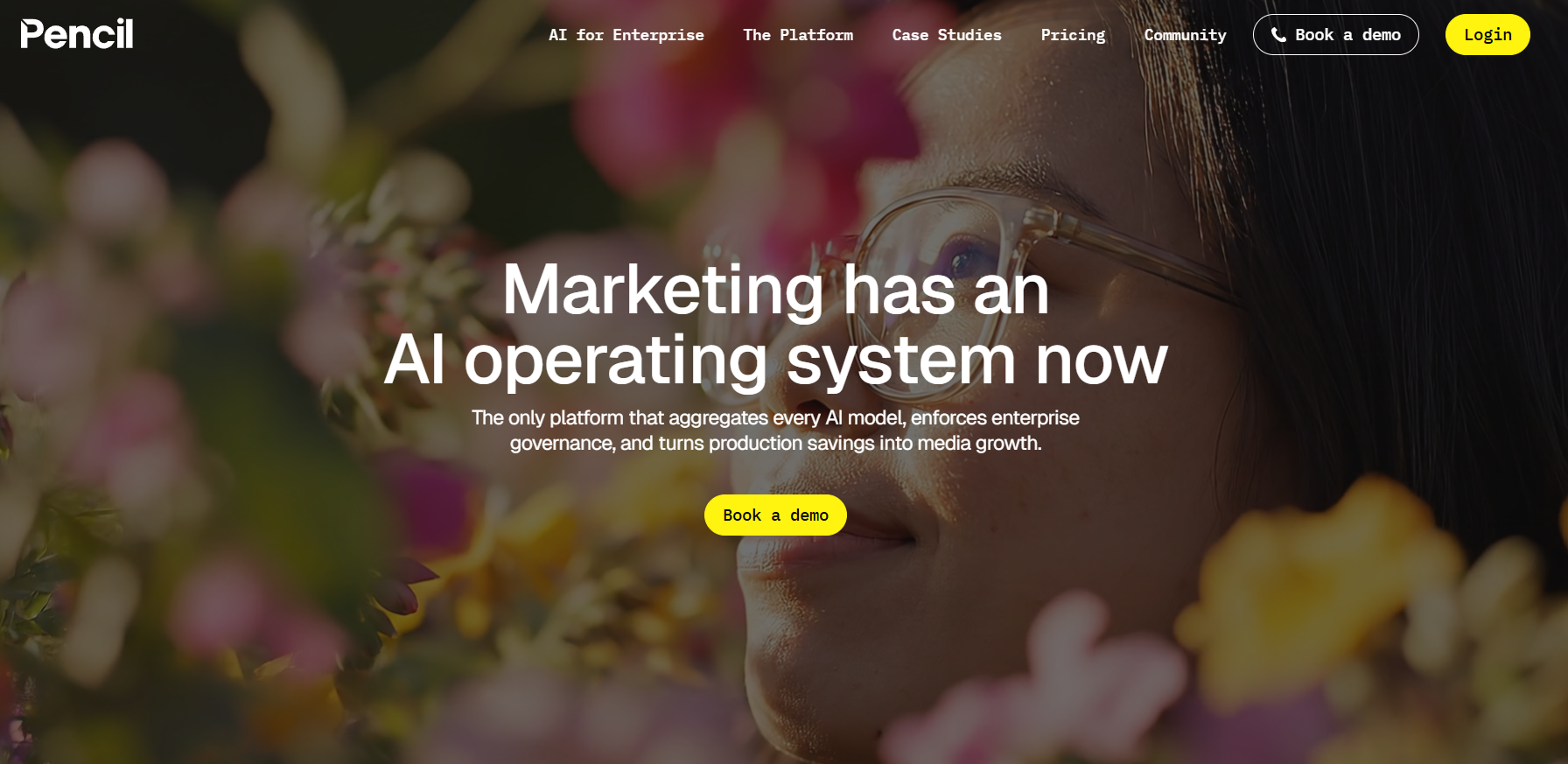
Pencil focuses heavily on AI-generated video and static ads, giving performance teams a faster way to create polished paid social assets at scale. Where many AI ad tools lean heavily into static generation, Pencil stands out for helping brands produce motion-first creative that feels more native to paid social.
The platform is especially useful for teams running frequent campaign refreshes and testing multiple creative directions across Meta, TikTok, and other social channels. Pencil combines AI-generated creative with predictive performance scoring, giving teams a faster way to generate, test, and prioritize new concepts before pushing spend behind them.
Key capabilities:
- AI-generated video creative helps teams produce short-form ad content faster without traditional video production.
- Static and motion asset generation gives marketers more flexibility across formats, placements, and campaign types.
- Predictive performance scoring helps prioritize which creative concepts are most likely to perform before launch.
- Brand-aligned creative output makes it easier to generate ads that stay visually consistent across campaigns.
- Social-first creative workflows support faster testing and refresh cycles across Meta, TikTok, and other paid social channels.
Best for: Brands and paid social teams that need faster video production, stronger creative refresh cycles, and more scalable social-first ad testing.
4. Canva Magic Studio
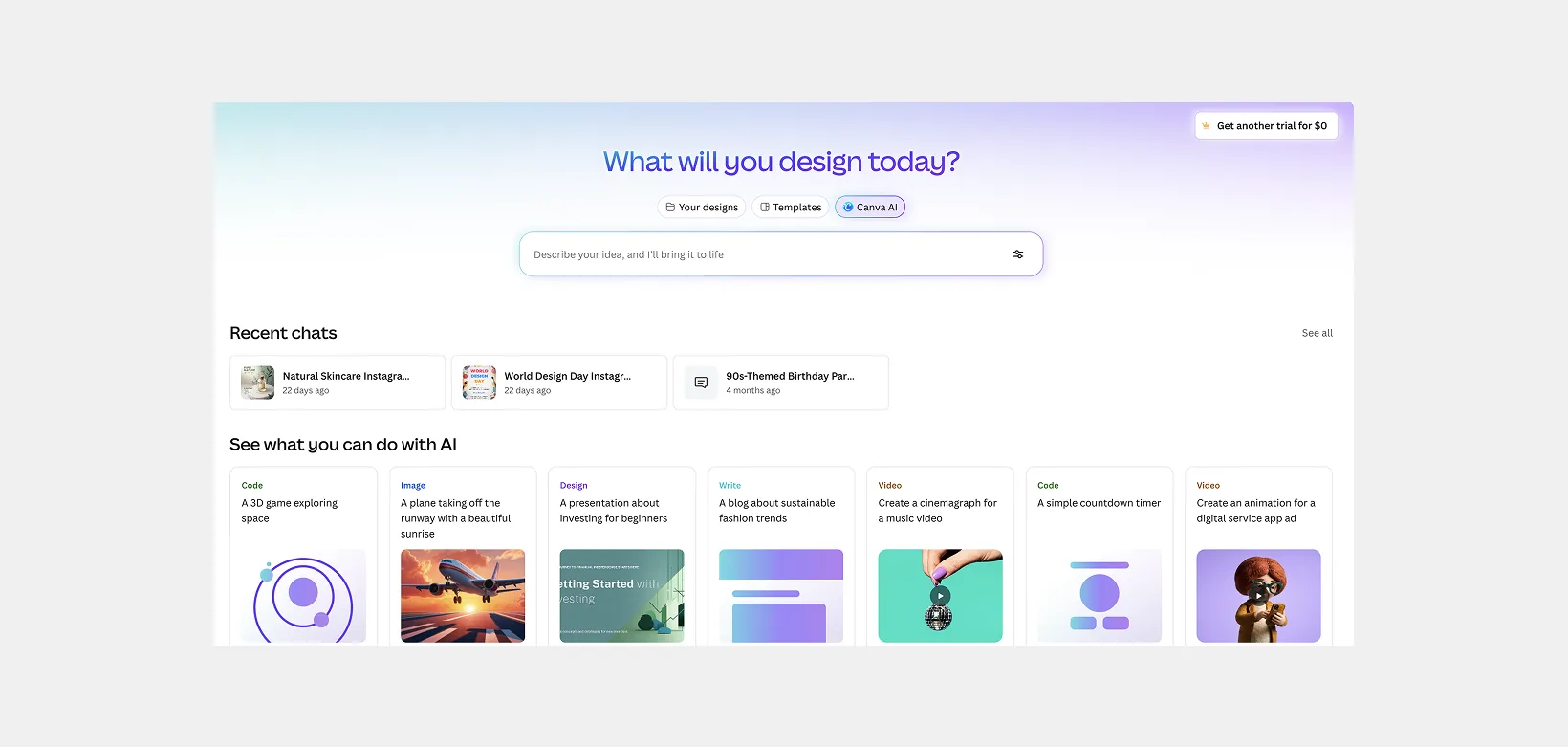
For teams already working inside Canva, Magic Studio adds AI on top of a workflow they already know. It is less specialized than purpose-built AI ad platforms, but that is also what makes it useful. Canva Magic Studio is built for general marketing teams that need fast creative output across ads, social content, presentations, and lightweight campaign assets. It is easy to use, fast to adopt, and useful for teams that value convenience over advanced performance workflows.
Key capabilities:
- AI-powered design generation helps teams create ad visuals and marketing assets faster with minimal design effort.
- Built-in copy assistance gives marketers a quick way to generate headlines, captions, and supporting text inside the design workflow.
- One-click resizing makes it easy to adapt creative across formats, placements, and channels.
- Template-based asset creation helps teams move faster with prebuilt layouts for ads, social posts, and campaign content.
- Accessible creative workflows give non-designers an easy way to produce polished assets without added production overhead.
Best for: Small teams and general marketers who need fast, flexible creative production without relying on dedicated design resources.
5. Jasper
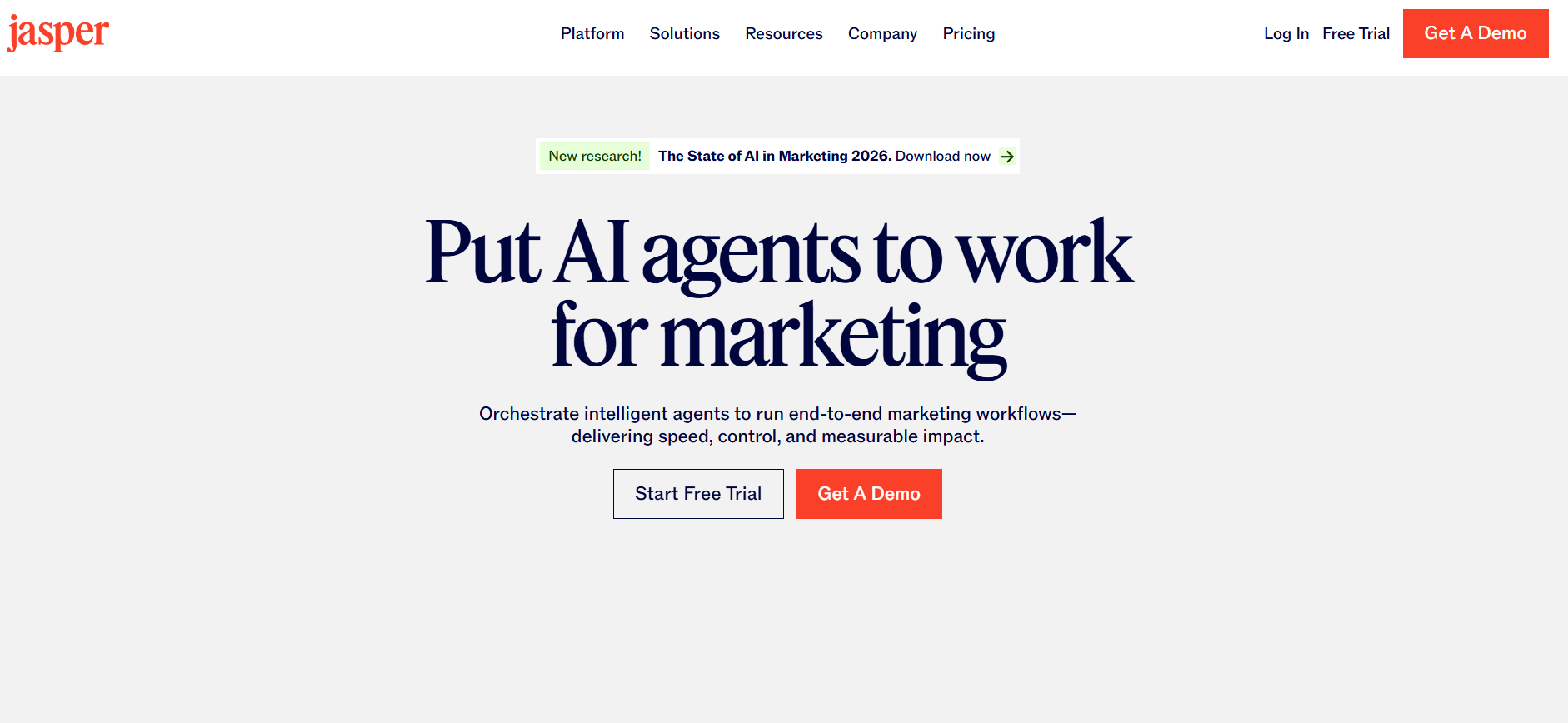
Jasper is built for marketers who need better messaging before they need better creative. While many AI ad generators focus on visuals first, Jasper is strongest at shaping the words behind the campaign, from headlines and hooks to positioning, offers, and ad copy variations. It is less of a design tool and more of a messaging engine for performance teams that want stronger creative inputs before production starts. For marketers who believe the ad concept matters just as much as the asset, Jasper is often where the workflow starts.
Key capabilities:
- AI-generated ad copy helps teams create headlines, hooks, and conversion-focused messaging faster.
- Campaign messaging support makes it easier to test positioning, offers, and creative angles before design begins.
- Brand voice controls help teams keep ad copy consistent across channels, campaigns, and contributors.
- Prompt-based ideation gives marketers a faster way to generate concepts for paid social, email, and landing page campaigns.
- Cross-channel copy workflows support campaign development beyond ads, including lifecycle, content, and retention messaging.
Best for: Marketing teams that need stronger ad messaging, faster campaign ideation, and better creative direction before production starts.
6. The Brief (formerly Creatopy)
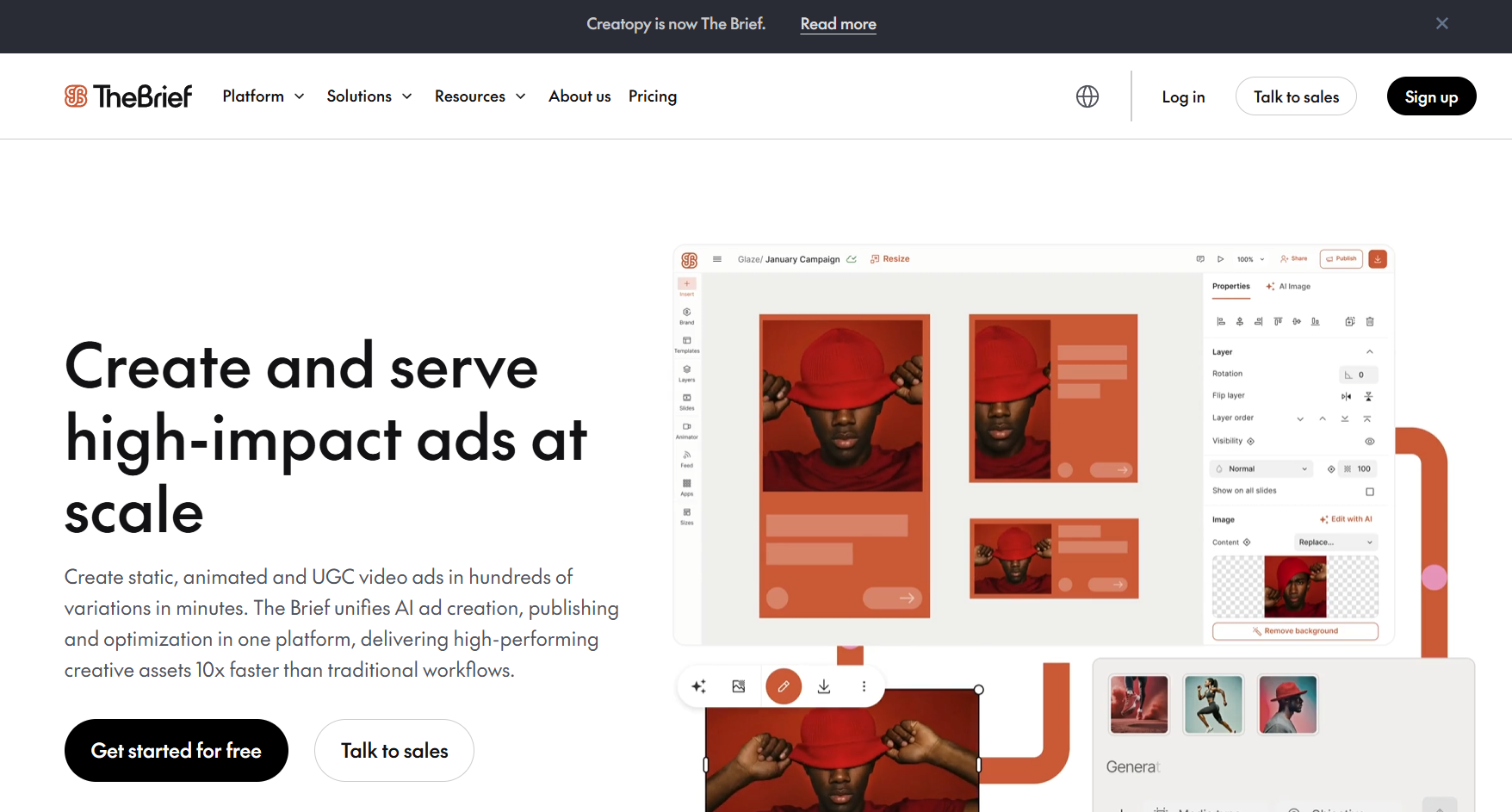
Formerly known as Creatopy, The Brief rebranded in late 2025 to reflect a much bigger ambition. What started as a creative automation platform for display ads has evolved into a broader AI marketing platform built to support the full campaign workflow. The name change signals that shift clearly. Creatopy was known for ad production and automation. The Brief is positioning itself as an AI agency for marketers, built to support strategy, creation, launch, and optimization in one connected system.
Key capabilities:
- AI-powered campaign planning helps teams move from research to creative direction using built-in competitive intelligence and strategy workflows.
- Creative generation across formats gives marketers a fast way to produce ads, videos, product visuals, and UGC-style assets in one system.
- Cross-channel publishing workflows help teams launch campaigns across Google, Meta, TikTok, Pinterest, and other paid channels with less platform switching.
- Built-in optimization workflows connect campaign performance back into the creative process with live reporting, spend insights, and AI-assisted recommendations.
- Expanded end-to-end campaign support gives teams a broader operating system for moving from insight to launch without relying on separate tools for every step.
Best for: Marketing teams that want more than creative automation and need one platform to support planning, production, launch, and optimization across the full campaign lifecycle.
7. Smartly.io
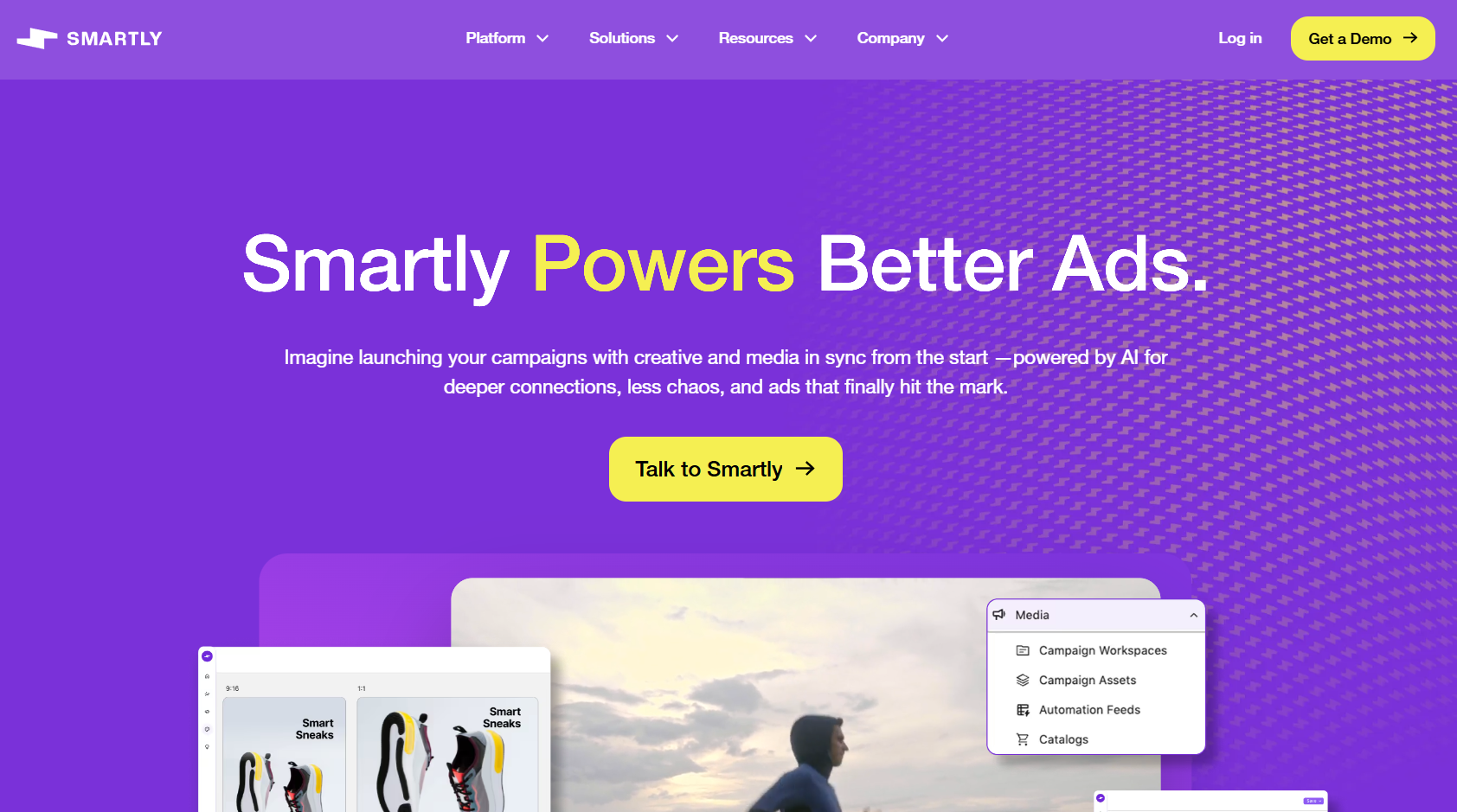
Smartly.io is built for enterprise advertisers managing paid media at scale. It combines creative automation, media buying, and campaign optimization into one platform, giving large brands a centralized system for running high-volume paid social across markets, teams, and channels. Where most AI ad generators focus on creative output alone, Smartly is built around campaign execution at enterprise scale.
Its biggest strength is operational control. Smartly helps large marketing teams manage creative production, audience delivery, spend, and reporting from one place, which makes it especially useful for brands running complex paid media programs across multiple regions. It is less flexible for lean teams and often heavier than standalone creative tools, but for enterprise advertisers, that added structure is the value.
Key capabilities:
- Enterprise creative automation helps large teams produce and manage high-volume paid social creative at scale.
- Integrated media buying workflows connect creative production directly to campaign execution and budget management.
- Cross-market campaign control gives global teams more consistency across regions, business units, and paid channels.
- Performance optimization workflows help teams connect creative, spend, and reporting in one operating system.
- Advanced workflow infrastructure supports larger organizations with more control, governance, and campaign complexity.
Best for: Enterprise brands and large agencies managing high-volume paid social campaigns across multiple teams, markets, and channels.
8. Superside
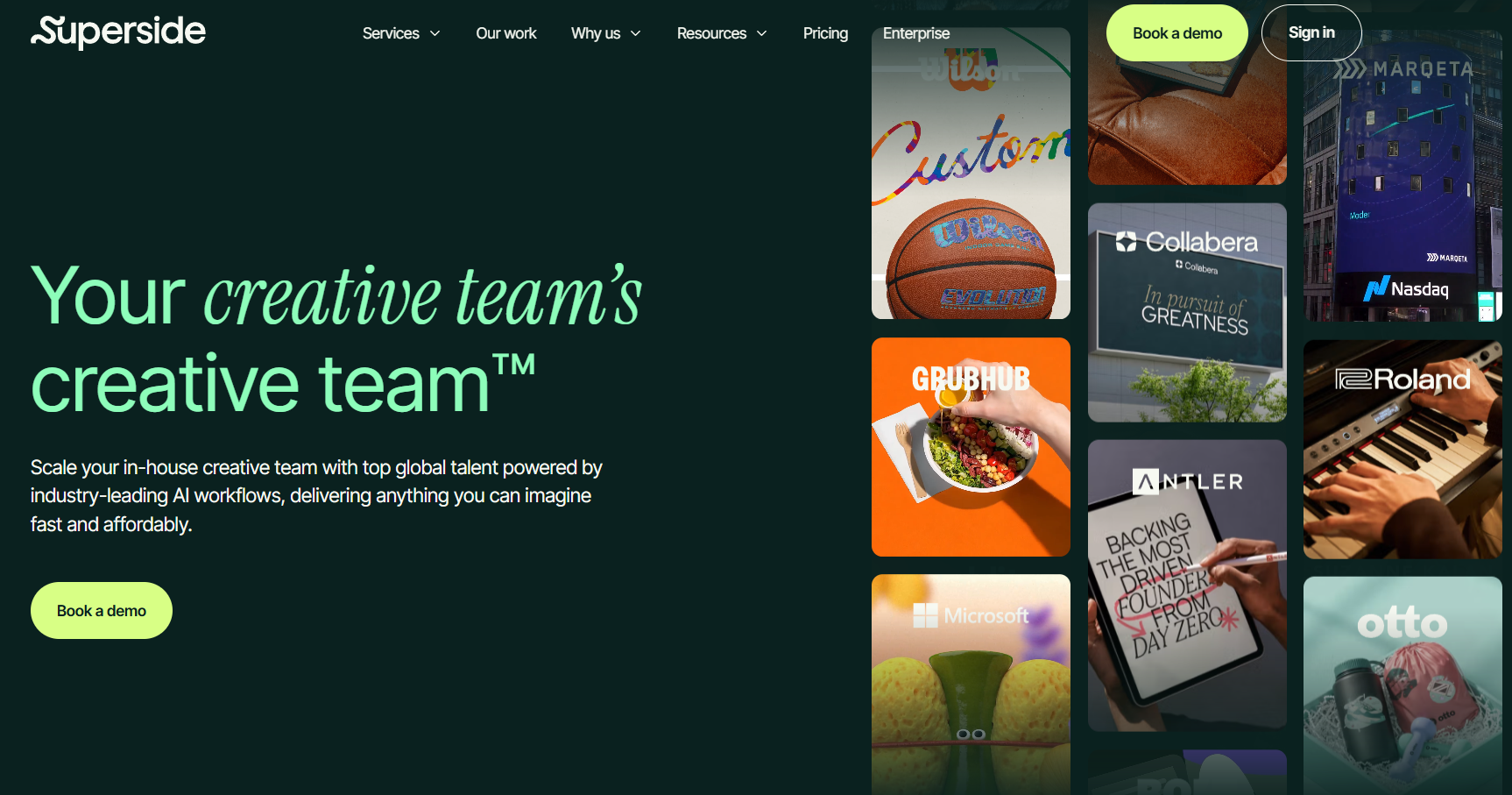
Superside sits in a different category than most AI ad generators because it is not just software. It combines AI-powered creative workflows with human design and production support, giving brands a faster way to produce ad creative without building everything in-house. Instead of relying entirely on self-serve tools, Superside offers a service-led model built around speed, flexibility, and access to creative talent. That hybrid approach appeals to brands that want scale without losing oversight. It is not self-serve in the same way as other AI ad generator tools are.
Key capabilities:
- AI-assisted creative production helps brands move faster without relying entirely on manual design workflows.
- Human creative support gives teams access to designers, editors, and production talent without hiring in-house.
- Scalable outsourced workflows help marketing teams increase output without adding internal headcount.
- Flexible creative support across formats covers paid ads, motion, social, branding, and campaign design needs.
- Service-led execution model gives teams a faster way to scale creative through a managed production partner.
Best for: Marketing teams that need more creative output, faster turnaround, and flexible design support without expanding internal production resources.
9. Predis.ai
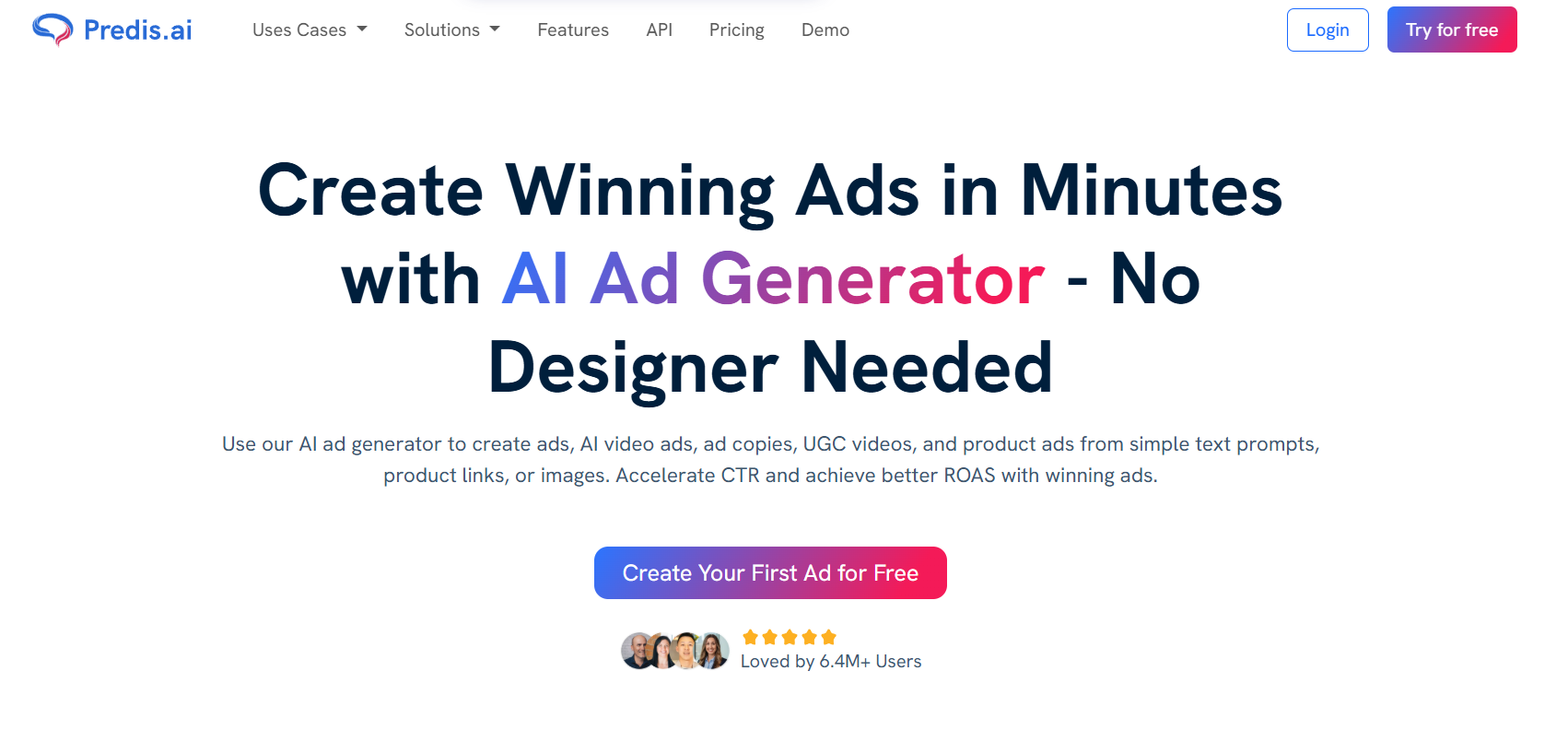
Predis.ai is built for social content teams that need to create more posts, faster. It focuses on AI-generated social media content, helping marketers turn simple prompts into captions, visuals, short videos, and post variations without much manual work. While it can support lightweight ad creation, Predis is better positioned as a social content engine than a true performance ad platform. It’s accessible and simple, but not built for deeper catalog automation or structured lift testing.
Key capabilities:
- AI-generated social content helps teams create posts, captions, and visuals faster from simple prompts.
- Fast content repurposing makes it easier to turn one idea into multiple social variations across formats.
- Built-in caption and creative workflows keep copy and visuals connected in one lightweight workflow.
- Short-form content support gives teams a quick way to create lightweight videos and social-first assets.
- Social-first publishing workflows help marketers move faster across organic content and lightweight paid campaigns.
Best for: Social media teams and small brands that need fast content generation for organic posting, lightweight paid social, and daily publishing.
10. Copy.ai
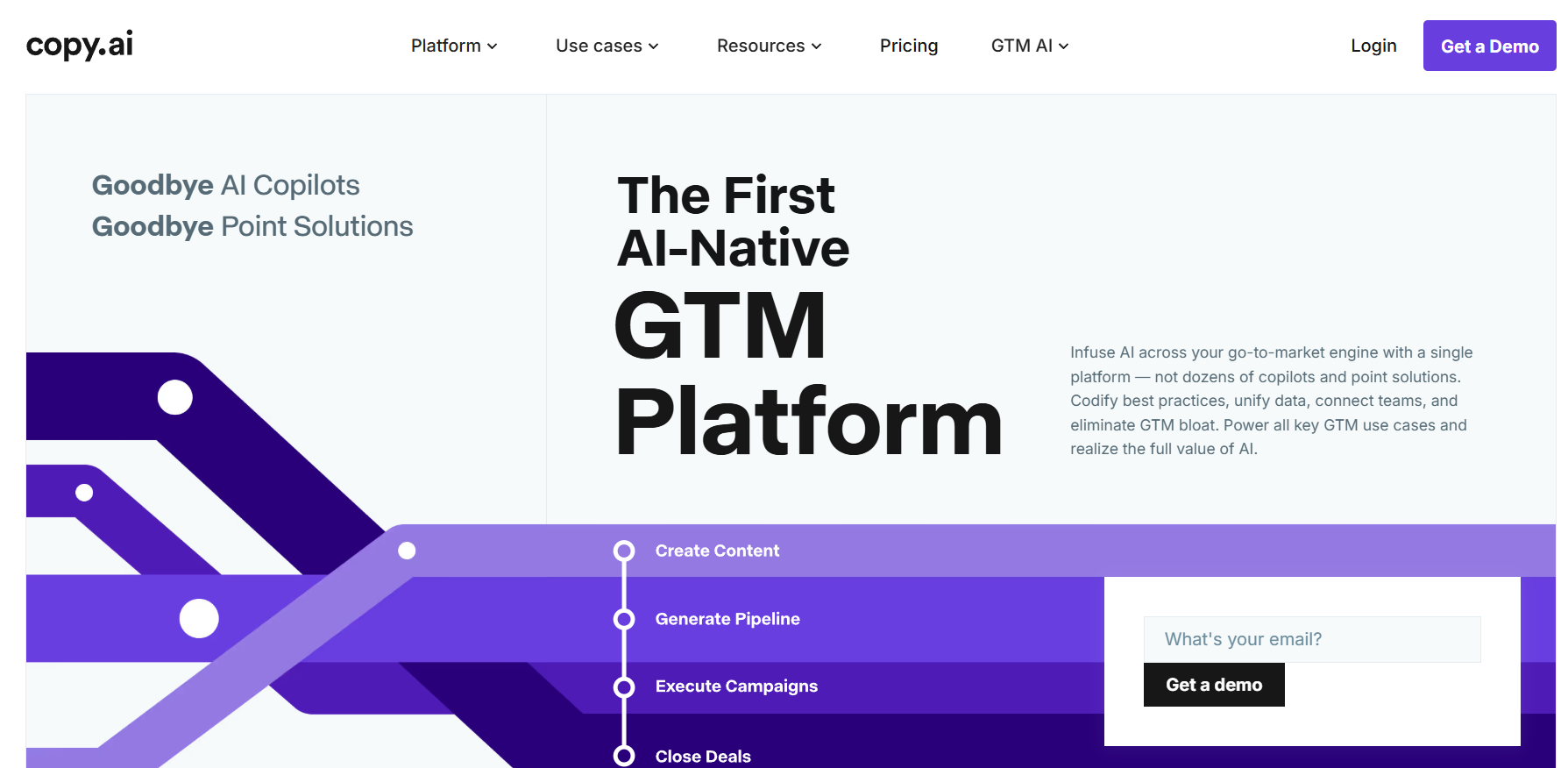
Copy.ai is built for messaging first. While it is not a visual ad generator in the traditional sense, it plays an important role in the ad creation workflow by helping marketers generate campaign angles, headlines, value props, and ad copy faster. For teams that believe stronger creative starts with stronger messaging, Copy.ai is often where the process begins. Copy.ai helps teams move faster through ideation, refine positioning before design starts, and generate more copy variations for testing across paid, email, and lifecycle channels. It is best thought of as a campaign messaging engine, not a full creative production platform.
Key capabilities:
- AI-generated campaign copy helps teams create headlines, hooks, and ad messaging faster.
- Messaging and positioning support makes it easier to test angles, offers, and value props before production begins.
- Fast copy variation workflows help marketers generate more options for testing across campaigns and channels.
- Prompt-based ideation gives teams a faster way to develop campaign concepts for paid, email, and lifecycle.
- Cross-channel messaging support helps extend campaign thinking beyond ads into broader marketing workflows.
Best for: Marketing teams that need faster campaign ideation, stronger messaging, and more copy variations before creative production starts.
11. Arcads
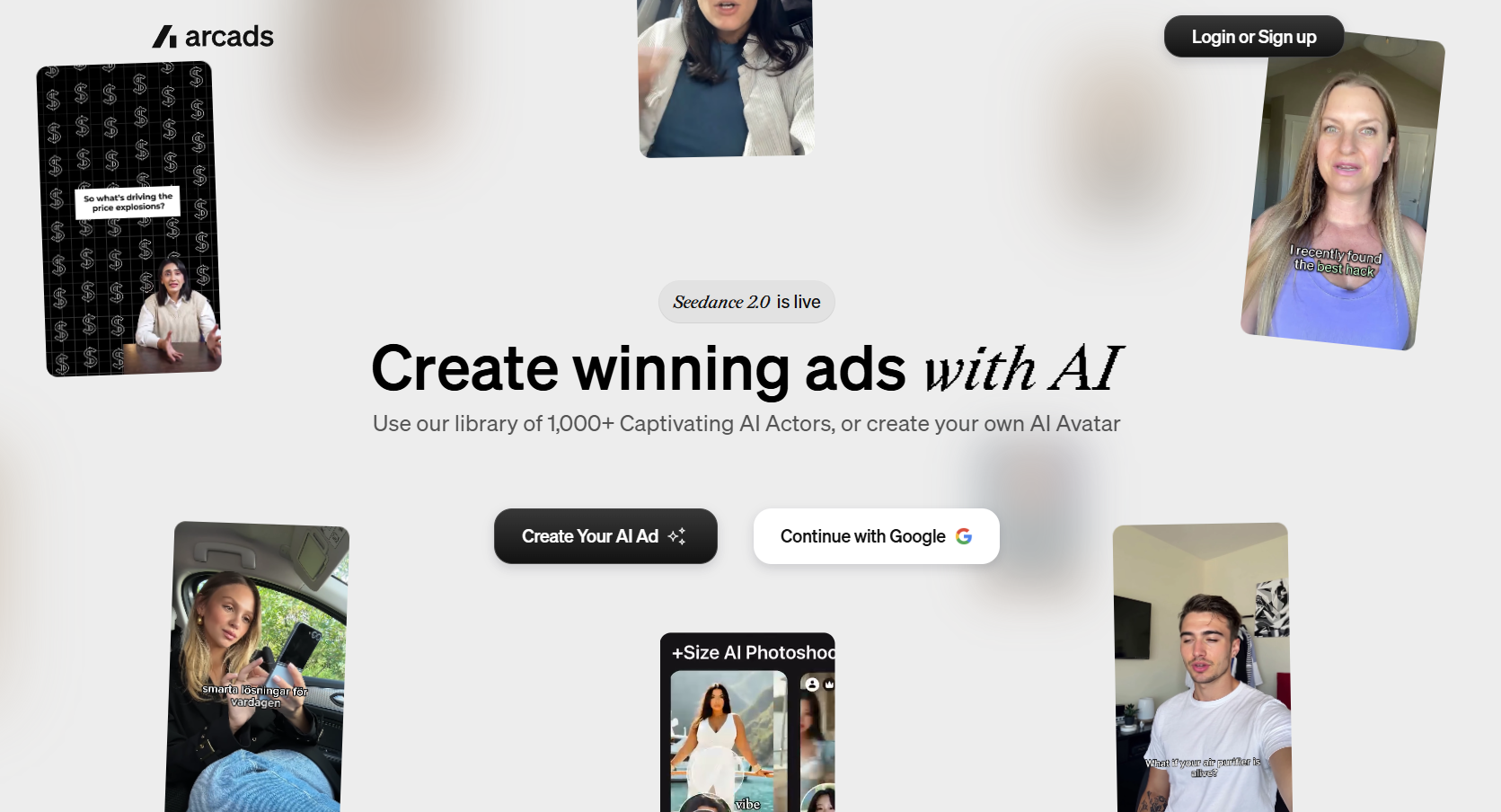
Arcads is built for one thing: fast UGC-style video ads. It helps brands generate creator-style paid social content without relying on traditional production, influencer sourcing, or in-house video teams. Instead of building polished brand ads, Arcads focuses on direct-response video formats designed to look and feel like native creator content on platforms like TikTok, Instagram Reels, and Meta.
That focus makes it especially useful for performance teams testing short-form video at speed. Arcads is not trying to be a full creative suite. It is built to help brands generate more UGC-style ads, test more hooks, and get more creator-like video into market faster.
Key capabilities:
- AI-generated UGC-style videos help teams create creator-style ad content without traditional production.
- Short-form paid social workflows support faster video output for TikTok, Reels, and Meta placements.
- Direct-response creative formats help brands test more hooks, offers, and creator-style ad angles quickly.
- Fast concept-to-video production gives teams a quicker path from script to launch-ready ad creative.
- Creator-style testing at scale helps performance teams produce and test more native-feeling video ads.
Best for: Performance teams and consumer brands that need fast UGC-style video ads for TikTok, Reels, and short-form paid social testing.
Recap: Comparing the Best AI Ad Generator Tools in This Article
What is an AI Ad Generator?
An AI ad generator is a platform that uses artificial intelligence to create advertising assets. That can include copy, static images, video ads, product-based creatives, or formatted assets for Meta, Google, TikTok, and other channels.
Some tools focus on speed. Others focus on automation. A few focus on structured experimentation. That distinction matters. There’s a difference between generating creative and generating insight.
How AI Ad Generator Tools Are Being Evaluated in 2026
There has been a noticeable shift in how AI ad generator tools are evaluated. A few years ago, the focus was novelty. Could it write headlines? Could it produce images? That is no longer the benchmark.
Now the focus is accountability.
- Does the tool connect to performance data?
- Does it structure variation logically?
- Does it reduce guesswork?
Generating ads is no longer the hard part. Most tools can do that. What matters now is whether the platform helps teams learn faster, test more deliberately, and improve performance with less wasted motion.
The tools becoming most useful in 2026 are not just generating more ads. They are helping teams understand what is worth scaling.
Choosing the Right AI Ad Generator for Your Workflow
AI ad generator tools have become a practical part of the modern marketing stack. The question is no longer whether teams should use them. It is which type of tool fits the way your team actually works.
Some platforms are built for faster design. Others are better for messaging, video production, or enterprise campaign execution. The best choice depends on what slows your team down most, whether that is creative volume, production speed, campaign planning, or performance testing.
For ecommerce teams in particular, speed alone is rarely the real bottleneck. The bigger challenge is producing enough creative variation to test what works across products, audiences, and channels. That is where systems built around structured variation and product-level testing tend to create more value than tools built only for faster asset generation.
If that is the problem your team is trying to solve, Marpipe is built for exactly that. Explore how Marpipe works and book a demo to see it in action.
Frequently Asked Questions
What is the difference between an AI ad generator and a dynamic product ad platform?
AI ad generators are usually built to speed up creative production. They help teams generate images, copy, videos, and variations faster. Dynamic product ad platforms solve a different problem. They use your product feed to automatically assemble and deliver relevant product ads across large catalogs. For ecommerce brands managing hundreds or thousands of SKUs, that distinction matters. One helps produce assets faster. The other helps scale product-specific creative across the catalog. Teams running feed-based campaigns should understand how dynamic product ads work before treating the two as interchangeable.
When does AI-generated creative actually improve ad performance?
AI-generated creative improves performance when it helps teams test better variables, not just produce more ads. More output can increase volume, but it does not automatically improve results. The lift usually comes from testing stronger offers, clearer product framing, sharper hooks, or better visual treatments in a more structured way. AI is most useful when it reduces wasted production cycles and gives teams a faster path to identifying what works. In one 10-week Facebook study spanning 35,000 advertisers and 640,000 ad variations, Meta found its AI-generated ad text improved click-through rate by 6.7% over the baseline model. That is the difference between generating more ads and generating more effective ones.
Do AI ad generator tools replace product feed automation platforms?
No. They support different parts of the workflow.
AI ad generators help teams create ads faster. Product feed automation platforms help structure and enrich the data those ads depend on. One improves creative production. The other improves the quality, consistency, and usability of the product data behind it.
For ecommerce teams, both matter. Creative systems get much stronger when the feed behind them is clean, enriched, and built to scale. Comparing product feed automation tools is often just as important as comparing creative tools.
What should performance teams prioritize in an AI ad generator in 2026?
Performance teams should prioritize tools that reduce guesswork. Faster production is useful, but it is rarely the biggest constraint. The better platforms help teams test more deliberately, connect creative decisions to measurable outcomes, and improve learning cycles over time. For most ecommerce teams, that matters more than generating one more ad variation.