

Most brands don’t struggle to launch products. Instead, they struggle to get those products seen. Building traffic on your own takes time, and paid ads get expensive quickly. At the same time, organic growth can be unpredictable. Meanwhile, platforms like Shein Marketplace already have millions of shoppers actively browsing every day.
As of January 2026, Shein has officially solidified its position as the #1 Apparel and Fashion website in the world, clocking in over 282.8 million monthly visits. This puts its traffic volume at more than 4x that of traditional giants like H&M or Zara.
Shein changes how brands access demand. Rather than trying to pull customers in, you place your products where customers are already searching, scrolling, and buying.
At Marpipe, we’ve seen this pattern play out across every major marketplace. Early sellers usually gain an advantage, but only if they understand how the platform actually works. It is not just about listing products. It is also about how those products appear, compete, and convert. So if you’re considering becoming a vendor on Shein Marketplace, the real question is: are you prepared to compete once you’re inside?
What is Shein Marketplace?
Shein Marketplace is a platform where third-party sellers can list and sell their products directly on Shein’s website and app.
Instead of Shein owning all inventory, brands and Shein vendors can upload their own product catalogs, manage pricing, and fulfill orders while tapping into Shein’s global audience. This model is similar to marketplaces like Amazon, but with a key difference. Shein is highly focused on fast-moving categories like fashion, accessories, beauty, and lifestyle products.
One of the biggest advantages of selling on Shein is that there are no monthly listing fees and no required advertising fees. This makes it easier to get started without a large upfront investment, especially compared to other marketplaces where visibility often depends on paid ads.
For brands exploring new opportunities on Shein Marketplace, this opens up a new way to reach customers without building everything from scratch. But it also means competing in a crowded, fast-paced environment where product presentation and pricing matter more than ever.

To become one of the approved Shein vendors, you must:
- Be a domestic US-based business (with some expansion to other regions)
- Ship products directly to customers from within the U.S.
- Operate as a professional seller with structured operations
However, not every U.S-based business gets accepted into Shein Marketplace. Shein prioritizes sellers who can keep up with demand, maintain consistent quality, and operate efficiently at scale. This means apart from a registered business, you’ll also need a structured product catalog and the ability to handle orders reliably. It is not built for casual sellers or small experiments.
Beyond basic qualifications, Shein looks closely at how well your products fit its platform. Your catalog needs to align with what customers expect, which usually means trend-driven, affordable, and visually appealing products. At the same time, a strong product presentation is essential. Since Shein is highly visual, your images, descriptions, and overall listing quality play a major role in both approval and performance. This is where catalog ad creative becomes critical for testing multiple variations at scale.
To assess if you are a good fit, it helps to look at a few key areas:
- Competitive pricing within your category
- Ability to launch and refresh products frequently
- Reliable inventory and fulfillment processes
- High-quality visuals for every product
If these elements are in place, Shein Marketplace can be a strong growth channel. If not, improving these areas first will increase your chances of both getting approved and performing well once you are live.
How to Become a Seller on Shein
Step 1: Apply for a Shein business account
To start selling, you’ll need to apply for a Shein business account. After that, Shein evaluates whether your brand fits the platform. Shein prioritizes sellers who can keep up with demand and maintain a consistent customer experience.
Step 2: Set up your seller account
Once approved, you will gain access to the seller dashboard. This is where you configure your account and prepare your store to go live.
You will need to set up payment details, define your fulfillment process, and organize your backend operations. This step might seem administrative, but it directly impacts how smoothly your business runs once orders start coming in. Small setup mistakes here can lead to delays or operational issues later.
Step 3: Upload your product catalog
The next step is uploading your product catalog. This includes your product titles, descriptions, pricing, variants, and images.
This is one of the most important stages in the entire process. Your product data determines how your listings appear, how they rank, and whether customers click on them. A well-structured catalog improves visibility, while inconsistent or incomplete data can limit your reach on the platform. Learn how proper feed management can improve visibility and consistency across listings.
Step 4: Go live and start optimizing
Once your products are live, your focus shifts from setup to performance. Successful Shein vendors actively manage their listings. They adjust pricing based on competition, update product images to improve engagement, and keep inventory fresh to match demand. Instead of treating listings as static pages, they treat them as assets that need continuous improvement.
Your product data determines how your listings appear, rank, and convert. If you’re new to this, here’s a clear breakdown of what a product feed is and how it powers marketplace listings.

Shein Marketplace Fees Explained
The cost structure on Shein Marketplace is straightforward. Your main expenses come from commission, optional fulfillment services, and operational performance. Because of this, profitability depends less on platform fees and more on how efficiently you manage pricing, shipping, and inventory.
Commission Fees
According to their Seller’s FAQs, Shein charges a fixed commission rate per sale, and this rate depends on your product category. That means:
- You only pay when you make a sale
- Different categories have different commission levels
- Your pricing strategy needs to account for this from the start
For example, a fashion item and an electronic accessory may not carry the same commission rate. This is why your product category matters early on.
Fulfillment and Storage Fees (optional)
If you choose to use SHEIN Fulfillment Service (SFS), there are additional costs for order fulfillment and a storage fee for inventory. Some sellers prefer this option because it simplifies logistics, while others handle fulfillment themselves to maintain more control over margins and operations.
Late Delivery Fees
Another important factor is delivery performance. Shein expects orders to be delivered within a specific timeframe. If an order is not delivered within 7 business days, a $1.00 fee per order is applied. While this may seem minor, it can quickly add up if your shipping process is inconsistent or delayed.
What Makes Shein Different From Other Marketplaces
Not all marketplaces operate the same way. If you approach Shein Marketplace like Amazon or Walmart, you will likely struggle.
On traditional platforms like Amazon, shoppers typically arrive with intent. They search for a product, compare options, read reviews, and then make a decision. In contrast, Shein behaves more like a content-driven shopping experience. Customers often do not know exactly what they want when they open the app. They scroll through listings, explore trends, and make decisions based on visuals, price, and how relevant a product feels in that moment.
Because of this shift in behavior, product presentation becomes far more important. While specifications and reviews still matter, they are not what stop the scroll. Instead, strong visuals, styling, and pricing are what capture attention first, and only then does the customer consider buying.
Here’s a quick comparison with the most common marketplaces:
Shein operates on a much faster trend cycle compared to most marketplaces. Products can gain traction and lose relevance within a short period, which means sellers need to refresh inventory and update listings more frequently. On Amazon or Walmart, products often have longer lifecycles, and rankings can remain stable for extended periods. On Shein, performance is more fluid and constantly shifting.
Another key difference is how competition plays out. Pricing pressure exists on all marketplaces, but on Shein, it is closely tied to visual appeal and trend alignment. Two similar products may be priced the same, but the one with stronger imagery and better presentation is more likely to win attention and sales. This creates an environment where listings compete more like ads than static product pages.
How to Actually Win on Shein Marketplace: 6 Tips for Shein Vendors
Success on the Shein Marketplace is not just about listing products and waiting for traffic. It requires ongoing updates, attention to creative quality, and a clear understanding of how customers interact with the platform. Once you recognize that Shein functions more like a social feed than a traditional storefront, it becomes easier to adjust your strategy and compete more effectively.
- Treat your listings like ads: Customers scroll quickly, so your images need to capture attention right away. Clear, styled visuals usually outperform basic product shots.
- Focus on trends, not just product quality: Shein moves fast, and sellers who regularly update their catalog with relevant styles tend to see better results.
- Price competitively: Customers compare similar products side by side, so you need to adjust pricing over time while protecting your margins.
- Optimize your product data: Clean titles, accurate attributes, and complete descriptions help your listings appear in the right places and improve visibility. As your catalog grows, managing this manually becomes difficult. Understanding what a PIM system is can help you keep product data consistent and scalable across marketplaces.
- Refresh creatives regularly: Updating images and presentation helps maintain engagement and keeps your listings from blending in with competitors.
- Maintain reliable inventory and fulfillment: Consistent stock levels and fast shipping prevent performance drops and improve customer experience.
When Should You Start Selling on Shein?
You are in a strong position to start if you already have a structured product catalog, competitive pricing, and the ability to fulfill orders consistently. Just as important, you need to be ready to actively manage your listings. Shein rewards sellers who update frequently, test creatives, and adapt to trends instead of setting things up once and leaving them.
On the other hand, if your catalog is limited, your visuals are inconsistent, or your operations are not fully reliable, it may be worth preparing before jumping in. The platform moves quickly, and early performance often sets the tone for long-term results.
What we’ve seen across marketplaces is that access to demand is no longer the hardest part. The real challenge is standing out once you are inside. On Shein, that comes down to how your products look, how often you refresh them, and how well your data is structured.
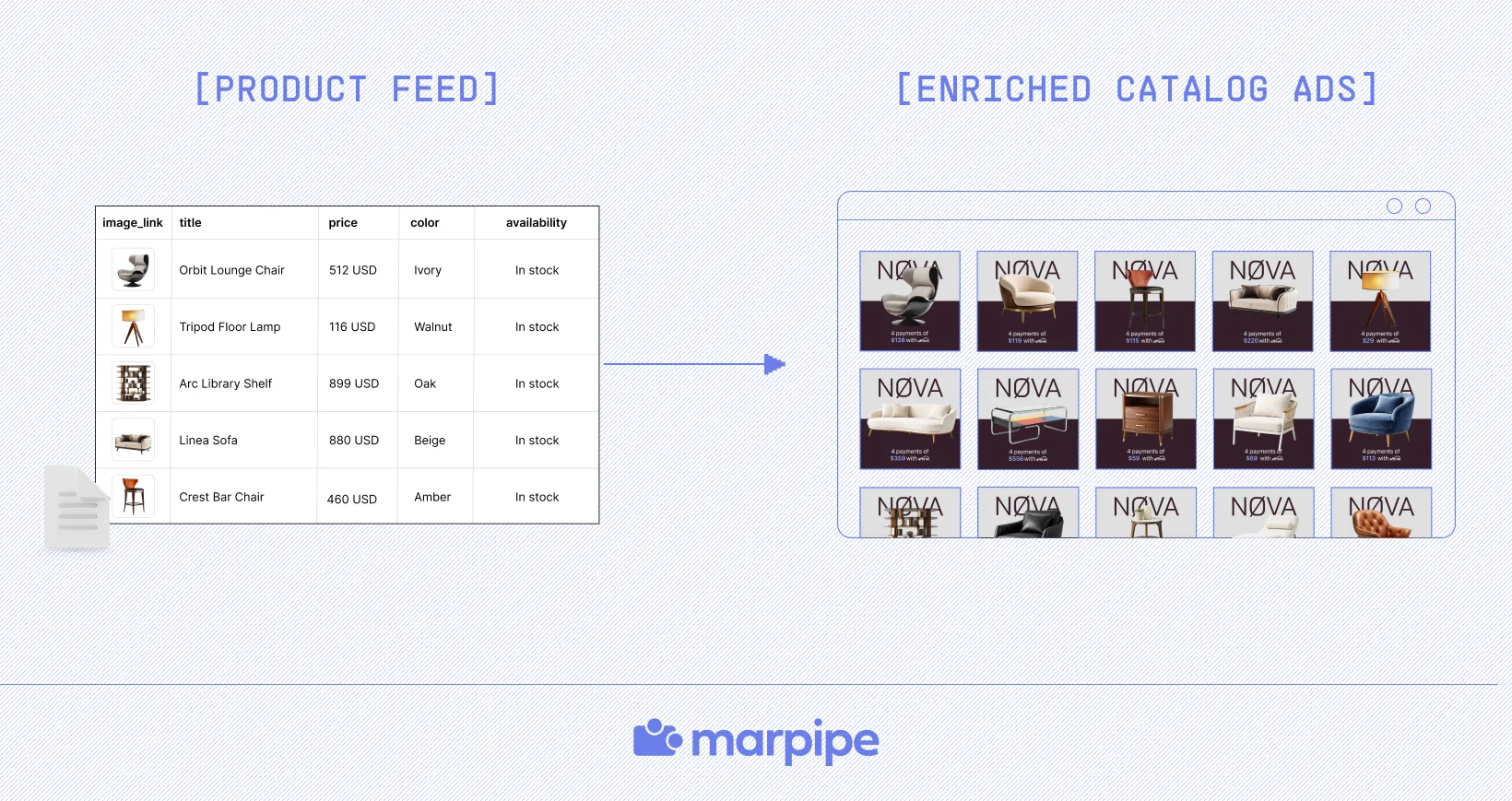
This is where Marpipe comes in. Instead of relying on a single version of your product listing, you can generate and test multiple creative variations at scale using generative AI. That means better-performing visuals, faster iteration, and more control over how your products compete in a crowded feed.
Book a demo to see how you can turn your product catalog into a high-performing creative engine and get more out of every listing on Shein Marketplace.
Frequently Asked Questions
Why is everything so cheap on Shein?
Shein keeps prices low because of how its supply chain is structured. Instead of producing large batches of inventory upfront, Shein works with a flexible manufacturing model that produces smaller quantities and quickly scales up products that perform well. This reduces waste and lowers production costs.
In addition, Shein sells directly to consumers without relying on traditional retail markups. There are fewer intermediaries, which means lower prices for shoppers. The platform also prioritizes high product turnover and competitive pricing among sellers, which further pushes prices down across the marketplace.
Are Shein and Temu the same?
Shein and Temu are not the same, although they may look similar at first. Shein started as a fashion-focused retailer and has expanded into a marketplace that includes multiple product categories. Its strength is in trend-driven products, especially in clothing and lifestyle.
Temu, on the other hand, operates as a broader marketplace from the start, offering a wide range of products across categories at very low prices. It focuses heavily on discounts, promotions, and direct-from-manufacturer pricing.
While both platforms emphasize affordability, Shein is more curated and trend-focused. However, Shein is quickly closing the gap on variety; non-apparel items now account for nearly a quarter (23%) of their total revenue, making them a direct competitor to Temu's general-merchandise model.
What does “shein” mean?
The name Shein does not have a specific dictionary meaning. It is a shortened, rebranded version of the company’s original name, SheInside, which was launched in 2008.
The original name “SheInside” was meant to reflect a fashion-focused brand centered around women’s clothing. Over time, the company simplified the name to Shein to make it easier to remember, easier to pronounce globally, and more adaptable as the brand expanded beyond just women’s fashion.
Today, the name represents a much broader business. While it started as a fast-fashion retailer, Shein has grown into a global ecommerce platform that includes multiple product categories and a marketplace for third-party sellers.
Is it safe to buy from Shein marketplace?
Buying from Shein Marketplace is generally safe, but the experience can vary depending on the seller you purchase from.
Shein handles the platform, payments, and overall customer experience, which adds a layer of security. This means your transaction is processed through Shein, not directly with an unknown third party. In most cases, this reduces the risk of payment issues or fraud. However, unlike a traditional retailer, where all products come from one source, the marketplace includes multiple sellers. Because of that, product quality, shipping speed, and packaging can differ from one listing to another. Overall, the platform itself is reliable, but your experience depends on choosing the right sellers and listings.
What is the Shein Reseller Program?
The Shein reseller program refers to a model where individuals or businesses source products from Shein and then sell those products through their own channels. Instead of selling on Shein itself, you are using Shein as a supplier.
In simple terms, you are not a marketplace seller. You are a middle layer between Shein and the end customer.
This model is commonly used in ecommerce because it allows you to start selling without manufacturing your own products. You can focus on choosing products, setting pricing, and driving traffic, while Shein handles the original production and inventory.