

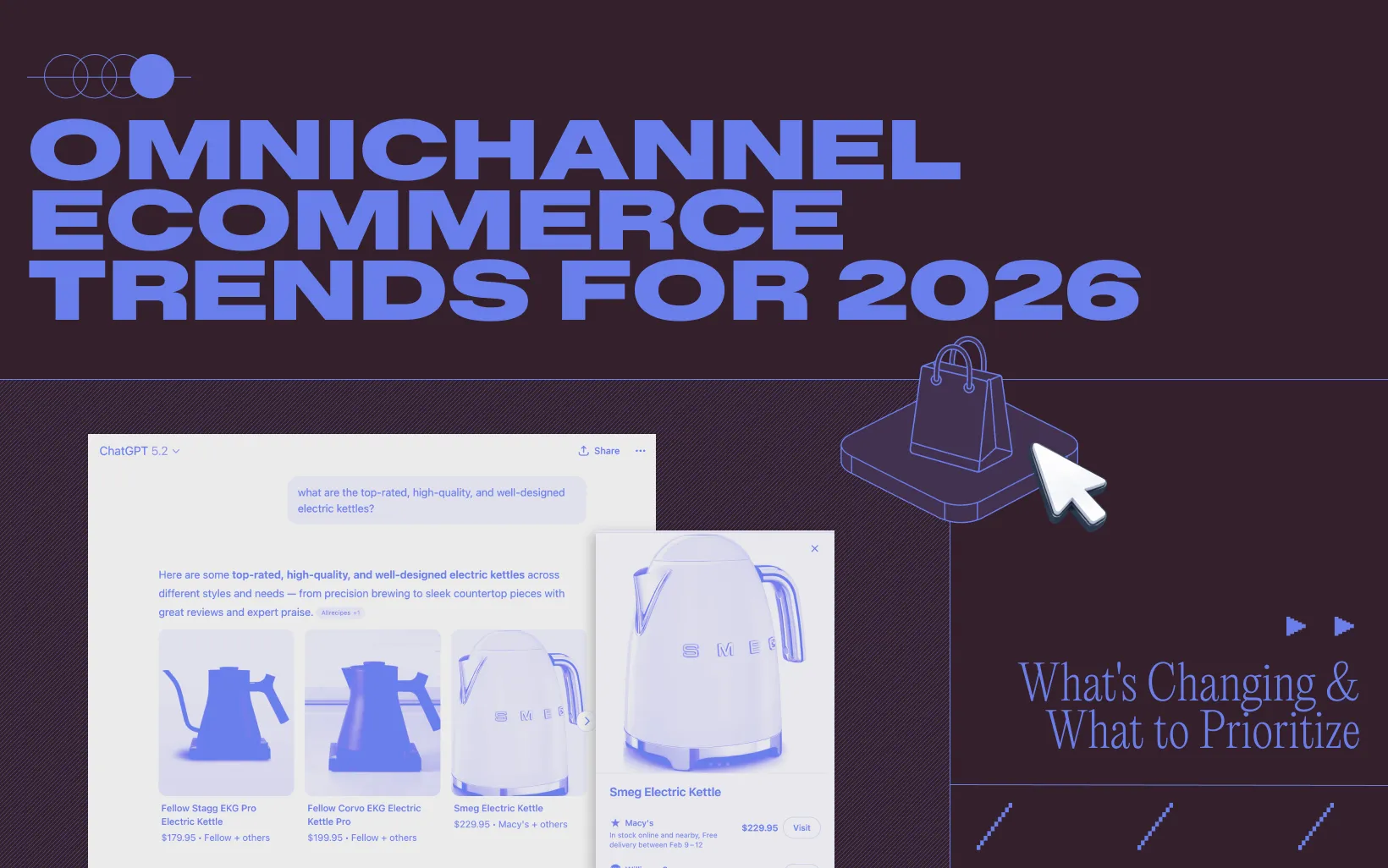
Omnichannel is evolving quickly. What used to mean selling across a few channels now includes AI-driven discovery, messaging-based commerce, retail media, and connected in-store experiences.
The next wave of omnichannel trends is not about expanding reach. It is about coordination. Customers move fluidly between AI tools, mobile, stores, and digital platforms, expecting the same product information, pricing, and experience at every step. This shift is driving new omnichannel marketing trends centered on consistency and real-time alignment.
At Marpipe, we see this play out through product data. Brands that invest in structured, scalable feeds through solutions like feed management are able to keep every channel aligned and responsive to change.
This guide breaks down what is changing in 2026 and what to prioritize to stay competitive.
11 Omnichannel Trends Defining Ecommerce in 2026
1. Agentic Commerce Is Replacing Search Behavior
Shopping is shifting from keyword-based search to AI-led decision-making. Instead of browsing results, customers are asking AI tools to find, compare, and even purchase products for them. This is known as agentic commerce. According to Forrester, by 2026, leading brands will adopt systems where AI agents become the main interface for product discovery and replenishment. This changes how products get chosen. Visibility is no longer just about ranking. It is about whether your product data is clear enough for AI to understand and recommend. Brands that rely on messy or incomplete data will struggle to show up, even with strong campaigns.
What to prioritize:
- Standardize product data across all channels
- Add clear, context-rich product descriptions
- Ensure feeds are complete, structured, and AI-readable
- Track performance at the product level, not just campaigns
- Keep pricing, availability, and messaging consistent everywhere
2. Physical Stores Are Becoming Media Channels
Physical stores are no longer just places to stock products or fulfill orders. In 2026, they will become part of the marketing engine. In-store displays, signage, QR codes, and product placements now work like physical ads that push shoppers into digital journeys, whether that means scanning for more details, joining a loyalty program, or buying later online. This matters because the store is no longer separate from ecommerce. It is a conversion touchpoint inside the broader omnichannel journey. Retailers investing in unified commerce, where store and digital operations work together, are seeing 1.5x higher customer lifetime value than those still operating in silos.
What to prioritize:
- Treat stores as customer acquisition and conversion channels
- Connect in-store promotions with digital follow-up journeys
- Keep pricing, inventory, and messaging aligned across store and online
- Use QR codes and displays to capture measurable shopper intent
- Measure store impact on lifetime value, not just foot traffic

3. AI Discovery Optimization Is Replacing Traditional SEO
Traditional SEO focused on keywords and rankings. In 2026, that approach is shifting toward AI Discovery Optimization, where products need to be understood by AI systems, not just indexed by search engines. Instead of matching keywords, AI evaluates context, use cases, and intent to decide which products to recommend. This means product data needs to be clearer, richer, and more structured than before. According to Gartner, by 2026, 80% of marketing interactions will be AI-driven, moving toward predictive, intent-based commerce. This changes discovery from reactive search to proactive recommendation, where only well-structured products consistently surface.
What to prioritize:
- Write product descriptions based on use cases, not just keywords
- Complete all product attributes to improve AI understanding
- Standardize categorization across your entire catalog
- Align product data with real customer intent and scenarios
- Continuously refine feeds to match AI-driven discovery patterns
4. The "Phygital" Reality: Mobile-In-Store Synergy
The gap between online and offline shopping is gone. Customers now use their phones while standing inside stores to compare prices, read reviews, and find better options in real time. This creates a “phygital” loop where physical and digital experiences constantly influence each other. According to Locala, 72% of consumers use smartphones in-store, and this behavior can increase loyalty by up to 30%. This means your store is no longer a controlled environment. Every product on the shelf is being evaluated against what customers see on their screens at the same moment.
What to prioritize:
- Ensure real-time pricing and inventory accuracy across channels
- Optimize mobile product pages for fast in-store access
- Make reviews, ratings, and key details easy to find instantly
- Align in-store messaging with online product information
- Enable seamless transitions from in-store browsing to online purchase
5. LTV Is Replacing ROAS as the Core Metric
ROAS has long been the default way to measure performance, but it often gives too much credit to channels that capture demand rather than create it. In 2026, leading brands are shifting toward customer lifetime value and incrementality testing to understand what actually drives growth. Instead of asking which channel got the last click, teams are asking which efforts generated real lift that would not have happened otherwise. This shift matters because omnichannel journeys are more complex, and relying on surface-level attribution can lead to over-investing in the wrong channels while underfunding true growth drivers.
What to prioritize:
- Shift from channel ROAS to customer lifetime value metrics
- Invest in incrementality testing to measure true lift
- Evaluate performance across the full customer journey
- Identify which channels create demand vs capture it
- Align budgets with long-term revenue, not short-term attribution
6. Conversational Commerce Is Taking Over Social Feeds
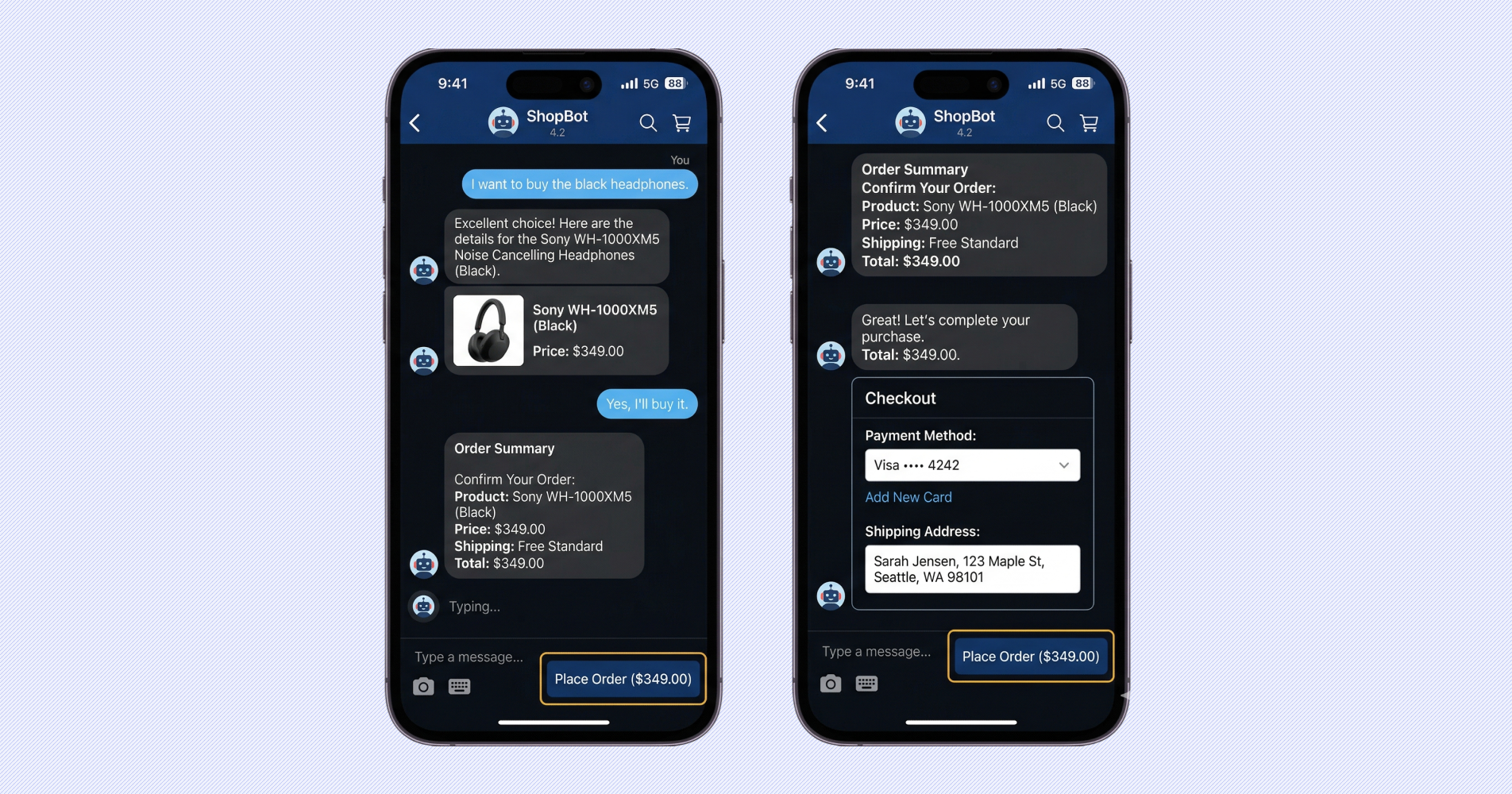
Omnichannel commerce is shifting from click-to-buy toward chat-to-buy. Instead of sending customers to a product page, brands are completing the entire purchase inside messaging apps like WhatsApp or Apple Messages. Product discovery, questions, recommendations, and payment all happen within a single conversation thread. This shortens the path to purchase and removes friction. According to Juniper Research, chatbot-driven messaging is expected to account for over 50% of global chatbot retail spend by 2026, with usage reaching 9.5 billion interactions. As payment and product integrations improve, messaging apps are becoming full storefronts, not just communication tools.
What to prioritize:
- Enable product discovery and checkout within messaging apps
- Integrate real-time product data into chat experiences
- Ensure fast, accurate responses through automation and AI
- Optimize product links and previews for conversational sharing
- Align messaging workflows with your broader omnichannel strategy
7. Agent-to-Agent Commerce Is Emerging in B2B
B2B commerce is moving beyond human-led negotiations toward machine-to-machine interactions. Procurement teams are now using AI “buyer agents” to search suppliers, compare specifications, and even negotiate pricing automatically. This means sellers are no longer just pitching to people. They are being evaluated by systems that prioritize structured data, speed, and consistency. According to Forrester, by 2026, 20% of B2B sellers will need to engage with AI-driven buyer agents during quote negotiations. This shift reduces friction but also removes flexibility for unstructured or inconsistent selling processes.
What to prioritize:
- Standardize product specs and technical data across all listings
- Enable real-time pricing and inventory visibility
- Structure catalogs for easy machine interpretation
- Automate quote and pricing workflows where possible
- Ensure consistency across all B2B sales channels
8. Ambient Discovery Is Changing How Products Are Found
Product discovery is shifting from active search to passive, context-driven moments. Instead of typing queries, consumers are increasingly exposed to products through AI-enabled devices like wearables, smart home systems, and connected sensors. These systems trigger recommendations based on real-world signals such as location, behavior, or routine. According to Gartner, by 2026, ambient smart devices will become a major channel for brand interactions, moving discovery from user-initiated search to real-time, context-aware suggestions. This means brands are no longer waiting to be found. They need to be ready to appear at the exact moment of relevance.
What to prioritize:
- Enrich product data with context and use-case signals
- Ensure products are categorized for real-world scenarios, not just keywords
- Maintain consistent data across all potential discovery surfaces
- Prepare feeds for real-time, context-driven recommendations
- Align product messaging with everyday customer behaviors and needs
9. The Single Customer View (SCV) Is Becoming Mandatory
In 2026, fragmented data is no longer just inefficient. It breaks the customer experience. As brands rely more on AI for support, personalization, and product recommendations, those systems need one consistent source of truth. If pricing, inventory, or product details differ across systems, AI will surface conflicting information, leading to poor experiences and lost trust. The omnichannel analytics market is expected to hit $27.8 billion by 2030, with 2026 marking a tipping point for unified, cloud-based data systems. Brands that fail to unify their data are also expected to face rising operational costs and complexity.
What to prioritize:
- Unify product, customer, and inventory data into a single system
- Eliminate inconsistencies across channels and platforms
- Ensure AI systems pull from one reliable data source
- Invest in cloud-based data infrastructure for scalability
- Reduce silos between marketing, ecommerce, and operations
10. Hyperlocal Commerce: The End of the "Single Message"
Generic, one-size-fits-all campaigns are losing effectiveness. In 2026, customers expect brands to reflect their immediate context, not just broad demographics. That includes neighborhood-level factors like local inventory, weather, events, and community preferences. According to Locala, 34% of consumers plan to buy more local products, and 76% of “near me” mobile searches lead to a store visit within 24 hours. This shows how strongly local relevance drives action. Brands that tailor messaging and offers to specific locations are seeing higher trust and conversion compared to those relying on national averages.
What to prioritize:
- Localize product availability and messaging by location
- Align campaigns with real-time local context like weather or events
- Optimize for “near me” and location-based search behavior
- Surface store-specific inventory and offers clearly
- Segment campaigns at the neighborhood level, not just regionally

11. Marketing Teams Are Becoming “Composable”
Traditional marketing teams built around channels like paid, email, or social are too slow for the pace of AI-driven commerce. In 2026, leading organizations are shifting to “composable” teams. These are small, flexible groups that combine strategy, creative, and data to act quickly on insights. Instead of waiting for cross-team coordination, they operate in real time alongside AI systems. Gartner predicts this shift is necessary as AI agents begin optimizing campaigns continuously, moving teams from “human-in-the-loop” to “human-on-the-loop,” where people guide rather than execute every step.
What to prioritize:
- Break down channel-based silos into cross-functional teams
- Align creative, data, and media into unified workflows
- Adopt faster testing and iteration cycles
- Equip teams to work alongside AI systems, not around them
- Focus leadership on strategy while AI handles execution
Turning Omnichannel Trends Into Real Growth
Success in 2026 is not about adding more channels. It is about making every channel work from the same foundation. Across the biggest omnichannel retail trends, retail omnichannel trends, and omnichannel marketing trends, one thing is clear. Product data, creative, and performance can no longer operate separately. They need to stay aligned in real time.
Brands that prioritize structured feeds, consistent messaging, and product-level visibility will move faster, adapt quicker, and perform better across every channel. The ones that do not will keep adding complexity without improving results.
If you want to turn these trends into execution, it starts with how your product data flows across your ecosystem. Book a demo with Marpipe and see how better feed management can improve performance across every channel.
Frequently Asked Questions
What is the meaning of omnichannel?
Omnichannel means creating a connected experience across all the places a customer interacts with your brand. Instead of treating each channel like a separate system, omnichannel connects them so customers can move between them without friction. For example, a shopper might discover a product on social media, research it on Google, check availability in-store, and complete the purchase on mobile. In an omnichannel setup, all those touchpoints share consistent product data, pricing, and messaging. This approach improves customer experience and makes it easier for brands to manage performance across channels. In 2026, omnichannel also includes AI-driven discovery, messaging apps, and retail media, making consistency across systems even more important.
What is the difference between omnichannel and multichannel?
Multichannel means selling across different platforms, such as a website, marketplaces, and social media. However, each channel often operates independently. Omnichannel goes further by connecting those channels into a single, consistent experience. For example, in a multichannel setup, pricing or inventory might differ between platforms. In an omnichannel setup, everything is synchronized, so customers see the same information everywhere. This difference becomes critical in 2026 as customers expect seamless transitions between channels. Omnichannel also supports better data sharing, which helps brands personalize experiences and improve performance across the entire customer journey.
What are some examples of omnichannel?
Common examples of omnichannel include buy online, pick up in store (BOPIS), where customers order online and collect in-store, and unified carts that sync across devices. Another example is seeing a product on Instagram, clicking through to a website, and receiving a follow-up email with the same product. Retailers also use QR codes in-store to link shoppers to product pages or reviews. Messaging apps like WhatsApp can act as storefronts where customers ask questions and complete purchases. These examples all share one thing: the experience feels continuous. The product information, pricing, and availability remain consistent, no matter where the interaction starts or ends.
How does AI impact omnichannel marketing trends?
AI is reshaping omnichannel marketing by changing how products are discovered and recommended. Instead of relying only on search engines or ads, customers now use AI tools that suggest products based on intent and behavior. This means brands need to optimize their product data for AI understanding, not just keywords. AI also helps automate messaging, personalize content, and optimize campaigns in real time. As a result, marketing becomes more predictive rather than reactive. In 2026, many interactions will be AI-driven, making it essential for brands to maintain accurate, structured data that AI systems can use effectively.
What is unified commerce, and how does it relate to omnichannel?
Unified commerce is an advanced form of omnichannel where all systems, including inventory, orders, and customer data, are connected in one platform. While omnichannel focuses on the customer experience across channels, unified commerce ensures that the backend systems are fully integrated. This allows for more accurate inventory tracking, consistent pricing, and better personalization. In 2026, unified commerce is becoming more important because it supports real-time updates and AI-driven interactions. Without it, brands may struggle to keep data consistent, leading to gaps in the customer experience.