

Dynamic product ads are one of the most efficient formats in ecommerce advertising. They pull directly from your product catalog. They automatically match products to user behavior. They scale without manual ad assembly. And yet, many brands still struggle to get a strong ROI from them. The format is powerful, but the execution is where performance breaks down.
If you are running dynamic product ads on Meta, TikTok, Google, or other platforms and your return on ad spend feels inconsistent, the issue is rarely the automation itself. It is usually feed quality, segmentation, creative structure, or testing discipline.
This guide breaks down how to improve ROI with dynamic product ads in 2026, based on what is driving results today.
What is ROI
Before optimizing, you need clarity.
ROI in dynamic product ads can mean different things:
- Return on ad spend
- Cost per acquisition
- Contribution margin
- New customer acquisition efficiency
- Lifetime value impact
Many brands focus only on platform-reported ROAS. That number can look strong while the margin is shrinking.
Dynamic product ads often perform best when you segment campaigns by margin tier, inventory level, or business priority instead of lumping all products into one structure. Improving ROI starts with aligning campaign goals to business goals.
10 steps to improve ROI with Dynamic Product Ads
1. Clean Up Your Product Feed
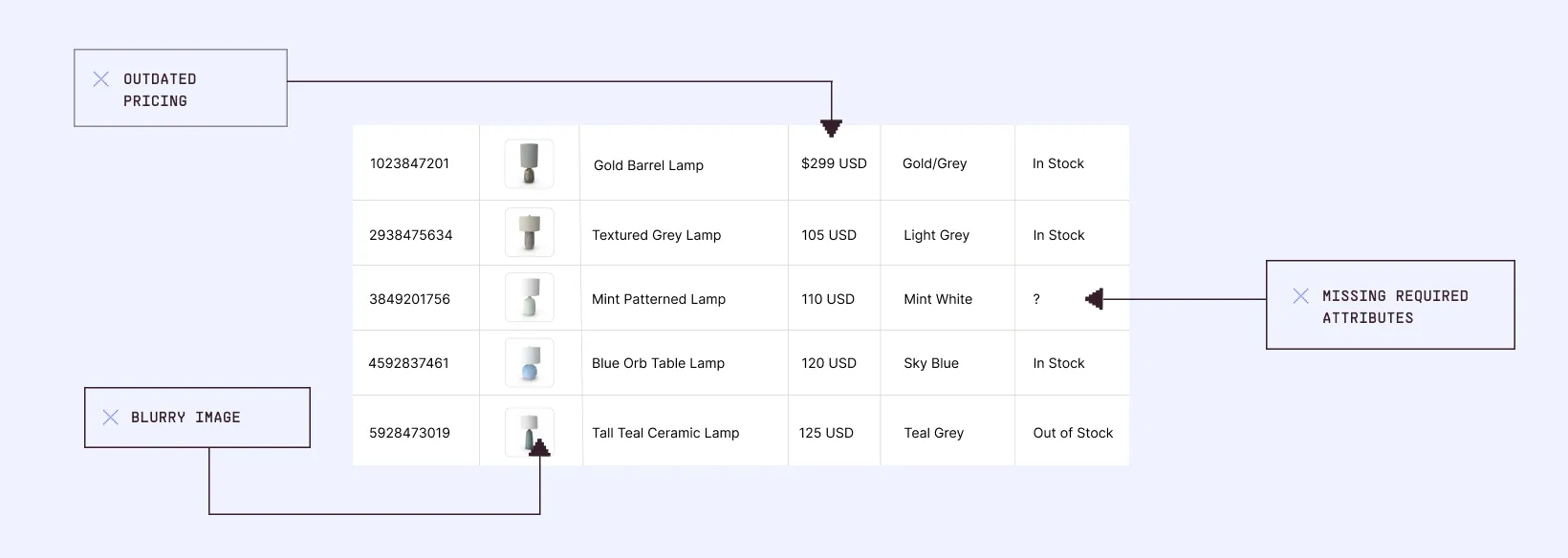
Dynamic product ads are only as strong as the data powering them. If your product feed contains vague titles, inconsistent categories, outdated pricing, or missing attributes, performance will suffer.
Platforms use feed data to determine relevance. If your titles are generic, your ads compete broadly. If attributes are missing, targeting signals weaken.
Start with:
- Clear, descriptive titles
- Accurate pricing and availability
- High-resolution images
- Consistent categorization
- Complete product attributes
Many brands underestimate how much feed quality influences ROI. A cleaner feed improves relevance, which improves click-through rate, which improves cost efficiency.
Better data = better delivery.
2. Segment Products Intentionally
One of the most common mistakes in dynamic product ads is running all SKUs in one campaign. That works when volume is low. It breaks when inventory grows.
Improving ROI requires segmentation. You can segment by:
- Margin
- Price range
- Best sellers
- Seasonal inventory
- New arrivals
- Clearance items
Why does this matter? Because high-margin products can support more aggressive bidding. Low-margin products require tighter control. Best sellers convert differently from long-tail SKUs.
When segmentation aligns with business economics, ROI becomes easier to control. Dynamic doesn’t mean unstructured.

3. Expand Beyond Basic Retargeting
Dynamic product ads are often associated with retargeting. Someone views a product, then they see it again, and eventually they convert. That is effective, for sure, but it is limited.
In 2026, many brands use dynamic product ads for prospecting as well. Platforms now leverage behavioral modeling to show catalog ads to users who have not visited your site yet.
Prospecting DPAs can improve ROI when:
- Your catalog is strong
- Your product data is optimized
- You have enough historical conversion signals
The key is creative structure. Generic product tiles often underperform in prospecting environments. Dynamic ads should NEVER feel like placeholders.
4. Improve Creative Structure, Not Just Volume
Dynamic product ads are automated. That does not mean they should all look the same. If your ads are pulling default product tiles with minimal formatting, you are leaving performance on the table.
Improving ROI often comes down to:
- Testing different layout hierarchies
- Highlighting price versus benefit
- Including social proof badges
- Adjusting background contrast
- Emphasizing urgency or scarcity
Small structural differences can impact engagement significantly. The mistake is assuming automation replaces creative thinking. Automation removes manual assembly. It does not replace strategy.
5. Monitor Frequency and Creative Fatigue
Dynamic product ads can run continuously. That is part of their appeal. But repetition erodes performance. When frequency climbs too high, click-through rate drops. When CTR drops, cost per result increases. ROI suffers.
Regularly review:
- Ad frequency
- Declining engagement
- Conversion rate shifts
Introduce variation before fatigue becomes visible in your reporting. This is where structured creative testing becomes important. Instead of swapping one asset at a time, systematic variation helps maintain freshness.
6. Use Exclusions Strategically
Improving ROI is not only about showing ads. It is about controlling who does not see them.
Exclude:
- Recent purchasers
- Products with low inventory
- Low-margin SKUs during high CPC periods
- Products temporarily out of stock
Dynamic platforms do not always handle exclusions perfectly by default. Manual oversight prevents wasted spend. If someone already purchased yesterday, continuing to show the same product may reduce efficiency. Exclusions protect the budget.
7. Optimize for Conversion Signals, Not Click Volume
Dynamic product ads can generate high click-through rates because they are highly relevant. But clicks alone do not improve ROI. If you optimize only for engagement, you may attract low-quality traffic. Make sure campaigns are optimized for:
- Purchase events
- Value-based bidding
- Target ROAS where appropriate
Align the optimization event with real business outcomes. ROI improves when the algorithm is trained on revenue, not just interest.
8. Review ASIN or SKU-Level Performance
Not all products perform equally. Some SKUs consistently drive high returns. Others underperform. Review dynamic ad performance at the product level:
- Which SKUs convert at the highest rate
- Which products have higher average order values
- Which items drive repeat purchases
Then adjust the budget allocation accordingly.
Many brands improve ROI simply by prioritizing high-performing products in prospecting while reserving retargeting for long-tail inventory. Dynamic ads allow scale. Scale requires prioritization.
9. Balance Automation With Oversight
Automation is powerful. It reduces manual labor and reacts faster than human intervention. But full hands-off management rarely produces the best ROI.
Regularly audit:
- Bid strategies
- Segmentation logic
- Creative freshness
- Feed integrity
- Conversion tracking accuracy
Small inefficiencies compound quickly in dynamic campaigns. Oversight protects profitability.
10. Connect Creative Testing to Performance Data
This is often the missing layer. Brands generate variations. They launch them. They see blended results. But without structured testing, it becomes difficult to identify what element drove performance.
Was it the layout? Messaging? Price emphasis? Color contrast? If you cannot isolate variables, you cannot systematically improve ROI. Structured creative experimentation allows you to iterate with intention instead of random refreshes.
The Role of Data in Improving ROI
In 2026, dynamic product ads are deeply data-driven. Feed data informs relevance. Conversion data informs delivery. Creative data informs engagement.
The brands that see consistent ROI improvements treat dynamic ads as performance systems, not background automation. They measure, segment, test, refine, repeat.
Marpipe Helps Improve ROI From Dynamic Product Ads
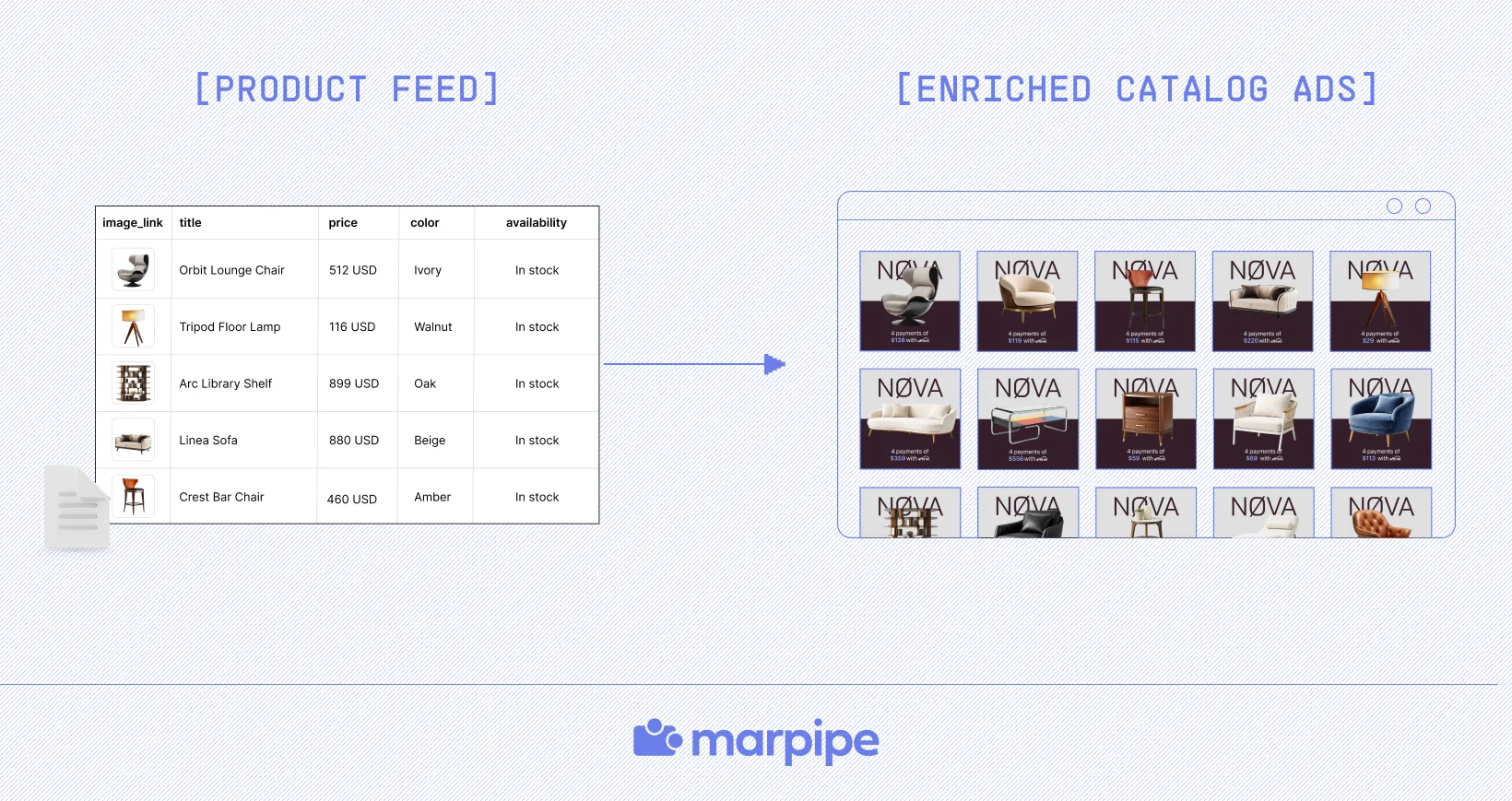
Dynamic product ads depend on product feeds. But a strong ROI depends on presentation and testing. Marpipe connects to your catalog and turns structured product data into scalable creative variations. Instead of running a single dynamic template, you can test different layouts, messaging emphasis, and visual structures at scale.
That structure makes it easier to see what drives performance and iterate intentionally. If you want to improve ROI with dynamic product ads, automation alone is not enough. You need controlled variation and measurable learning.
Book a demo to see how structured creative testing can unlock more from your catalog campaigns.
FAQs
What are dynamic product ads?
Dynamic product ads automatically show catalog products to users based on behavior and signals, helping drive relevant traffic and conversions.
How can segmentation improve dynamic product ad performance?
Segmentation helps align bidding and messaging with product economics, so high-margin or best-selling items get prioritized for better ROI.
Why is creative testing important for ROI?
Creative testing identifies which layouts, messaging, or visuals actually drive engagement and conversion, moving beyond automation alone.