

Most of what happens inside an ecommerce ad account today is being decided by AI. The audience the platform builds, the creative variants it shows, the bids it places in each auction, the campaign type it recommends in the first place: all of it is run by machine learning models rather than media buyers manually tweaking ad sets.
This article walks through 6 ways ecommerce brands are using AI to scale their ads right now. For each one, we cover what the AI is actually doing, what it changes for the brand running it, and a real example of someone who's done it.
1. End-to-end automated shopping campaigns with Meta Advantage+
Meta Advantage+ Shopping Campaigns (ASC) hand over most of the campaign setup to Meta's AI. You feed it a catalog, a budget, and a conversion goal, then the system handles the rest. According to Meta's Q1 2025 data, advertisers running ASC earn $4.52 in revenue per $1 spent, 22% higher than manually managed campaigns.
Here's what the AI is actually doing under the hood, and why that matters if you're thinking about turning it on:
- Audience: You can skip manual interest stacking and lookalikes. The system targets broadly and lets conversion signals decide who actually sees the ad.
- Creative selection: You can upload up to 150 ad variations per campaign; Meta serves the right one to the right person, then shifts budget to whichever combinations are winning in real time.
- Existing vs. new customers in one campaign: Set a cap on how much budget goes to existing customers (e.g., 20%), and Meta splits prospecting and retargeting automatically. There are no separate campaigns to manage.
- Placement and bidding: Feed, Reels, Stories, Marketplace — the system picks per impression, and bids are set at auction time using live signals from the Conversions API.
You can now stop optimizing ad sets and start feeding the system better inputs: a clean catalog, strong creative variety, and reliable conversion data.
Fashion brand Bimba & Lola is one of the clearer proof points. After moving the budget into Advantage+, they reported a 28% sales lift, 25% lower cost per purchase, and 21% higher ROAS. Sister brand Claudie Pierlot saw the same pattern: 36% more transactions and 25% better ROAS, without rebuilding creative or audiences.
2. Cross-channel campaign allocation with Google Performance Max
Google Performance Max (PMax) applies the same automation logic as Meta Advantage+ but spreads it across Google's full inventory: Search, Shopping, YouTube, Display, Gmail, Discover, and Maps. You supply the assets and the conversion goal, then Google's AI decides where each impression lands.
Here's what's actually happening once the campaign goes live:
- Channel selection: A single PMax campaign runs across every Google placement at the same time. The system decides per query whether a user sees a Shopping listing, a YouTube pre-roll, a Discover card, or a Display banner.
- Asset groups: Instead of traditional ad groups, you organize creative into asset groups built around a product line or audience. Each group holds headlines, descriptions, images, videos, and a product feed that the AI mixes and matches.
- Audience signals: Audiences in PMax are hints, not hard targeting. You give the system a starting point — customer lists, in-market segments, your own first-party data — and it expands from there based on who actually converts.
- Conversion-value bidding: Bids are set in real time against either Maximize Conversions or Maximize Conversion Value, with optional ROAS targets layered on top.
The main tradeoff is reporting depth. You see less granular data per channel and audience than you'd get from a traditional Shopping or Search campaign. Google has added campaign-level negative keywords, channel reporting, and search term insights through 2025 to soften this, but PMax is still more of a black box than most advertisers would prefer.
Furniture brand Joybird is one of the case studies Google often points to. Their PMax test reportedly delivered 40% higher ROAS and a 95% lift in revenue against their previous setup. Numbers like these usually represent a ceiling rather than a baseline. The actual results depend heavily on feed quality, conversion volume, and how clean the tracking is.
3. Generative AI for ad creative production
Generative AI is now doing real production work on ad creative (image, video, and copy) at a fraction of the previous cost and turnaround. The work splits across two layers: native tools built into the ad platforms (Meta Advantage+ Creative, TikTok Symphony) and external generation tools like Midjourney, DALL·E, Adobe Firefly, and Runway that sit outside the ad accounts.
Here's the specific work the AI is taking over:
- Image generation: Tools like Midjourney, DALL·E, and Firefly produce product visuals, lifestyle shots, and conceptual scenes from text prompts in minutes instead of days. Final cleanup usually happens in Photoshop, Photoroom, or Topaz.
- Background generation and image expansion: Meta's Advantage+ Creative can swap or generate new backgrounds around an existing product photo and extend an image to fit Stories, Reels, and Feed without re-shooting.
- Text variations: Meta and Google both generate alternate headlines and primary text, trained on what's converted in your historical campaigns. You approve or reject each variant before it goes live.
- Image-to-video: Meta now offers a tool that stitches up to 20 product photos into a single multi-scene video ad, removing the need to film or animate from scratch.
- Localized creative: AI translation and dubbing tools produce versions of the same ad in different languages and cultural contexts, which used to require a separate production cycle per market.
The point isn't that the AI replaces a creative team. It compresses the production cycle so a small team can test more variants and refresh assets more often, which matters because creative fatigue is one of the most common reasons ad performance drops over time.
Klarna's internal report claims they cut image production from 6 weeks to 7 days and reduced external marketing supplier spend by 25%. On the e-commerce side, beauty brand Fresh ran Advantage+ Shopping with Meta's generative text variations and reported a 5x incremental ROAS.
4. AI-personalized dynamic product ads
Dynamic product ads (DPAs) take a product catalog and auto-generate an ad that matches each viewer to the SKU they're most likely to buy. Meta, Google, and TikTok all run this mechanic on their respective platforms (Meta DPAs, Google Dynamic Remarketing, TikTok Catalog Ads) and it's a default format for most e-commerce brands with more than a handful of products.
Here's what the AI is doing once a catalog is connected:
- Catalog ingestion: The system pulls your product feed from Shopify, BigCommerce, or Google Merchant Center and maps each SKU to its attributes — category, price, color, size, availability, and so on.
- SKU matching: For each impression, the AI predicts which product is most likely to convert for that specific viewer based on browsing history, past purchases, cart contents, and similar users' behavior.
- Cross-sell and upsell: The system surfaces complementary products from the same catalog based on cart or browse history, like showing the matching pants after someone viewed the shirt.
- Prospecting plus retargeting: The same campaign can retarget people who already viewed a product and serve hot SKUs to new users based on similar-buyer behavior, instead of needing two separate campaign builds.
The catch with DPAs is that the AI is only as good as the feed and creative it's working with. Missing product titles, broken image URLs, outdated inventory, and vague category labels all degrade matching quality fast. The other issue is visual: the platforms' default catalog ad templates often look like catalog tiles. They are fine for retargeting someone who already wants the product, but weaker for prospecting where the ad has to do persuasive work.
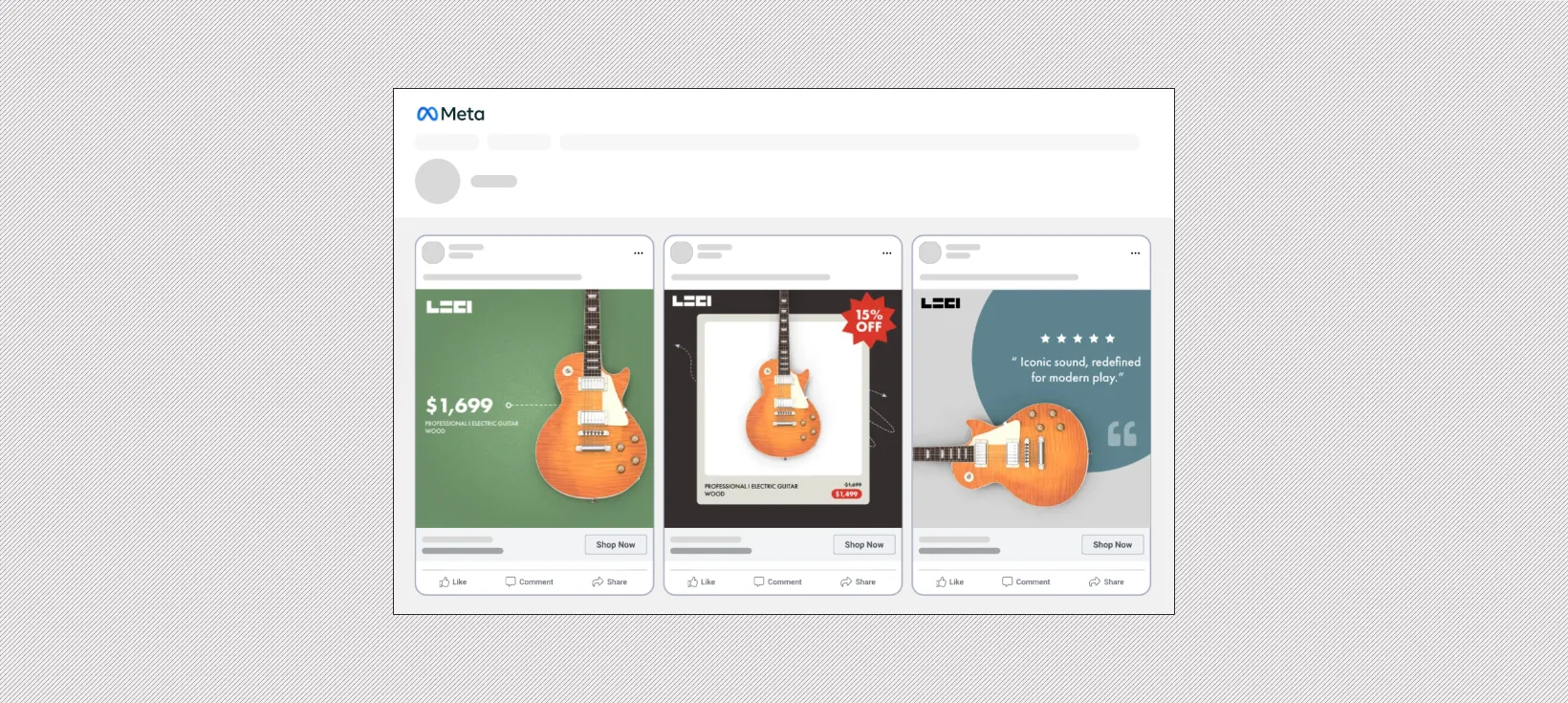
This is the part that Marpipe solved.It sits on top of platform DPAs to enrich the product feed and add branded design such as custom backgrounds, lifestyle imagery, promo overlays, and creative variations layered onto SKUs that would otherwise render as generic tiles. You keep the dynamic delivery the platforms handle, but the ads stop looking like boring, default templates.
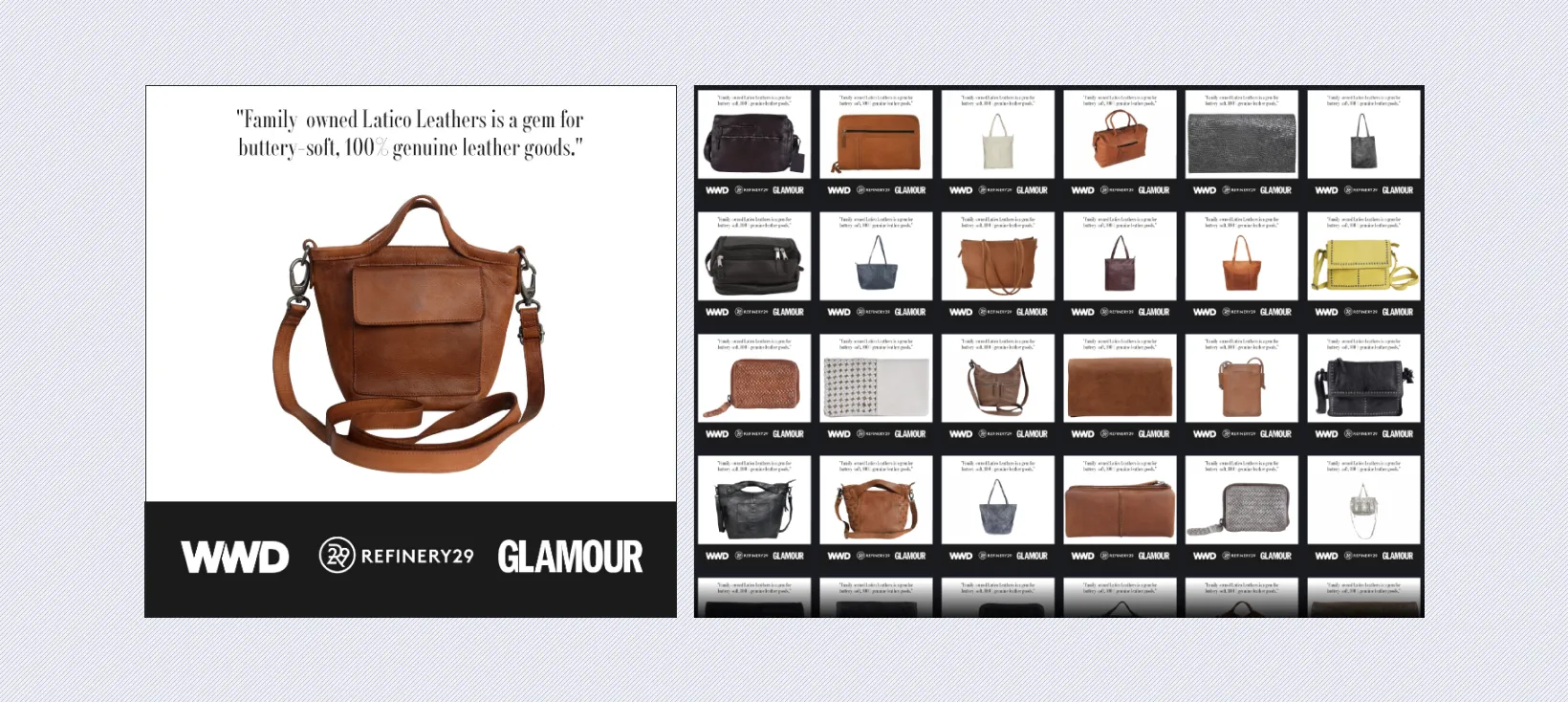
Here's an example of Meta ads designed for Latico using Marpipe’s dynamic ad builder:
5. AI video generation from product URLs with TikTok Symphony
TikTok Symphony Creative Studio is TikTok's in-platform suite for generating video ads with AI. The headline feature is that you paste a product URL and the system produces multiple short video variations from the product page itself. Symphony is built on TikTok's Dreamina Seedance video model and sits inside the standard TikTok Ads Manager flow.
Here's what the tools cover:
- URL-to-video: Paste a Shopify, Amazon, or DTC product page and Symphony pulls the images, descriptions, and price data to generate multiple TikTok-style video ads typically 5-15 seconds, with text overlays and a voiceover.
- Image-to-video: Static product photos are extended into short video clips and stitched together into a multi-scene ad. This is the easiest path for brands that don't have existing video assets to get into video advertising at all.
- AI avatars: A library of digital presenters can read your script in different languages, accents, and demographics. Useful for testimonial-style ads without hiring talent.
- Video translation and dubbing: An existing video can be auto-translated into multiple languages with synced voiceovers, removing the need to re-shoot per market.
- Script generation: Symphony Assistant produces ad scripts and hooks from product information and any campaign brief you provide.
The tradeoff with Symphony, and with most platform-native AI video, is that the audience can usually tell. TikTok audience in particular rewards content that feels native to the platform. So overly polished, AI-generated talking-head ads with an obvious digital avatar often underperform real UGC. The brands getting strong results tend to use Symphony as production assist rather than as a full replacement for human-shot creative.
Drinkware brand Meoky used Symphony's URL-to-video flow to test multiple ad variations directly from their product pages and reported a 1.8x purchase lift and 13% improvement in ROAS. Luxury marketplace YOOX used the same source's image-to-video feature to convert static product photography into video ads and reported a 15% drop in cost per add-to-cart. Both are TikTok-published case studies, so the usual selection effect applies.
6. AI creative testing platforms
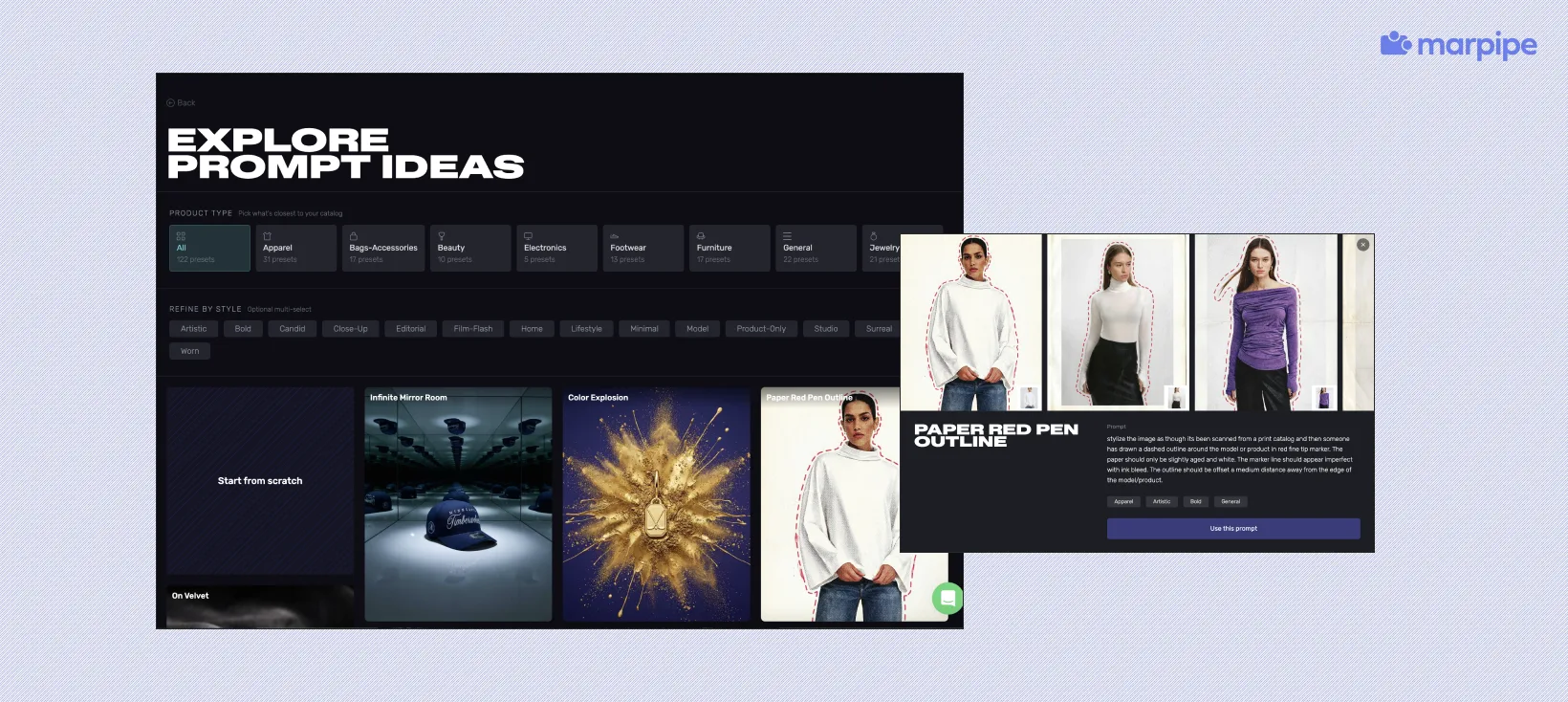
A separate category of tools has emerged that doesn't generate creative or run ads itself, but decides which creative variations actually deserve budget once they're in market. Platforms like Pencil, AdCreative.ai, Motion, and Marpipe sit between the generation layer (Midjourney, Firefly, Meta's built-in tools) and the ad accounts, automating the experiment loop that used to take a media buyer's full week.
Here's what these platforms typically do:
- Variant generation: Some tools produce dozens of ad variants from a single brief, varying headline, copy, image, layout, and color. Others focus only on the testing layer and ingest your existing creative.
- Multivariate testing: Instead of testing one ad against another in a simple A/B, the system tests every combination of elements (background, headline, CTA, product shot) to identify which specific components are driving performance, not just which finished ad wins.
- Performance scoring: Some platforms layer a pre-flight AI score on each variant, predicting likely CTR or conversion rate before any spend, so weaker variants get filtered before they hit the auction.
- Budget rebalancing: Once variants are live, the platform monitors performance and shifts spend toward winners through direct integrations with Meta and TikTok ad accounts.
- Reporting back to creative: The output isn't just "which ad won," it's a breakdown of which elements keep winning across tests, which then feeds the next round of production.
Where Marpipe fits across this
Most of what's covered above is something Meta, Google, and TikTok are doing themselves inside their ad systems. That's mostly good for advertisers, but it leaves two problems: catalog ads usually look like generic product tiles, and testing creative on top of automated delivery is hard to do with any rigor.
Marpipe addresses both. The tool enriches your product feed with branded backgrounds, lifestyle imagery, and promo overlays so platform DPAs stop looking like default templates. It also runs multivariate tests across catalog creative on Meta and reports back which specific elements (backgrounds, headlines, promos, product framings) are driving conversions at the SKU level, so you know what to build more of next.
If you're running catalog ads on Meta at any real volume, book a demo to see how Marpipe handles feed enrichment and multivariate creative testing on your own product catalog.