


Furniture ads usually look easy from the outside. Nice photography. Big products. Plenty of space to tell a story. In practice, they are one of the harder categories to get right.
People do not buy furniture quickly. They look. They compare. They imagine it in their space. They leave. They come back days or weeks later and keep looking. Sometimes they buy. Sometimes they do not. That behavior changes how furniture ads need to work.
A single hero image rarely does the job. One clean product shot is almost never enough. The brands that perform well are not just showing furniture. They are showing options. Different styles. Different rooms. Different versions of the same product, over time. That repetition matters more than most teams expect.
This guide walks through how furniture ads actually work online, which channels matter most, where brands usually get stuck, and how teams scale performance without rebuilding ads from scratch every week.
Why Furniture Ads Work Differently
Furniture is not an impulse category for most shoppers. It is a higher ticket. It takes up physical space. It has to fit into a room that already exists. That means furniture ads have to support exploration, not just conversion.
Shoppers want to browse visually. They want to compare colors, shapes, materials, and layouts. They want to see how a piece looks in context before they ever think about clicking through.
When furniture ads fail, it is usually because they push too hard too early. They try to close before the shopper has finished looking. The best furniture ads feel more like browsing than selling.
The Channels That Matter Most
Furniture brands usually advertise across multiple channels, but those channels play very different roles.
Social platforms like Meta and Instagram are where discovery happens. People are not searching for a specific SKU. They are scrolling. Furniture ads need to stop them visually and give them something worth exploring.
Search and Google Shopping capture intent later. When someone already knows what they want, search becomes important. But it rarely creates demand on its own.
Most strong furniture ad strategies use both. Social creates interest and familiarity. Search supports the decision when the shopper comes back ready to buy. The mistake is treating all channels the same.
Why Social Catalog Ads Sit at the Center
For furniture brands, catalog ads are usually the backbone of social advertising. Instead of pushing a single product, catalog ads let shoppers browse. Multiple products. Multiple variations. All in one unit. That mirrors how people shop for furniture in real life.
Catalog ads also make retargeting feel less repetitive. Someone who looked at a sofa does not see the same sofa again and again. They see similar styles. Matching pieces. Complementary products.
This is where many furniture brands start to struggle. They rely on a limited set of images or variations. Performance looks fine at first. Then it slows down. Nothing is technically broken. The ads just stop feeling new.
Where Furniture Ads Usually Break Down
This is usually the point where things quietly fall apart. A brand launches catalog ads. Results look solid early on. Over time, engagement drops. Clicks get more expensive. Conversion rates soften. Most of the time, it is not targeting. It is not a budget. It is creative exhaustion.
Furniture needs variation more than most categories. Different rooms. Different colors. Different groupings. When ads stop showing that range, shoppers stop engaging, even if they still like the product. Manual workflows struggle here. Teams rebuild ads one by one. Testing slows down. Learning stalls. That is usually when performance plateaus.
What Makes Furniture Ads Convert
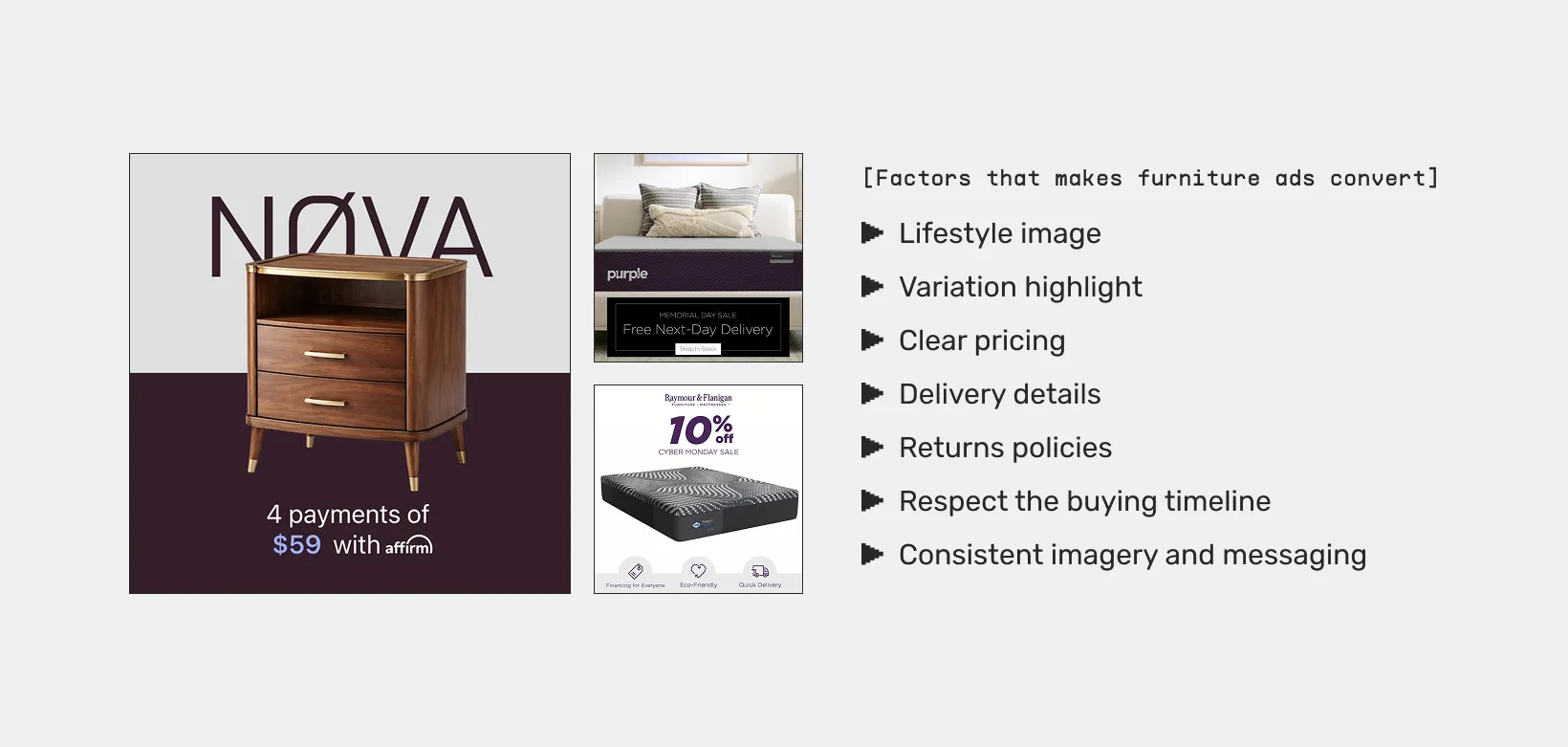
Furniture ads that convert tend to share a few characteristics. They show products in context. Lifestyle imagery almost always outperforms plain product shots. People want to see furniture in a space, not floating in isolation.
They highlight variation. Color, size, and configuration matter. Showing only one option limits appeal.
They reduce friction. Clear pricing, delivery details, and returns policies matter more for furniture than many other categories.
They respect the buying timeline. Furniture ads rarely convert on the first touch. Expecting that usually leads to frustration. Conversion happens after exploration.
Search and shopping are still important too, just not in isolation. Google Shopping captures shoppers who are further along. Paid search supports branded and category-level intent. These channels work best when they reflect what shoppers already seen on social.
Consistent imagery and messaging matter. When a shopper recognizes a product from an ad they saw earlier, trust builds faster. Furniture ads work better when channels support each other rather than compete.
Creative Testing Matters More Than Targeting
In furniture advertising, creativity usually matters more than audience tweaks. When targeting and placements are automated, the visuals do most of the work. Messaging, layout, imagery, and context decide whether someone stops scrolling.
Brands that struggle with furniture ads often look for targeting fixes. In reality, the issue is often creative volume.
One or two ads cannot carry a category that requires comparison. Furniture needs options. Testing those options manually does not scale. This is where automation starts to matter.
How to Measure Furniture Ad Performance
Furniture ads should not be judged only on immediate return. The buying cycle is longer. Assisted conversions matter. Repeat visits matter. Engagement across multiple products matters.
Creative fatigue is another key signal. When performance drops, it is often the creative, not the audience. Brands that monitor creative performance closely and refresh variations regularly tend to see more stable results over time.
Where Marpipe Fits In
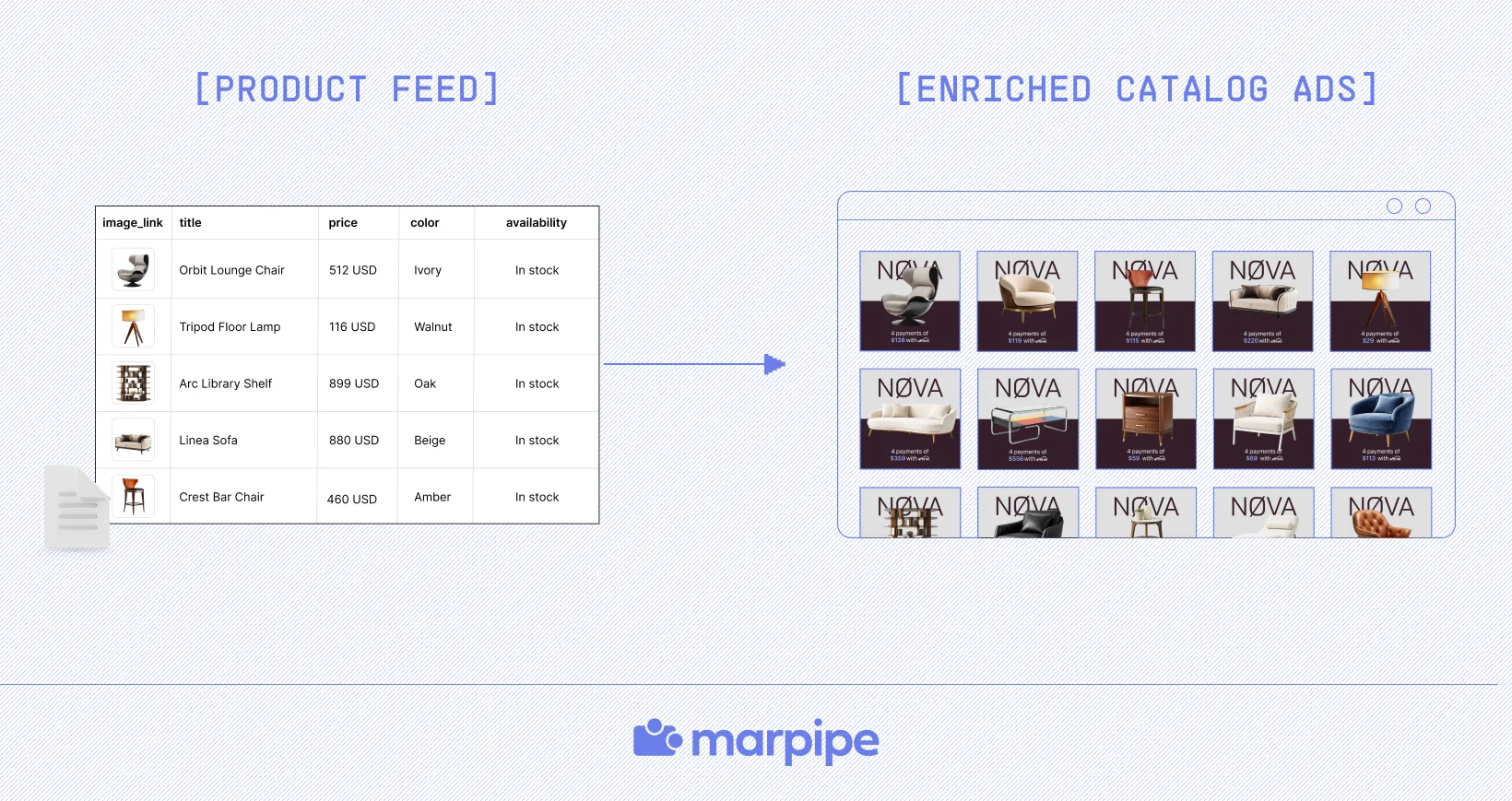
Marpipe fits into furniture advertising because it addresses the part that breaks first: creative scale. Furniture brands already have the raw material. Product images. Attributes. Variations. What they lack is an efficient way to turn that data into testable creative.
Marpipe lets brands generate and test catalog ad variations automatically. Different layouts. Different backgrounds. Different product combinations. All pulled directly from the catalog.
Instead of rebuilding ads by hand, teams can test at the catalog level. That keeps ads fresh longer and makes performance easier to sustain. It does not replace strategy. It removes the bottleneck that usually limits execution.

Building a Scalable Furniture Ads System With Marpipe
Furniture advertising that scales follows a familiar pattern: clean product data, strong catalog coverage, continuous creative testing, and tight coordination between social and search. None of that is complicated on paper. What breaks down is execution, especially as catalogs grow, buying cycles stretch, and creative fatigue sets in.
Furniture ads rarely fail because the products are wrong. They fail because shoppers stop discovering new reasons to keep looking. Catalogs start to feel repetitive. Creative wears out. Teams spend more time rebuilding ads than learning what actually works. Treating furniture advertising as an ongoing system, rather than a sequence of campaigns, is what separates consistent performers from everyone else.
When tools like Marpipe sit at the center of that system, teams can turn clean catalogs into continuously refreshed ad variations, connect discovery on social with intent on search, and automate the parts of the workflow that usually slow scale down.
FAQs
What are furniture ads?
Furniture ads are digital ads designed to promote furniture products online, usually across social platforms, search, and shopping channels, with a strong focus on visuals and product catalogs.
Which platforms work best for furniture ads?
Social platforms like Meta and Instagram work best for discovery, while Google Search and Shopping help capture demand later when shoppers are closer to buying.
Why are catalog ads important for furniture brands?
Catalog ads let shoppers browse multiple products and variations in one place, which fits how people naturally shop for furniture and compare options.
What usually causes furniture ads to stop performing?
Most of the time, it’s creative fatigue. The same images and layouts get repeated too often, and shoppers stop engaging even if they still like the products.
How can furniture brands improve ad performance at scale?
By testing more creative variations consistently and using tools that make catalog-based creative testing easier to manage as the product lineup grows.