


If you’ve run ads or sold products online, you’ve probably run into the same problem: every platform wants your product data in a different format. Google wants one set of fields, Meta wants another, TikTok has its own expectations, and every marketplace has its quirks.
Doing this manually is a nightmare. Exporting CSVs, fixing errors, pushing updates one place at a time, it eats time, and it’s fragile.
That’s where feed management tools come in. These tools take your product catalog, your source of truth, and shape it so every channel sees what it expects. They clean up titles, align attributes, handle missing data, keep pricing synchronized, and save you from a thousand tiny mistakes that add up to real revenue loss.
In 2026, feed tools are more than just “data formatters.” They’re automation engines, compliance guards, and time savers. They make sure your products are visible where your audience actually shops.
Below are some of the tools ecommerce brands rely on today, from heavy hitters that handle thousands of SKUs and regions to lighter tools that just get the job done without drama.
1. Marpipe
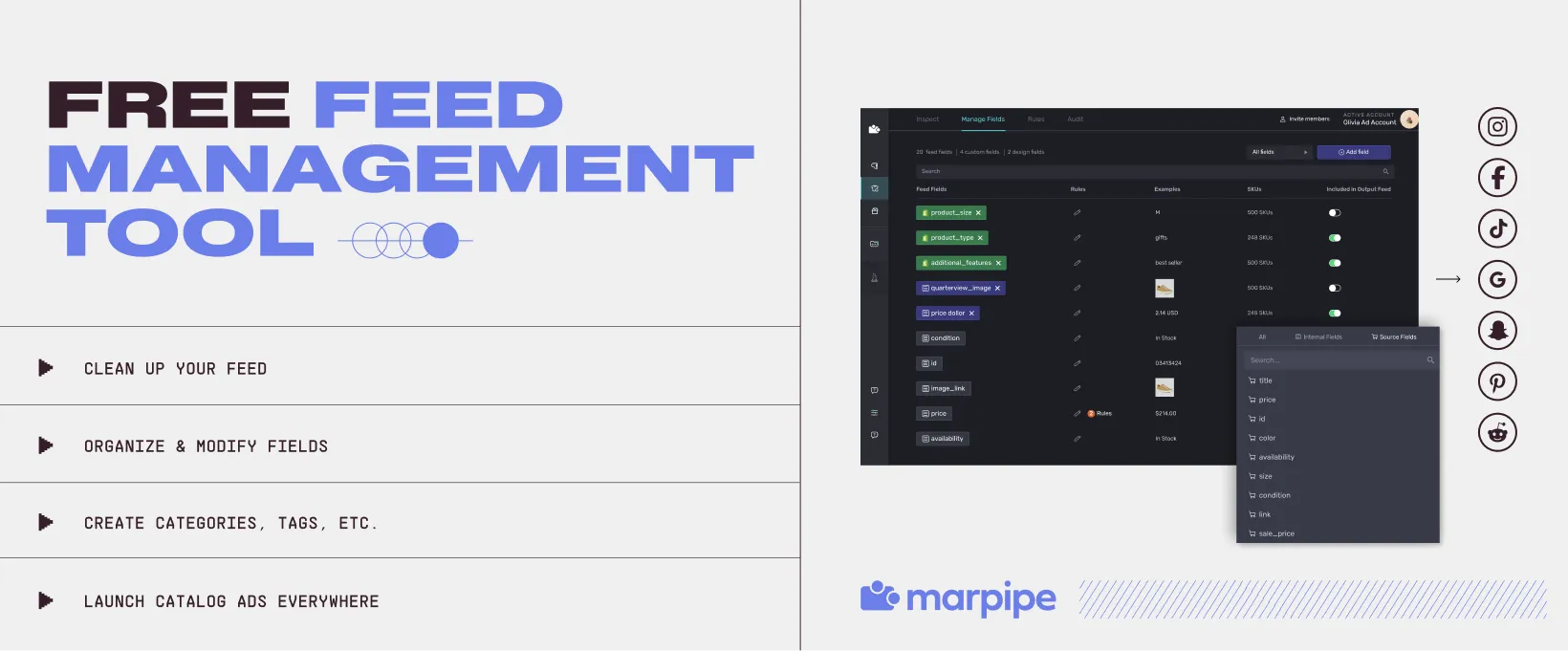
While Marpipe is widely recognized for helping brands test and scale catalog ad creative, the platform now also includes its own product feed management capabilities. This allows ecommerce teams to handle product data preparation and advertising workflows in the same place, rather than splitting those tasks across multiple tools.
Key features include:
- Uploading and managing product feeds directly within Marpipe
- Cleaning and organizing catalog data to keep product information consistent
- Enriching product attributes to support dynamic product ads and shopping campaigns
- Preparing feeds for use across multiple advertising channels
- Built-in feed management available for free, instead of charging separately like many feed tools
By combining feed management with creative experimentation, Marpipe helps brands turn structured product catalogs into scalable advertising systems. Teams can start with clean, reliable product data and immediately use it to generate and test catalog ad variations, making it easier to identify the creative approaches that actually drive performance.
2. Feedonomics
If your catalog is big, messy, or spread across many channels, Feedonomics can handle the complexity that other tools simply aren’t built for.
It’s not cheap, and it’s not simple, but it’s reliable.
What it does well is normalization and scaling. You can connect multiple sources, apply rules that automatically fix errors, manage dozens of destinations, and keep everything running without someone babysitting spreadsheets.
A lot of enterprise teams end up here because it just works when simpler tools break.
3. DataFeedWatch
DataFeedWatch is a favorite for mid-sized brands that want flexibility without having to be experts in every marketplace.
It lets you build rules in a way that feels approachable. You can map fields, conditionally tweak values, and push feeds to all the big channels. It’s not as scary as some enterprise tools, and for many teams, that’s exactly what they want.
The trade-off is that if you push it into very complex workflows or dozens of marketplaces at once, you’ll start to feel the limits of a non-enterprise tool. But for a lot of stores, it hits the sweet spot of power and usability.
4. Channable
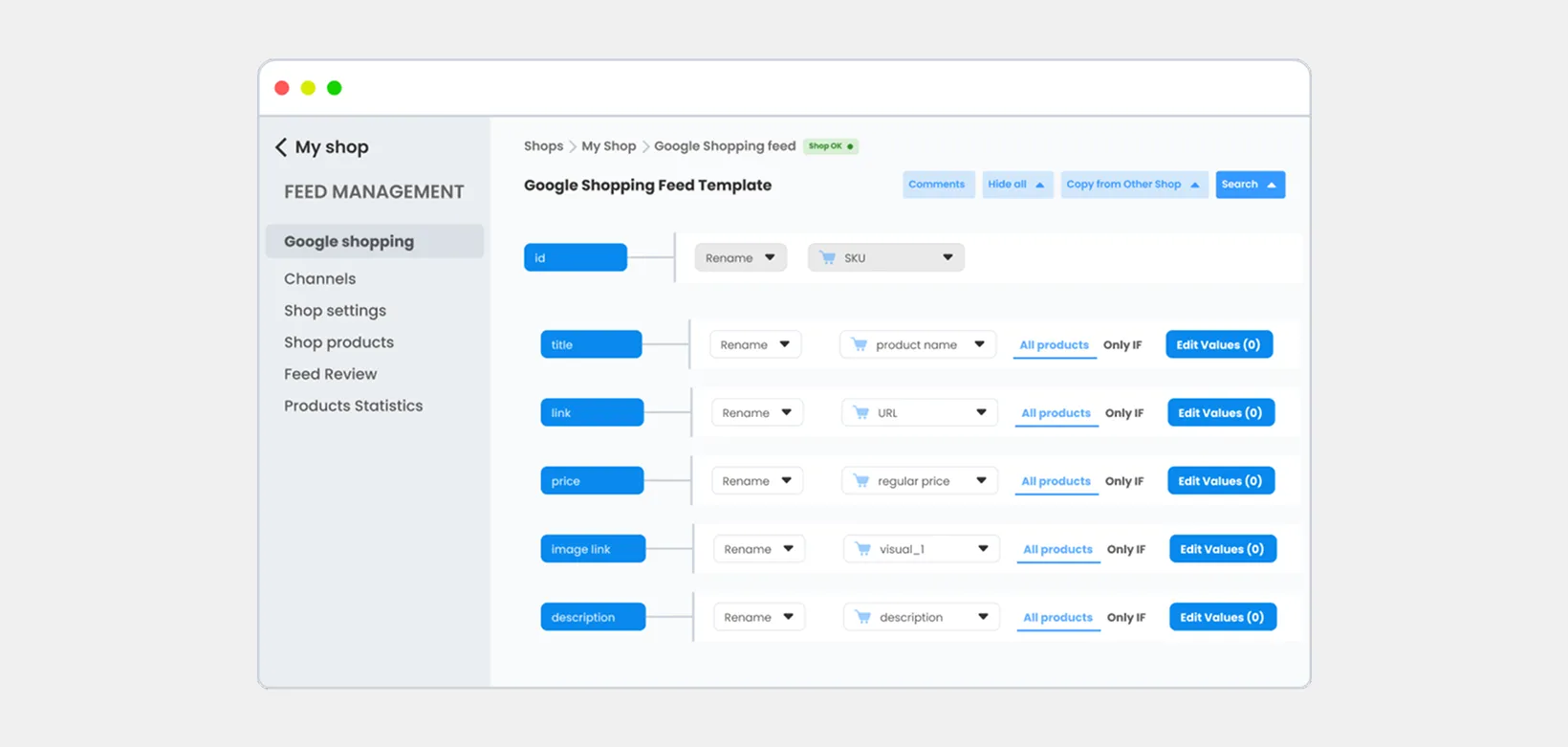
Channable sits in an interesting place. It manages feeds, sure, but it also lets you build campaign structures and link feed logic closer to the places where ads actually run.
A lot of marketers like this because feed and campaign strategy start to feel connected instead of separate steps. You can build rules that matter for Google and Meta and then see how those same data points flow into campaigns without crossing back and forth between tools.
It’s not the deepest tool for every need, but for teams that want feed and some activation logic all under one roof, it’s worth a look.
5. GoDataFeed
GoDataFeed appeals to teams that want feed syndication without a ton of setup overhead.
It’s straightforward. You upload your catalog, set a few rules, and GoDataFeed pushes your products where they need to go. Inventory stays synchronized. Prices update. The usual stuff.
This one is less about fancy transformations and more about making sure feeds don’t break. If your needs are relatively simple: a few channels, not too many custom rules. GoDataFeed gets you there without a big learning curve.
6. Productsup
Productsup is up there with Feedonomics in terms of capability, but it has a slightly different vibe.
It really shines when you have lots of variables: regions, languages, formats, and custom mappings. You can build very specific logic for each storefront or channel and keep them all under one umbrella.
That precision is great if you have the team to manage it. But if you’re a smaller team or a newer brand, Productsup can feel like a tool bigger than your immediate needs.
7. Shopstory
Shopstory manages product feeds with an emphasis on simplicity and automation. It supports popular storefronts like Shopify and helps automate key parts of feed optimization and formatting. Tools like this are ideal for smaller shops or newer ecommerce ventures.
Shopstory also has automated reporting features and basic optimization suggestions, making it appealing for teams that want quick results without heavy setup.
8. LitCommerce
LitCommerce combines feed management with flexible channel distribution. It’s designed to help sellers streamline product publishing across hundreds of marketplaces and advertising platforms.
It’s a solid option for:
- Multi-marketplace sellers
- Smaller teams that want breadth of support
- Those who want real-time inventory sync
LitCommerce tends to be easier to adopt for teams that need to cover many destinations without managing multiple tools.
Emerging Tools and the Feed Landscape in 2026
One trend you’ll see in 2026 is more tools that blur the line between feed management and performance optimization. Formerly, feed tools were about data hygiene: get it formatted, get it right.
Now people want tools that help them think about feed performance. That means feeds that optimize for clicks and conversions, not just compliance.
Some newer or niche tools experiment with tighter integration between feed data and performance signals. They might give performance suggestions, show how certain attributes affect CPCs, or connect creative outcomes to feed quality.
This reflects a broader shift in ecommerce: the data layer isn’t just plumbing anymore. It’s part of performance.
How to Choose a Feed Management Tool
There’s a trade-off in every tool choice, and it comes down to your context:
- Channels: Where are you selling? Google? Meta? Amazon? Walmart? Every channel adds nuance.
- Catalog Size: A few dozen SKUs? A few thousand? Tens of thousands? Patterns change with scale.
- Team Bandwidth: Do you have someone dedicated to feed operations? Or is this something the ecommerce or marketing team handles part-time?
- Performance Needs: Are you optimizing for basics, or do you want some level of automation and performance insights?
Feed tools are not one-size-fits-all. Some help you avoid errors and keep inventory up to date. Others help reduce manual work at scale. And a few start to bridge toward performance automation.
A good rule of thumb: the bigger and more complex your catalog, the more valuable automation becomes.
Where Marpipe Fits in the Modern Feed Stack
Product feed management is the foundation of ecommerce advertising. It ensures product data is clean, structured, and synced across platforms so campaigns can run reliably. Most feed management tools focus only on that layer: organizing product attributes, mapping fields, and keeping catalogs compliant with channel requirements.
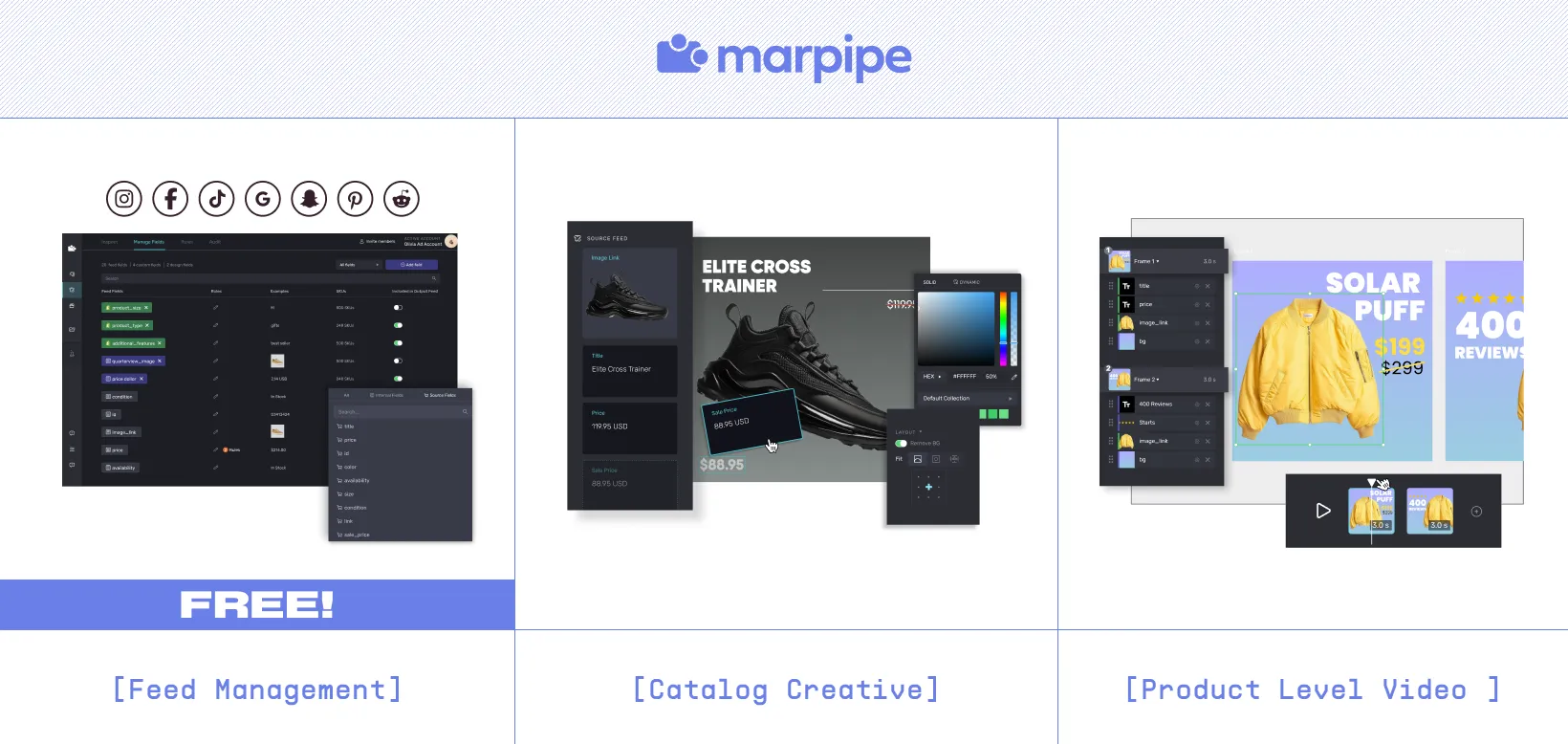
Marpipe approaches the problem slightly differently. The platform now includes a built-in product feed management tool where brands can upload and manage their catalog directly, clean and enrich product data, and prepare feeds for dynamic advertising. Unlike most standalone feed management platforms, Marpipe offers this functionality for free as part of its ecosystem. The idea is simple: once your feed is structured and ready to use, you can immediately use that same data inside Marpipe to create and test catalog ad creative at scale. Feed management becomes the starting point, while the rest of the platform focuses on turning that structured product data into stronger advertising performance.
The strongest ecommerce teams use feed management tools to tell platforms what to sell, and creative optimization tools to show shoppers why to click. As channels evolve and creative fatigue accelerates, bridging those two layers is no longer optional for teams that want consistent growth. Book a demo with Marpipe now!
FAQs
What are feed management tools?
They are platforms that take your ecommerce catalog and format it correctly for multiple channels so listings and ads display properly.
Do feed tools automate updates?
Yes, they typically keep inventory, prices, and attributes up to date automatically.
What’s the difference between a lightweight tool and an enterprise tool?
Lightweight tools focus on setup speed and simplicity. Enterprise tools can handle large catalogs and complex rules.
Why do ecommerce brands need feed management tools?
Because each channel has unique rules and formats. Without automation, managing feeds manually becomes error-prone and time-intensive.
Where does Marpipe fit in?
Marpipe turns clean feed data into testable ad creatives at scale, helping ecommerce teams learn what creative works best without manual work.