

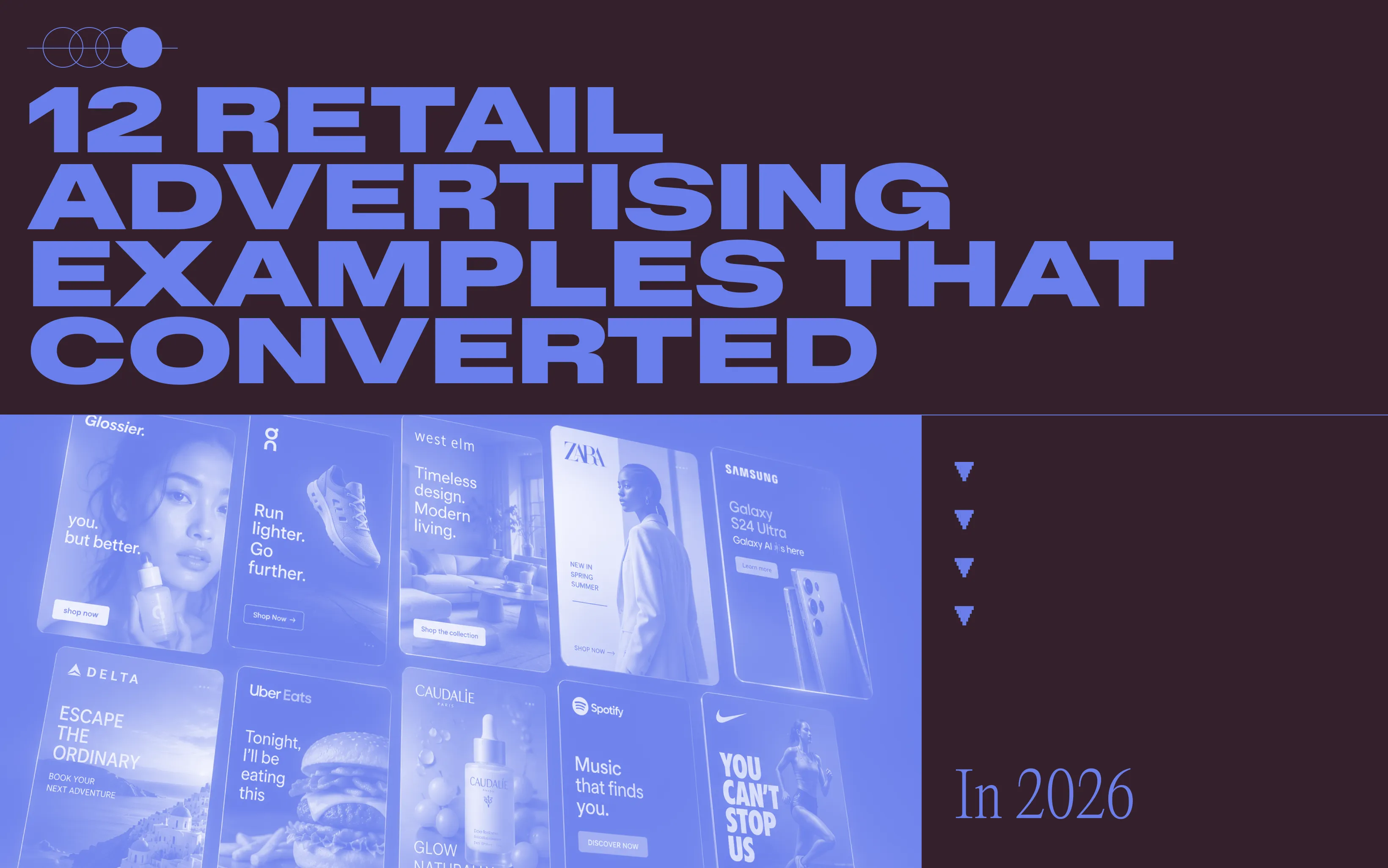
Every retail brand is fighting for the same few seconds of attention, on the same feeds, often against a near-identical product at a lower price. The ones pulling ahead usually aren't spending more. They're making ads that actually earn the tap, then running that creative across their entire catalog instead of one product at a time.
This piece breaks down 12 real retail advertising examples from brands doing exactly that, names like Best Buy, Foot Locker, Sephora at Kohl's, Target, and Lovevery. For each one you'll get the creative move that makes it land and the strategy you can lift for your own store, whether you're chasing online sales, foot traffic, or both.
Why Retail Advertising Still Matters
Retail brands have it rough: too much competition, price pressure everywhere, generating brand awareness is so complex, and the constant push and pull between online and in-store sales.
But here’s the bright side — it’s also the best time to stand out.
The smartest retailers today are blending creativity with data, automation, and personalization. DPAs make that possible — helping you tailor what people see without lifting a finger and boosting sales on the way!
In this guide, you’ll see how top brands use eye-catching visuals and smart data to bring in both online and offline shoppers — and how you can do the same.
The 12 Best Creative Retail Advertising Examples
1. Product Hero Ads: Keep it clean, keep it simple.
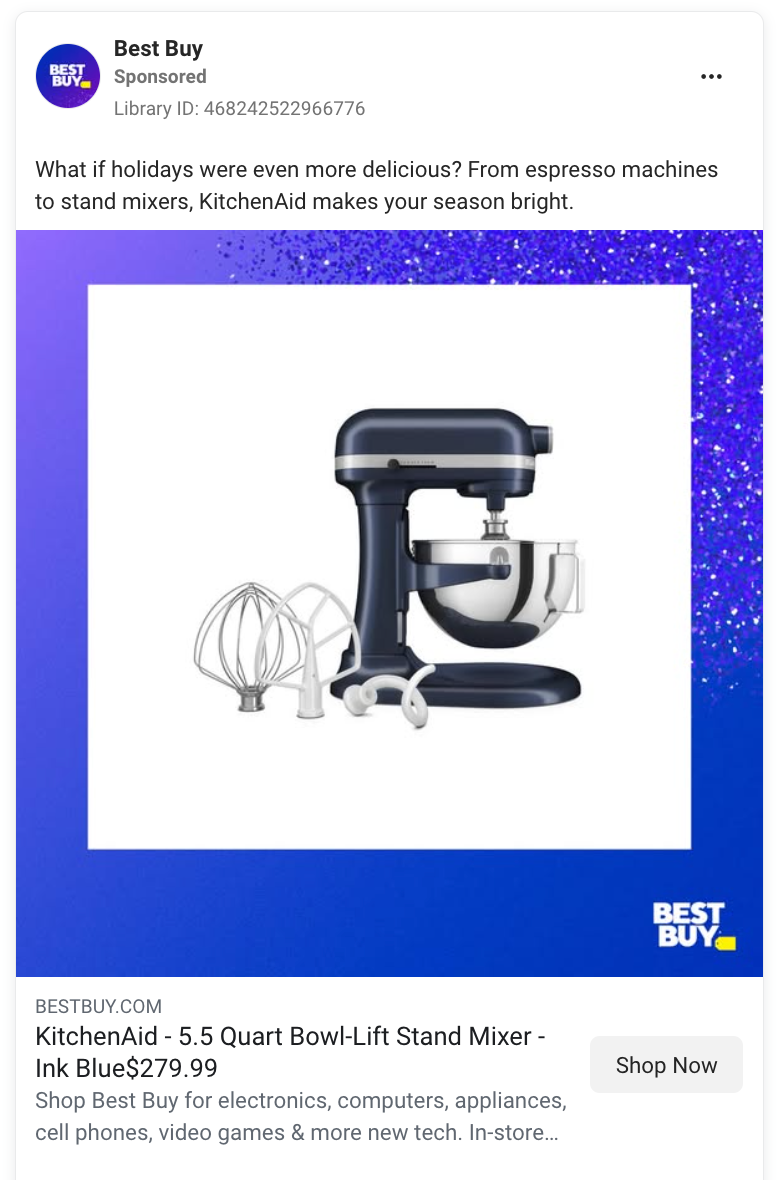
Style: Make the Product the Star When in doubt, go minimal. Skip the busy backgrounds and focus on the product itself. Whether it’s a laptop, a couch, or a snack, let it shine.
Strategy: Clarity Converts Retail ads work best when they’re easy to digest — clear image, short copy, and a strong value hook that speaks to your target audience, driving sales through effective retail media strategies.
And here’s where DPAs step in: they can automatically personalize your ad based on what someone just viewed or added to their cart. That little touch of relevance boosts engagement fast.
2. Lifestyle and Use-Case Product Ads
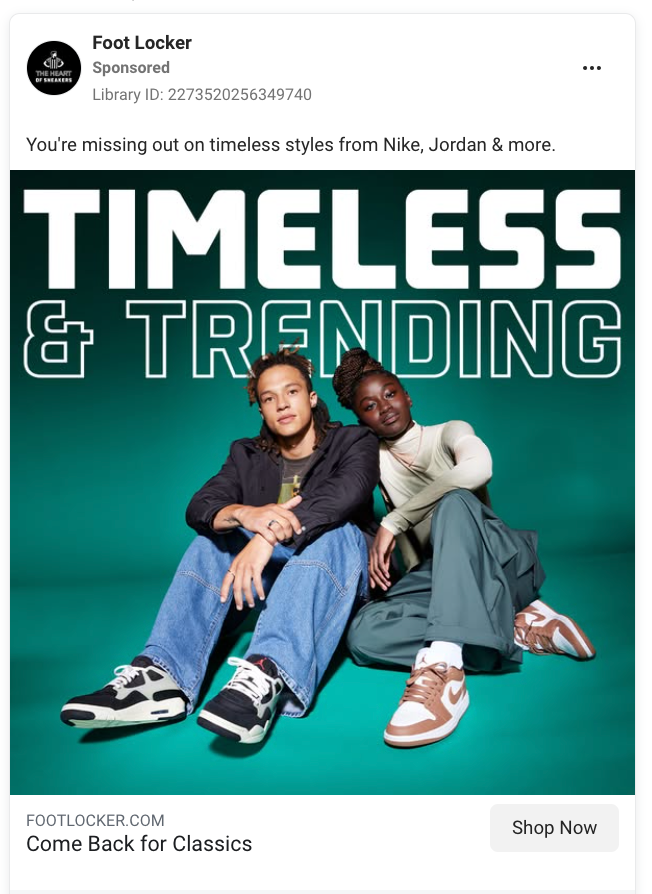
Style: Show Real-Life Context Instead of just showing a shoe, show someone running in it. Instead of cookware, show a Sunday brunch table. People buy into the vibe as much as the product.
Strategy: Inspire, Don’t Just Sell Help people picture your product in their lives. Got multiple products? Use carousels or quick videos to show how they fit together. Instagram and Pinterest are perfect playgrounds for this — users go there for inspiration, so meet them with the stories they’re already looking for.
3. Seasonal Advertising Campaigns
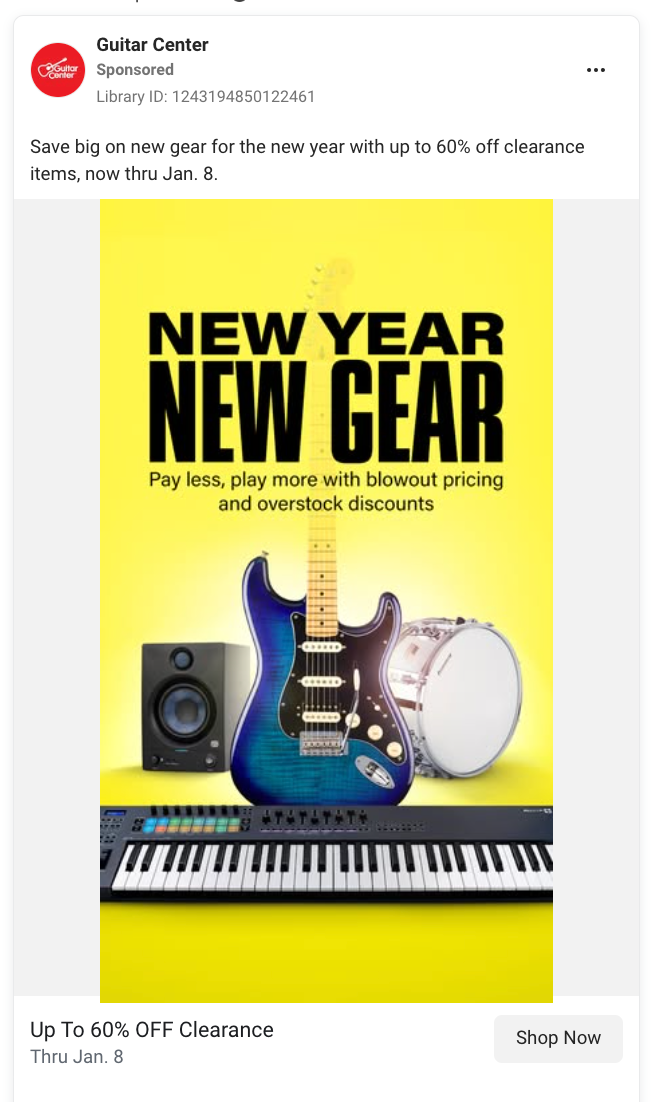
Style: Ride the Seasonal Mood Holidays, seasons, and special moments — they’re all built-in opportunities. You’re not just promoting an item; you’re joining the conversation of that moment.
Strategy: Stay Timely and Relevant Use visuals and copy that match the time of year:
- August → Back to school
- October → Spooky vibes and cozy décor
- July → Beach days and summer sales
DPAs can automatically surface what fits best — like “Get Ready for Fall: Sweaters, Boots, and More!” — so your ads always feel current.
4. Product Bundles? Cross-Sell!
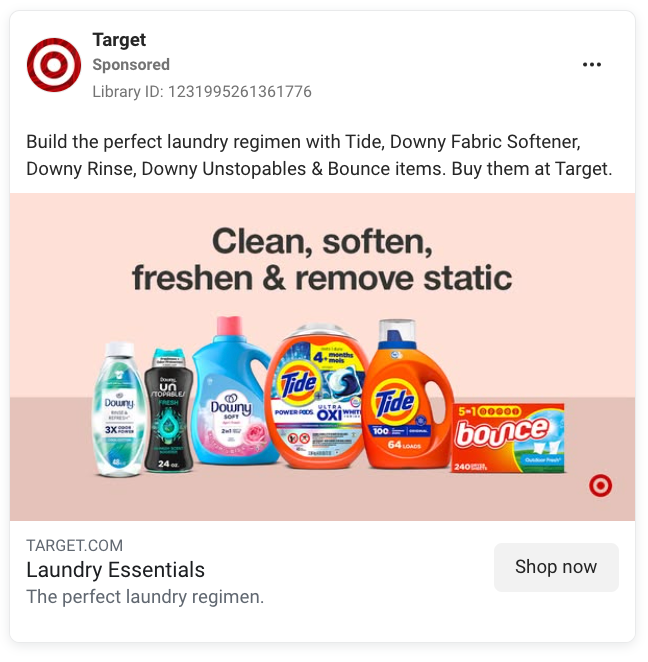
Style: Show It All Together Bundles are a simple way to make each cart bigger. Show complementary items together — think “Dinner for Four” meal kits or “Complete the Look” outfit sets.
Strategy: Make It Easy to Add More Highlight how your products work together, not just alone. DPAs can even auto-generate bundles based on what customers usually buy together — making upsells feel natural, not pushy.
5. Flash Sales and Urgency-Driven Promotions
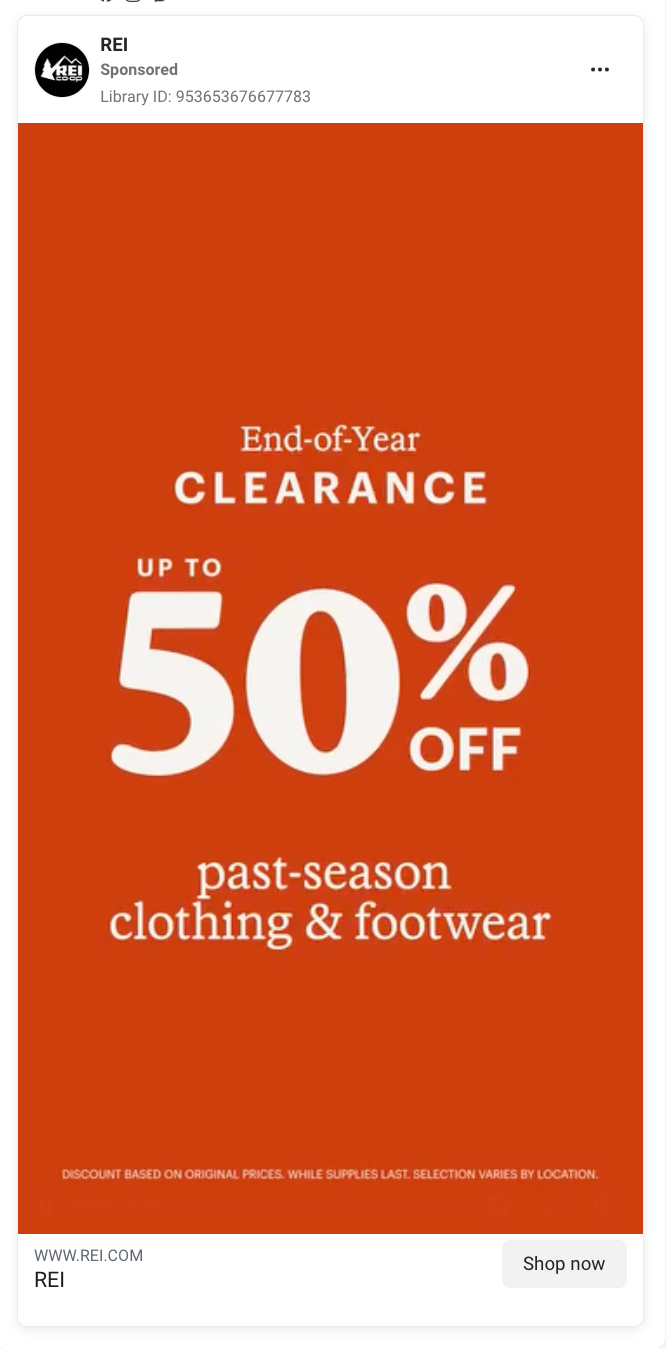
Style: Build Urgency Nothing moves faster than a ticking clock. Limited-time deals, countdowns, and “only a few left” banners all make people click now.
Strategy: Play on FOMO — Just Enough Retail shoppers love a good deal. Try short, punchy lines like:
- “Ends Tonight!”
- “Only 3 Left!”
DPAs keep it accurate by pulling in real inventory or timing data automatically, so your urgency feels real, not forced.
6. Foot Traffic Drivers
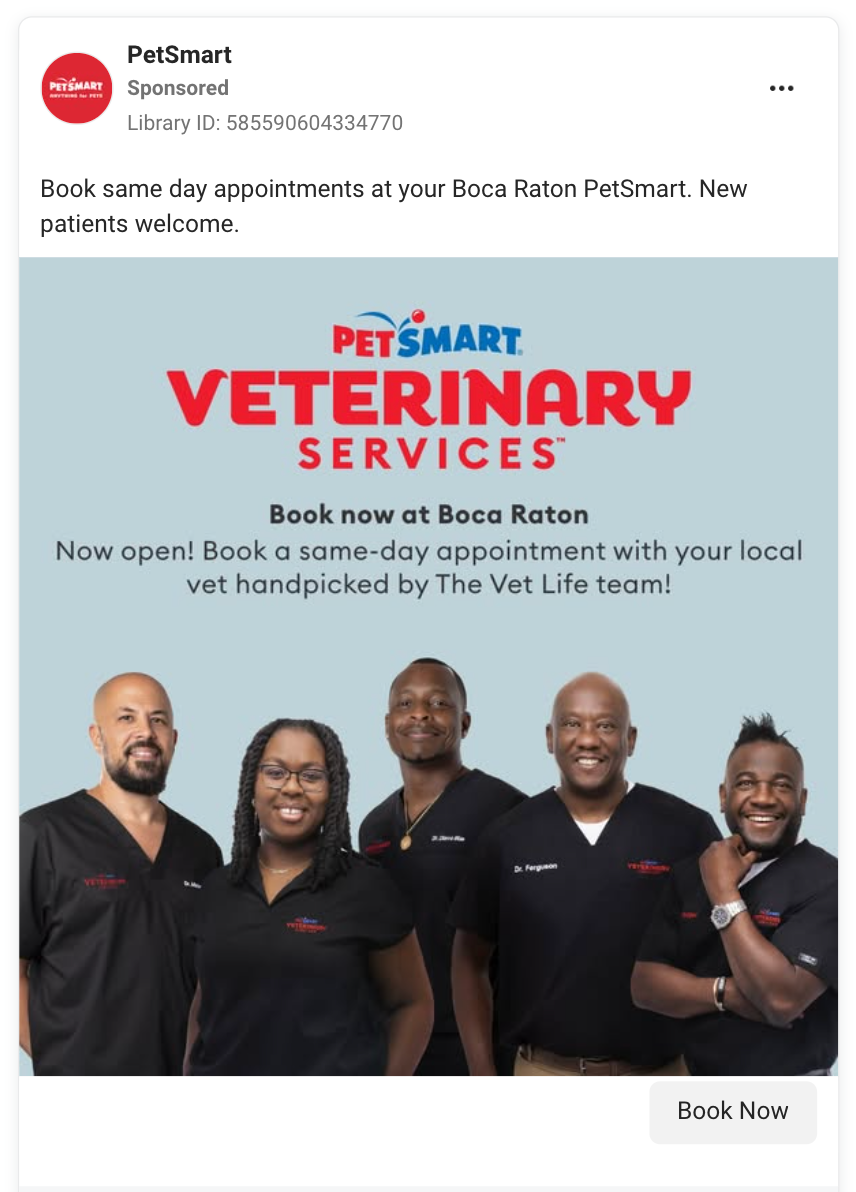
Style: Localized Promotions Trying to get people into your physical store? Geo-targeted ads are perfect.
Strategy: Make It Local Use lines like:
- “Available at our [Nearest Store Location].”
- “20% off in-store today only.”
Add real-time inventory or store-only offers, and your ads feel like a personal invitation.
7. Creator & Influencer Partnership Ads
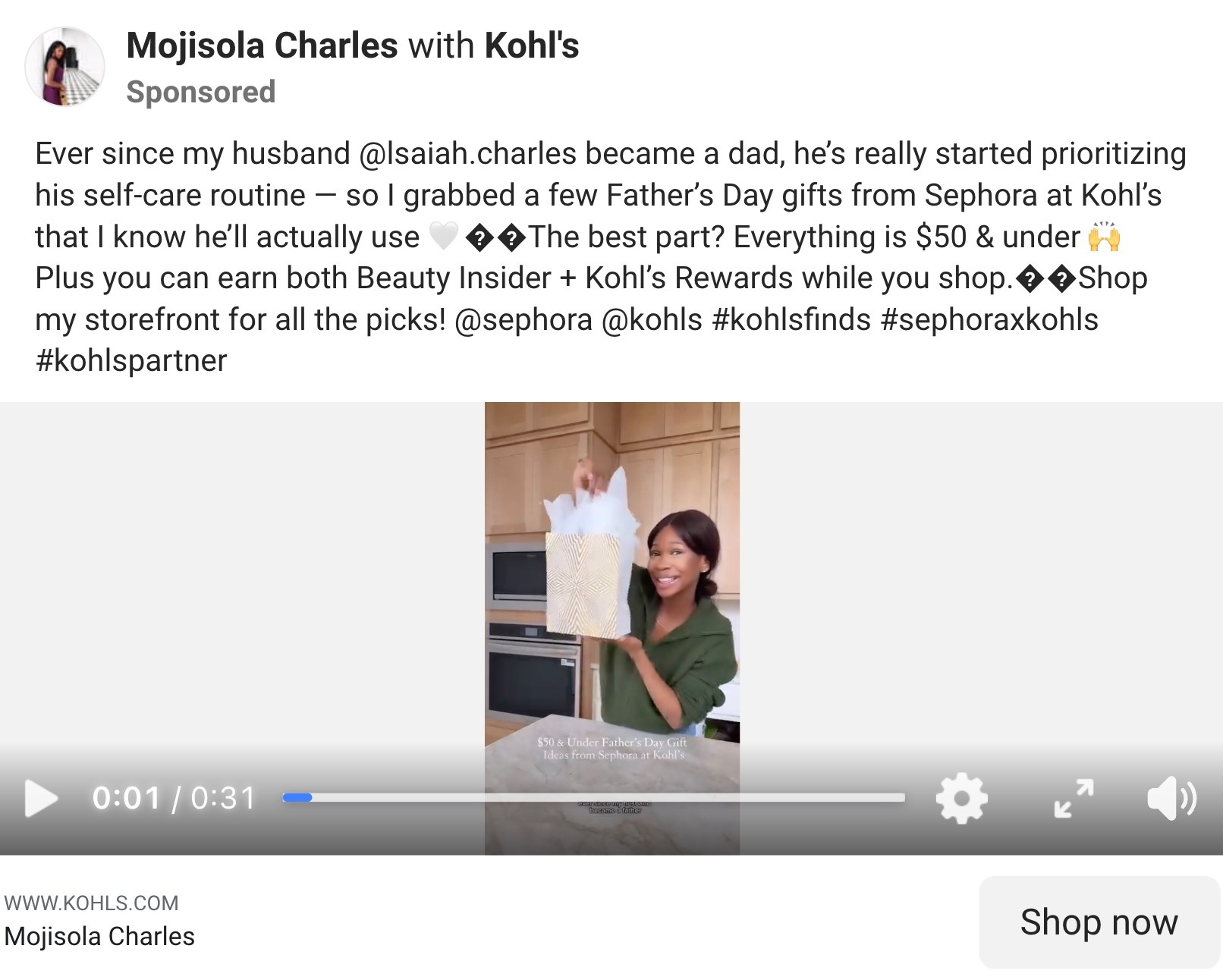
Style: Let a Real Person Do the Talking This Father's Day spot hands the mic to creator Mojisola Charles, who builds the whole pitch around a relatable moment of grabbing self-care gifts for her husband, a new dad. It looks and feels like a friend's post, not a polished brand ad: home kitchen, casual delivery, a gift-bag reveal. The "$50 & under" hook and the dual Beauty Insider + Kohl's Rewards angle land naturally inside her story.
Strategy: Borrow the Trust People trust people more than logos. Creator partnerships let retailers tap an audience that's already engaged and add a layer of authenticity static ads can't fake. The key is relevance here. The creator, the occasion, and the product range all line up. Pair the human storytelling with DPAs on the back end, and you can retarget everyone who tapped through with the exact products she featured.
8. Carousel & Catalog Ads
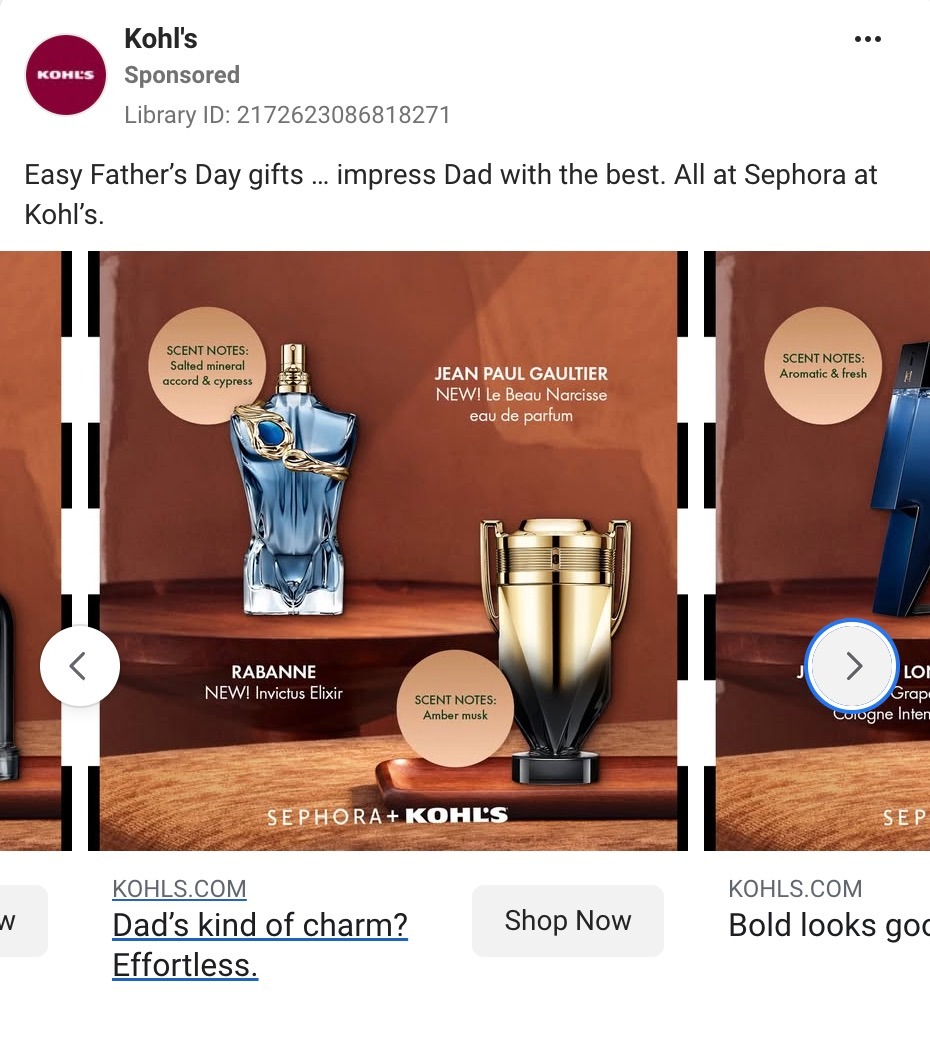
Style: Let Shoppers Swipe and Discover Here Sephora at Kohl's lines up a swipeable carousel of men's fragrances, such as Jean Paul Gaultier, Rabanne, and more, each card tagged with scent notes like "Amber musk" and "Salted mineral accord & cypress." One simple line up top ("Easy Father's Day gifts… impress Dad with the best") and the products carry the rest, frame by frame.
Strategy: Turn Browsing Into Choosing Carousels are perfect when you've got a range and want people to explore it. The scent-note callouts do real work as they help a gift-buyer who knows nothing about cologne pick one with confidence. This is exactly where Dynamic Product Ads (DPAs) shine. They connect the carousel to your product feed and it auto-populates with current SKUs, prices, and stock, so every card stays accurate and you never push something that's sold out.
9. Mascot & Character-Driven Video Ads
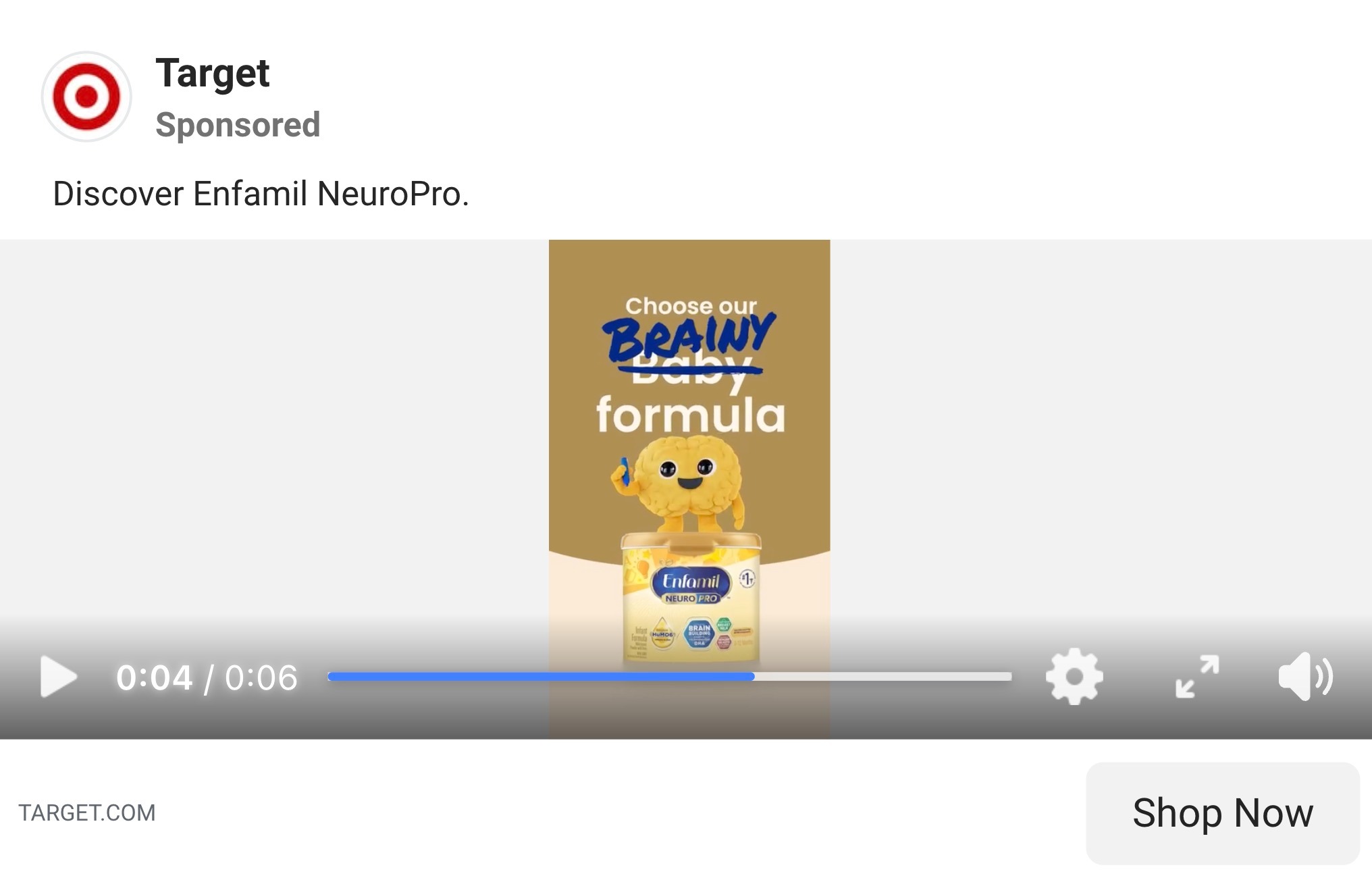
Style: Give the Benefit a Face Target's short Enfamil NeuroPro spot leans on a cheerful animated brain mascot to sell one idea fast: "Choose our brainy baby formula." It's six seconds, playful, and impossible to forget. The character turns an abstract benefit (brain development) into something instantly visual and friendly.
Strategy: Be Memorable, Be Quick In a fast-scrolling feed, a distinctive character buys attention and brand recall a plain product shot can't. Short-form video works because it makes a single point and gets out. For retailers carrying big-brand products, a mascot also boils a complex benefit down to one cheerful takeaway, and then a "Shop Now" button closes the loop straight to the product page.
10. Mix-and-Match Product Ads
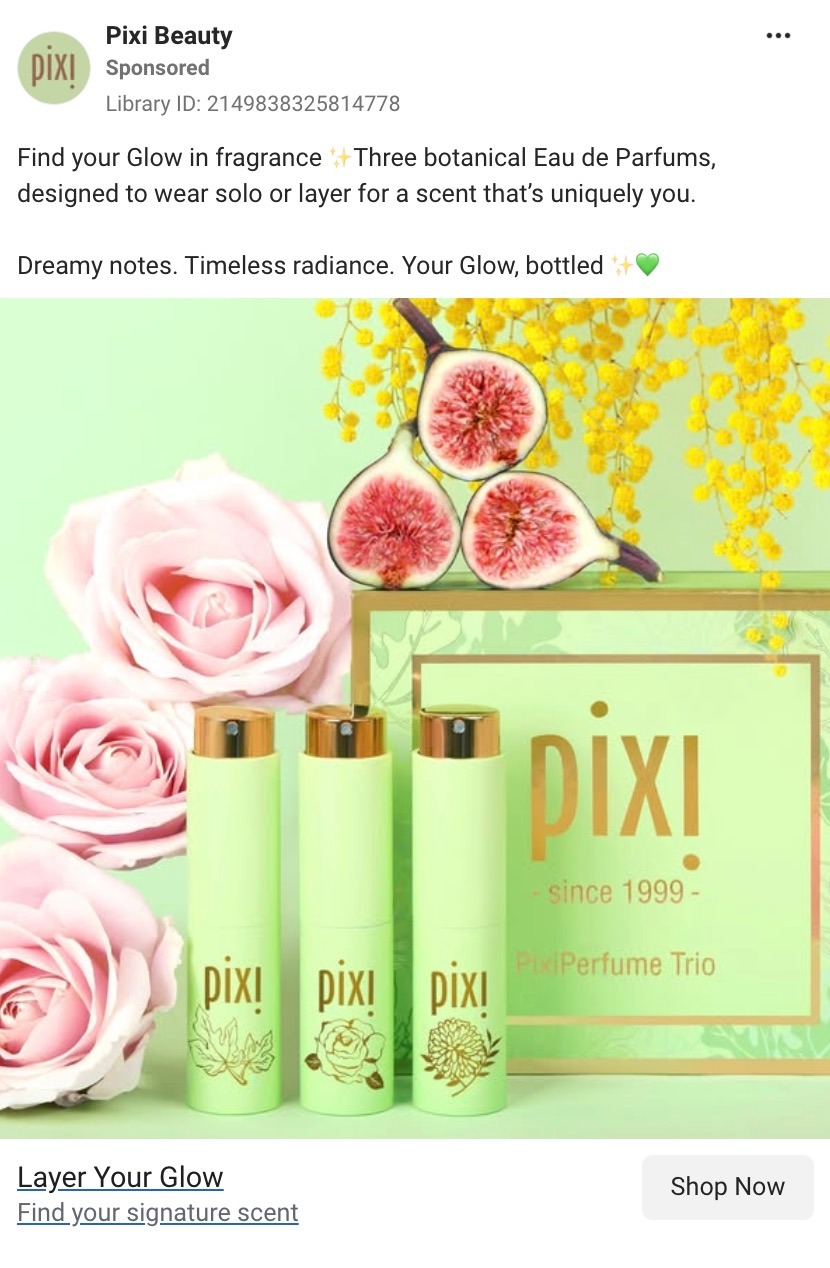
Style: Show That Products Work Together Pixi shows three botanical perfumes styled with figs, roses, and mimosa flowers that match the scents inside. The copy makes the main point clear right away: wear each one solo, or layer them for a scent that's your own. The visual does the same job, lining up all three bottles so you see the full set at once.
Strategy: Let People Build Their Own Version When a product can be combined or customized, say so directly. The idea that you can mix the three perfumes to make something personal gives shoppers a reason to buy the whole set instead of just one. It also gives them something to come back for, since there's always another combination to try.
11. Benefit-Stacked Offer Ads
Style: List the Reasons to Buy
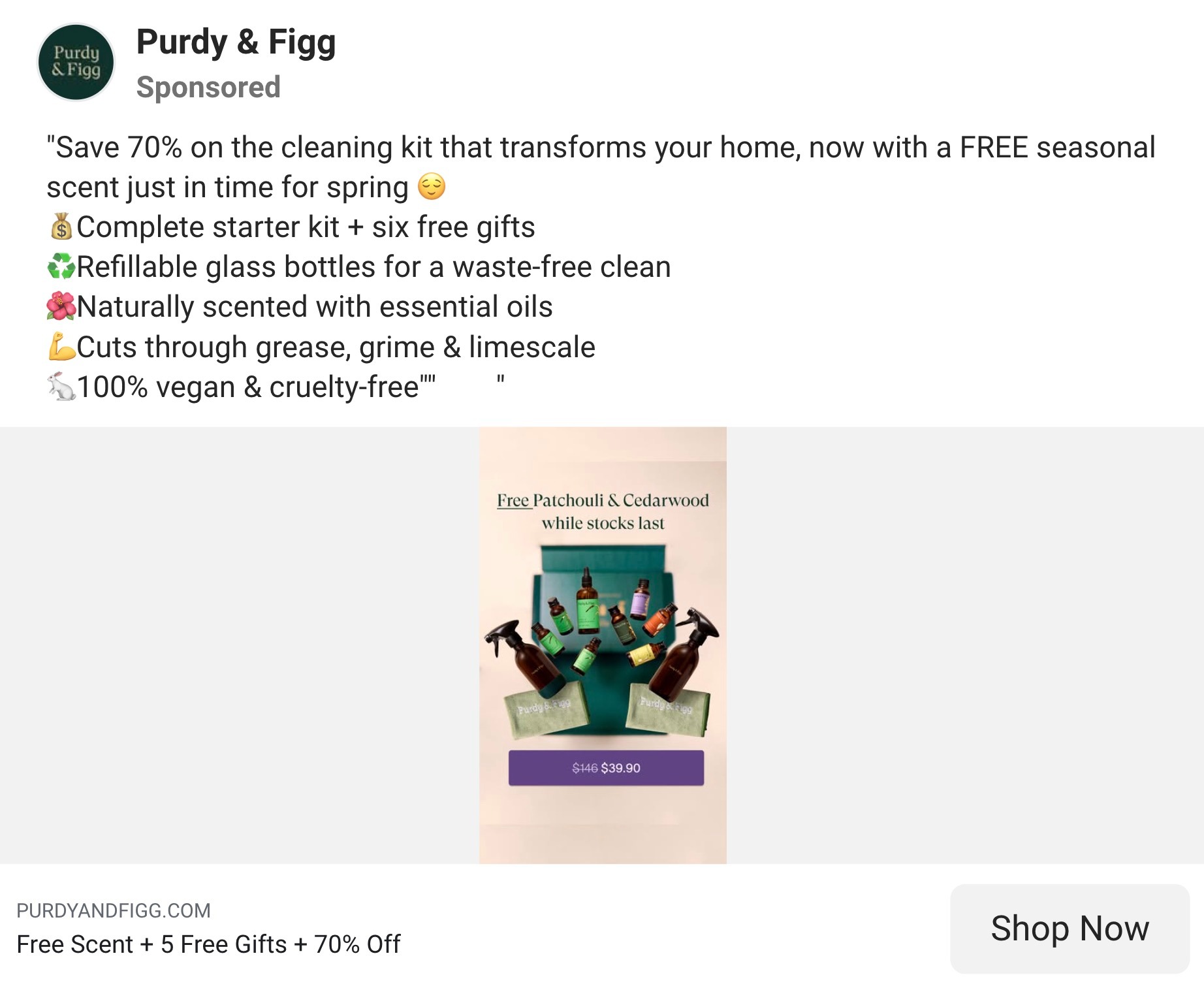
This Purdy & Figg ad leads with a strong discount (70% off plus a free gift) and then lists the reasons to care, one line at a time: refillable bottles, natural essential oils, cuts through grease, vegan and cruelty-free. The image shows everything you get in the kit, with the sale price right on it.
Strategy: Stack the Value, Then Add a Reason to Act Now
A single discount gets attention, but a list of clear benefits is what makes the deal feel worth it. Each line answers a different question a shopper might have. The "while stocks last" note adds light pressure to act, and the before-and-after pricing makes the savings easy to see at a glance.
12. Educational, Research-Backed Ads
Style: Teach Something, Then Sell
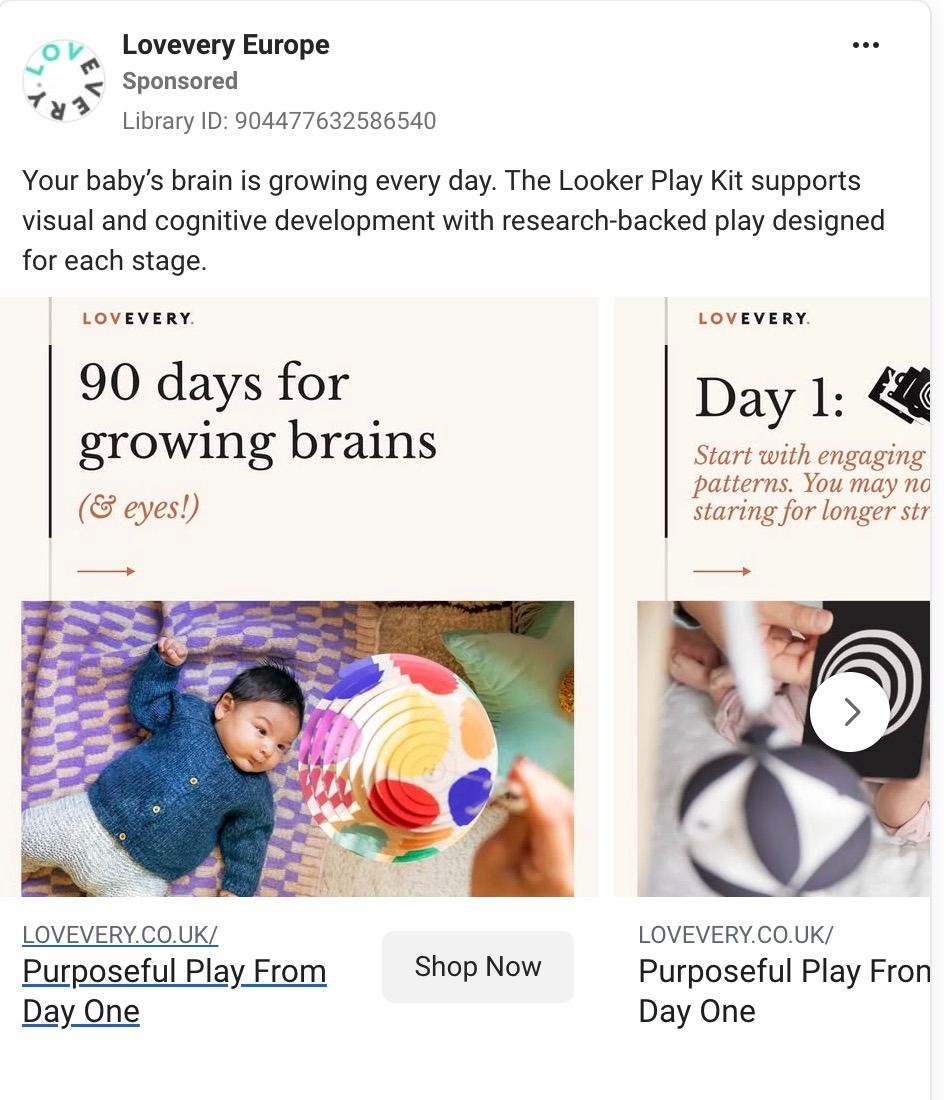
Lovevery uses a carousel to explain how its play kit supports a baby's development over the first 90 days. Instead of just showing the product, each card walks the parent through what to expect, like starting with simple patterns on day one. The copy points to research and matches the toys to each stage.
Strategy: Build Trust by Being Useful
For products parents think carefully about, teaching works better than a hard sell. Explaining the "why" behind the product makes the brand feel credible and worth the price. A carousel fits this well because it gives you room to tell a short, step-by-step story that a single image can't.
What 2026 Winning Retail Creative Looks Like
The ads that work now share a few things in common. Here's what the strongest retail creative is doing this year.
It looks like a person made it, not a brand
The best-performing ads feel native to the feed. That means creator videos, casual phone footage, and copy that sounds like a real recommendation instead of a sales pitch. People scroll past anything that looks too polished or too much like an ad, so the goal is to blend in first and sell second. Even big retailers are leaning on real faces and everyday settings to earn a few seconds of attention.
It's built to run at scale, not one ad at a time
A single great ad isn't enough anymore. Winning brands build templates and connect them to their product feed, so one design can turn into hundreds of versions across their catalog. This lets them show the right product to the right person and keep prices, discounts, and stock accurate without manual work. The brands moving fastest are the ones who can test, swap, and refresh creative in hours instead of weeks.
It earns trust before it asks for the sale
Shoppers are more careful about where they spend, so ads that explain the "why" are pulling ahead. That can mean showing how a product works, pointing to research, listing clear benefits, or being upfront about price. The point is to answer the questions a buyer already has before they have to ask. This works especially well for considered purchases like baby products, skincare, or anything people compare before buying.
It's made for short attention and small screens
Most retail ads are watched on a phone, with the sound off, in a few seconds. The creative that wins is built for that: a clear message in the first frame, text that's readable without audio, and one simple action to take. Short video, bold visuals, and a single strong hook beat long, busy ads almost every time.
Build Retail Ads That Convert with Marpipe
You've seen what good retail creative looks like. The hard part is making enough of it, fast, without a huge team. That's where Marpipe can help.
Marpipe is built for creating product ads at scale. You design one image or video template, connect your product feed, and Marpipe automatically generates ready-to-run ads across your entire catalog. Product names, prices, discounts, and images all pull in on their own, so every ad stays accurate even when your inventory changes. What used to take a designer days can be done in about an hour.
It also makes testing easy. You can build different versions of an ad, run them, and quickly see which images, headlines, and offers actually drive sales. Instead of guessing what works, you let the results tell you, then scale up the winners. B
If you want to create product ads from catalog, without the manual work behind each one, Marpipe is the tool to do it.
Book a quick demo to see how it works with your catalog.
FAQs
1. What are Dynamic Product Ads (DPAs)?
DPAs are ads that pull from your product feed and change automatically based on what each person has done, like the items they browsed or added to a cart. Instead of one fixed ad shown to everyone, the same ad slot can show different products to different people. This makes the ad feel more relevant, which usually means more clicks and sales without you building each version by hand.
2. Which retail ad format should I choose?
It depends on what you're trying to do. Product hero shots and carousels work well when you want people to browse and compare items. Lifestyle and educational ads help when the product needs context or a bit of explaining. Urgency and offer ads are best for moving inventory or pushing a sale. Most brands end up using a few formats together and testing to see which one their audience responds to.
3. How does Marpipe help with retail advertising?
Marpipe lets you build one image or video template, then connect your product feed so it fills in details like name, price, discount, and photos automatically. From that single template, it can generate ads across your whole catalog instead of you making each one manually. That means you can launch a large, personalized campaign in about an hour, and update everything at once when prices or products change.
4. What metrics should I track for retail ad success?
Start with click-through rate to see if your ad is catching attention, then conversion rate to see if those clicks turn into sales. Return on ad spend tells you whether the campaign is actually making money. It also helps to watch what happens after the click, like whether your pages load fast and people make it through checkout, since a slow or clunky site can undo a good ad.
5. How do I get started with dynamic product ads?
First, make sure your product feed is clean and up to date, since that's the data your ads will pull from. Next, build a template for the look you want, then connect the feed so it can fill in each product automatically. From there you can launch, watch your metrics, and test small changes like different images or button text to see what performs best.