

AI ad generators have become part of the standard marketing stack. Some teams use them for copy. Others use them for image production. A growing number rely on them to automate variation testing. But the tool itself is rarely the full story.
In 2026, the question is not which AI ad generator can create the most variations. It’s which one actually helps you learn what works and what doesn't? Below is a breakdown of the top AI ad generator tools this year, what they are good at, and where they tend to fall short.
What is an AI Ad Generator?
An AI ad generator is a platform that uses artificial intelligence to create advertising assets. That can include copy, static images, video ads, product-based creatives, or formatted assets for Meta, Google, TikTok, and other channels.
Some tools focus on speed. Others focus on automation. A few focus on structured experimentation. That distinction matters. There’s a difference between generating creative and generating insight.
1. Marpipe
Marpipe takes a different approach compared to most AI ad generator tools.
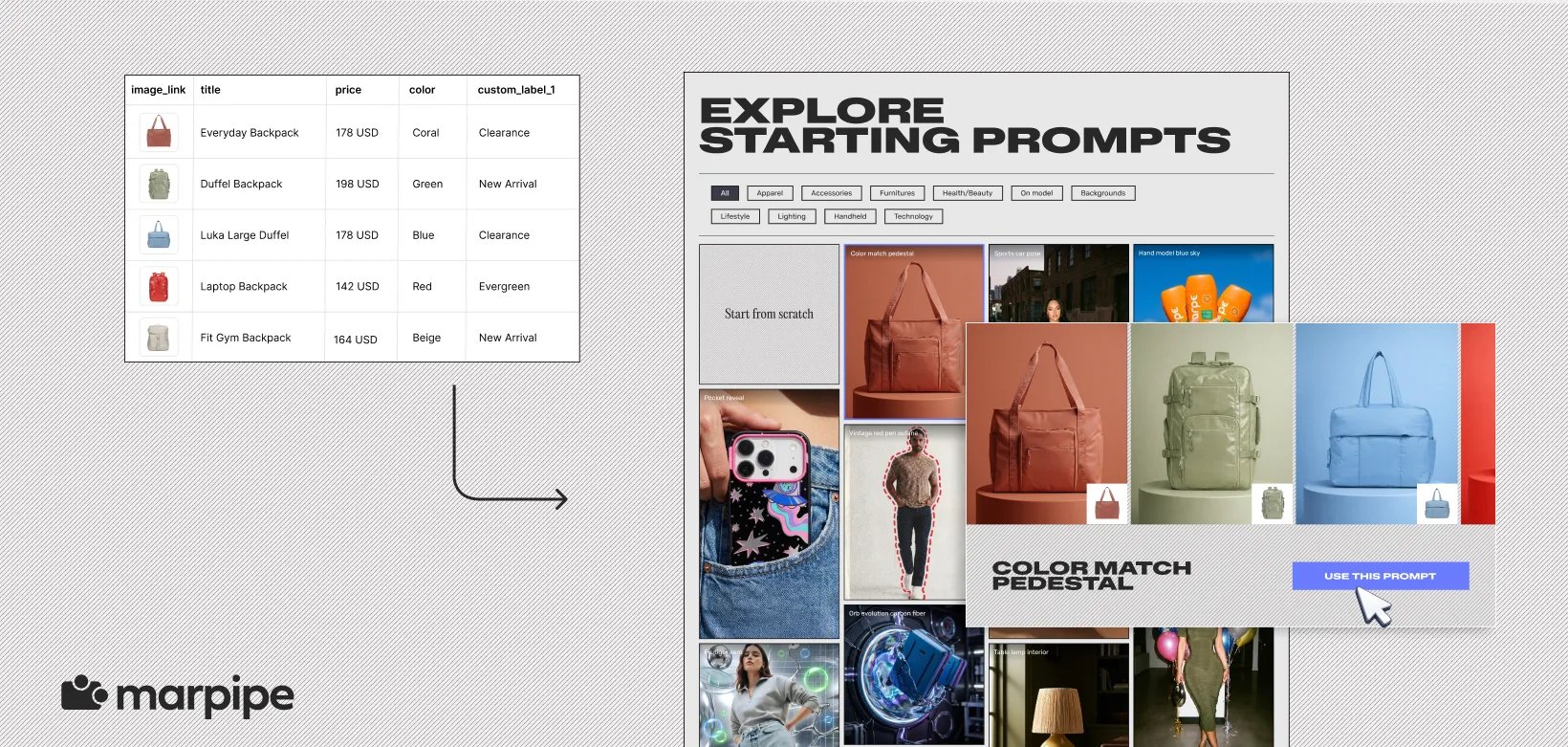
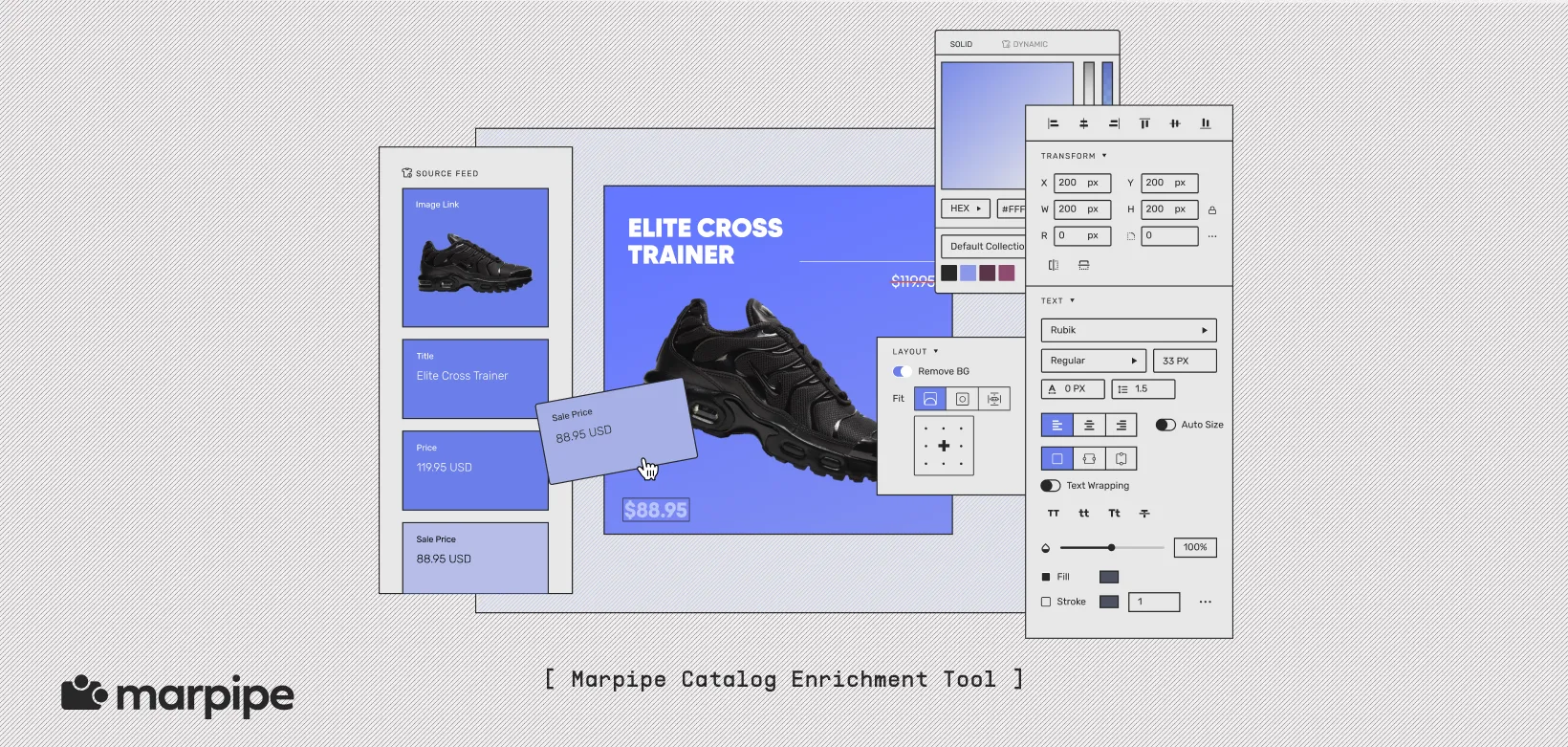
Instead of asking for prompts and producing standalone creatives, it connects directly to your product feed. From there, it builds structured variations automatically. Product attributes are mapped into design templates, and combinations are tested systematically.
This makes it less of a design toy and more of a testing engine.
For ecommerce brands running catalog ads, that distinction is important. It means the AI ad generator is not just producing ads. It’s producing controlled experiments.
It is not the right tool for a brand team building a hero campaign. It is built for performance teams who care about iteration and lift.
2. AdCreative.ai
AdCreative.ai is built around speed. Upload your assets, enter a few inputs, and it produces platform-ready visuals. It also assigns predictive scores to creatives, which can be useful when prioritizing what to launch first.
It works well for teams that need to fill creative gaps quickly. But the testing layer is lighter than platforms designed specifically for structured experimentation. If speed is the main bottleneck, this tool solves that.
3. Pencil
Pencil leans heavily into video. Short-form, social-first video ads can be generated quickly, which makes them attractive for brands that need constant creative refresh on platforms like TikTok and Meta.
Where it shines is volume video production. Where it is more limited is in feed-level product automation. It is creative-forward, not infrastructure-forward.
4. Canva Magic Studio
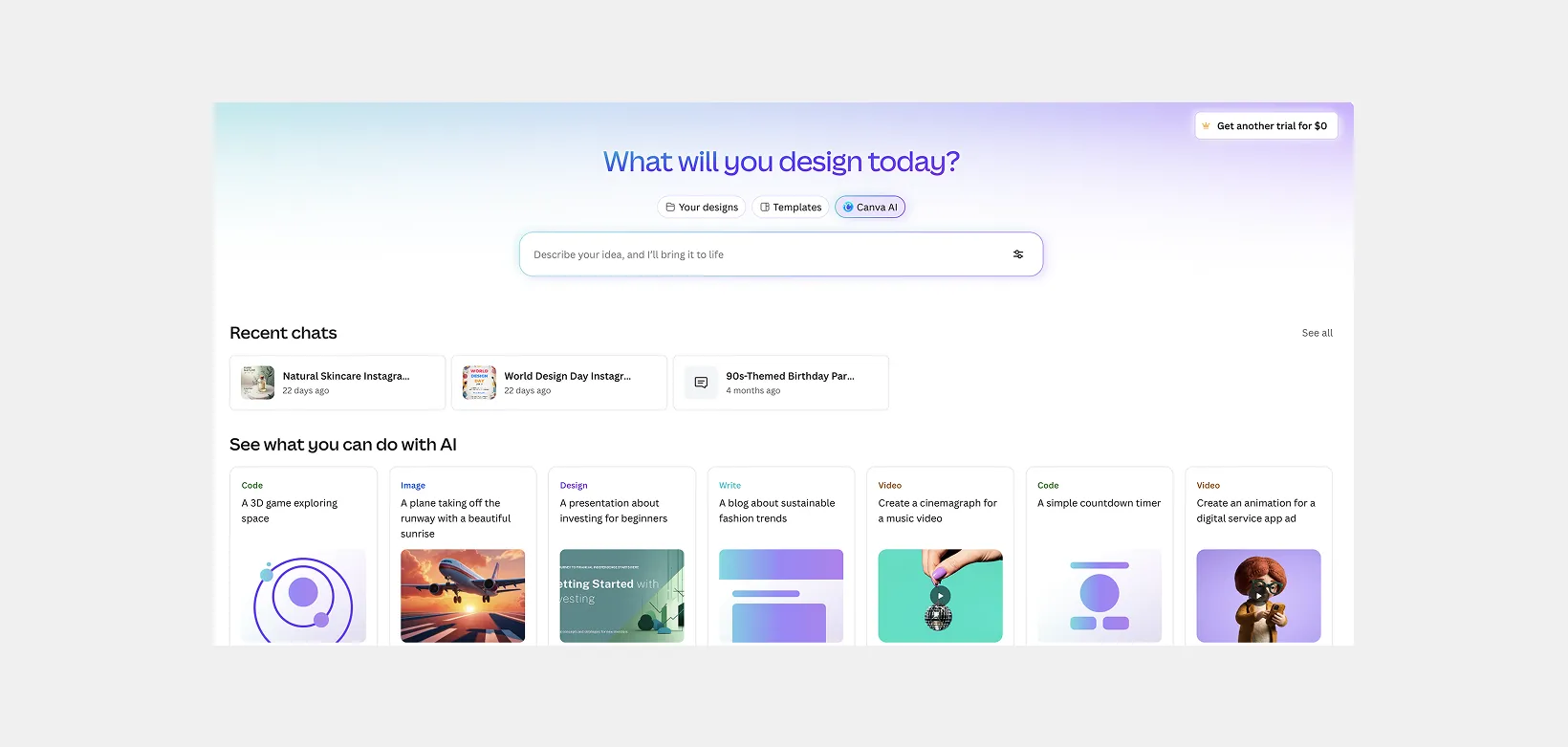
Canva has gradually integrated AI into its existing design ecosystem. It is not a dedicated AI ad generator platform, but it is now widely used to build ad variations quickly.
The appeal is obvious. Most teams already know how to use it. However, Canva remains design-centric rather than performance-centric. It helps you create ads. It does not necessarily help you structure testing or interpret results.
5. Jasper
Jasper is primarily a copy tool, but it continues to play a role in ad workflows. Many teams use it to generate headline variations, hooks, and ad descriptions. When paired with a visual production system, it can accelerate iteration significantly.
On its own, though, it is not a complete AI ad generator. It solves one piece of the puzzle.
6. Creatopy
Creatopy sits somewhere between design automation and ad production. It allows for resizing, adaptation across placements, and semi-automated visual generation. That makes it useful for multi-format campaigns where consistency matters.
It is less focused on experimentation and more focused on production efficiency.
7. Smartly.io
Smartly.io is more enterprise infrastructure than a standalone AI ad generator. It integrates creative automation into a broader media buying ecosystem. That means creative, placements, and campaign logic can operate in the same system.
For large advertisers, that integration can be powerful. For smaller teams, it can feel heavy.
8. Superside
Superside blends AI tools with human creative services. It is less about pressing a button and getting instant output, and more about accelerating creative production with a managed layer.
That hybrid approach appeals to brands that want scale without losing oversight. It is not self-serve in the same way as other AI ad generator tools are.
9. Predis.ai
Predis.ai focuses on social content and quick ad generation. It works well for brands with fast-moving content calendars and lighter performance structures.
It is accessible and simple, but not built for deeper catalog automation or structured lift testing.
10. Copy.ai
Copy.ai remains a useful supporting tool for ad copy generation. Like Jasper, it fills the headline and description gap efficiently. It works best when combined with visual generation tools.
On its own, it does not cover the full creative workflow.
Choosing the Right AI Ad Generator
The best AI ad generator depends on what problem you are trying to solve.
- If creative production is your bottleneck, speed-focused tools will help.
- If scaling ecommerce ads is your challenge, feed-connected platforms make more sense.
- If testing is the priority, structure matters more than volume.
Many teams end up using more than one tool.
Volume is easy now. Clarity is harder. The real advantage comes from knowing which variations are driving results.
AI ad generator tools in 2026
There has been a noticeable shift in how AI ad generator tools are evaluated. A few years ago, the focus was novelty. Could it write headlines? Could it produce images?
Now the focus is accountability.
- Does the tool connect to performance data?
- Does it structure variation logically?
- Does it reduce guesswork?
AI generation is no longer the differentiator. Learning velocity is. The platforms that help teams test deliberately, not randomly, are the ones becoming core infrastructure.
Why Marpipe Stands Out Among AI Ad Generator Tools
AI ad generator tools are part of the standard stack now. That much is clear.
But the real advantage is not in automation alone. It is in how automation connects to outcomes.
The right AI ad generator does not just help you create ads faster. It helps you identify what works faster. Creative fatigue is constant now, and performance fluctuates quickly, so that difference actually matters.
If you’re running ecommerce ads and want more than just creative output, Marpipe helps you turn your product feed into structured, testable ad variations at scale. Instead of guessing which layouts or messages might work, you can see it in the data.
Explore how Marpipe works, book a demo to see it in action.
FAQs
What is an AI ad generator tool?
An AI ad generator tool uses artificial intelligence to help create ad copy, visuals, or variations for paid campaigns across social and search platforms.
Can AI ad generator tools improve ad performance?
They can improve speed and volume of ads, but real performance gains come from structured testing and understanding what creative resonates with audiences.
How do I choose the right AI ad generator?
Look for tools that align with your workflow and goals, whether that’s fast creative production, feed integration, structured testing, or performance insights, not just raw output.